 By st20113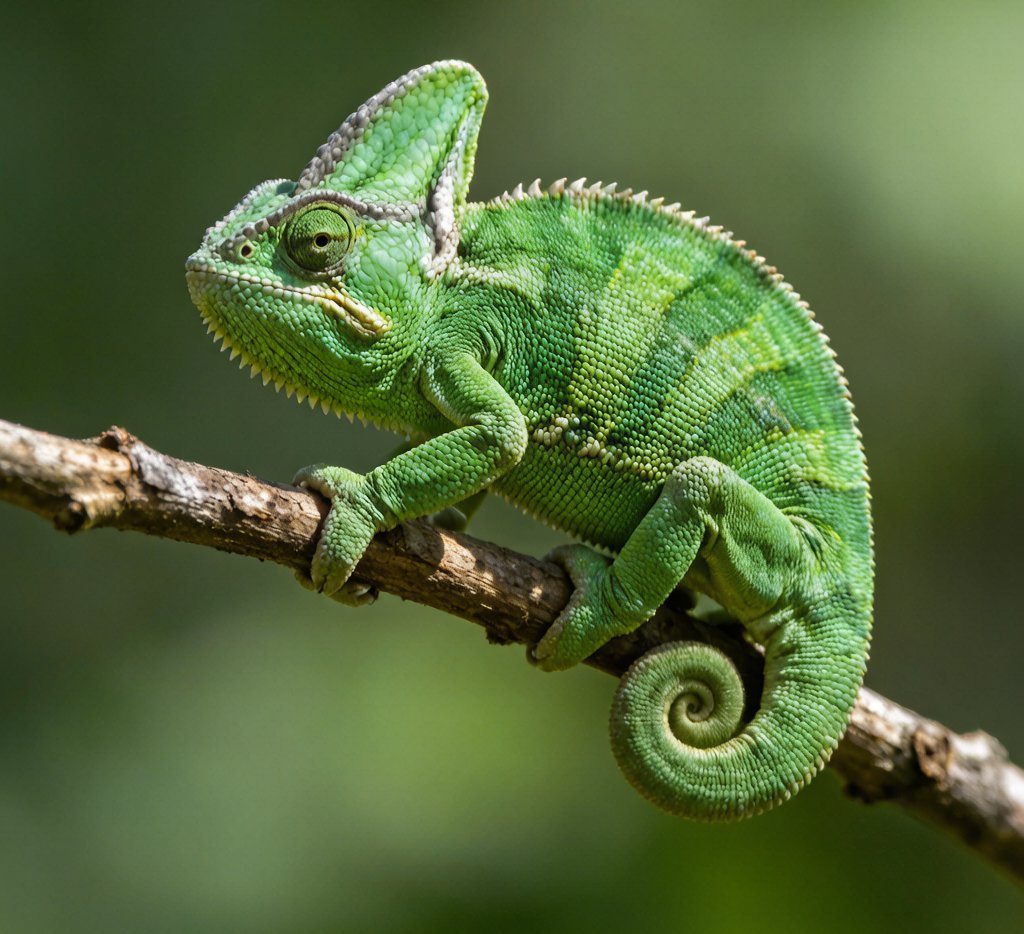
Introduction
The common chameleon (Chamaeleo chamaeleon) is a remarkable reptile found across the Mediterranean region, the Middle East, and parts of North Africa. It is one of the most widely recognized members of the family Chamaeleonidae, a group of more than 200 lizard species famous for their extraordinary ability to change color. The common chameleon has fascinated humans since antiquity, appearing in ancient Greek texts and medieval bestiaries. Unlike most lizards, chameleons are highly arboreal, spending nearly all their time in trees where their specialized adaptations give them advantages over both prey and predators.
Taxonomy
Chamaeleo chamaeleon belongs to the family Chamaeleonidae within the order Squamata. The species was first described by Carl Linnaeus in 1758. Several subspecies are recognized across its range, including C. c. chamaeleon in North Africa and the Middle East, and C. c. africanus in the eastern Mediterranean. Molecular phylogenetic studies have clarified relationships between subspecies and revealed complex patterns of genetic differentiation. Within the suborder Iguania, chameleons represent a highly specialized branch that evolved a suite of unique traits over approximately 90 million years. Their closest relatives include the green iguana and other iguanian lizards.
Physical Characteristics
Adult common chameleons reach 30 to 45 centimeters in length including the tail, with females typically smaller than males. The body is laterally compressed, giving a narrow profile suited for concealment among leaves. The most striking feature is the eyes, which move independently within conical turrets, providing a nearly 360-degree field of view without moving the head. This stereoscopic vision allows precise depth perception for hunting with a projectile tongue. The skin contains multiple layers of chromatophore cells containing colored pigments, allowing the chameleon to produce an extraordinary range of colors in a fraction of a second for camouflage, thermoregulation, and social communication.
Habitat
The common chameleon inhabits Mediterranean scrubland, olive groves, coastal dunes, rocky hillsides, and deciduous forests across its native range. It thrives in semi-arid to temperate climates with distinct seasons and is well adapted to hot, dry summers. During cooler winter months, chameleons brumate beneath leaf litter or in rock crevices. The species is obligately arboreal for most of its life. The Gila monster shares similar arid-adapted scrubland habitat in North America.
Diet
The common chameleon is an obligate carnivore and ambush predator, relying on its extraordinary projectile tongue to capture prey at a distance. Its diet consists mainly of insects and other arthropods, including crickets, grasshoppers, flies, beetles, caterpillars, and spiders. Larger individuals may eat small vertebrates. The tongue can be projected to more than twice the animal’s head length in less than a hundredth of a second, with a sticky, cup-shaped tip that adheres to prey upon contact. Chameleons are visual hunters relying on stereoscopic vision, remaining motionless on a perch until a target comes within range. Like the green anaconda, chameleons are patient, efficient ambush predators that conserve energy between feeding events.
Reproduction
Common chameleons are oviparous, with females laying 10 to 40 eggs after mating in late spring or early summer. Males become highly territorial during the breeding season, displaying vivid colors to deter rivals and attract mates. After a complex courtship, the female digs a nest chamber in the ground where she buries the elongated, leathery-shelled eggs at a depth of 10 to 30 centimeters. Eggs develop over 120 to 180 days before hatching in late summer or autumn. Hatchlings are independent from birth and immediately capable of climbing, hunting, and changing color. Like the Komodo dragon, chameleons exhibit temperature-dependent sex determination during embryonic development.
Conservation
The common chameleon is classified as a species of Least Concern due to its broad distribution and large populations, though localized declines have been documented where habitat loss and collection for the pet trade have impacted populations. Pesticide use, which reduces insect prey availability, also poses a threat in agricultural areas. In some European countries, the species is protected under national wildlife legislation prohibiting collection from the wild. Like the saltwater crocodile, it faces pressure from illegal wildlife trade in parts of its range.
Fun Facts
The chameleon’s tongue is one of the fastest biological mechanisms known, capable of reaching prey in as little as 0.003 seconds with acceleration exceeding 2,500 meters per second squared. Chameleons are the only vertebrates that can move each eye independently and simultaneously focus on two different objects, giving an almost spherical field of vision without head movement. The common chameleon’s name in Arabic, “Abu bareq,” means “possessor of many colors,” reflecting centuries of cultural recognition of its legendary color-changing ability. Fossil chameleons found in amber deposits are approximately 100 million years old.