 By st20113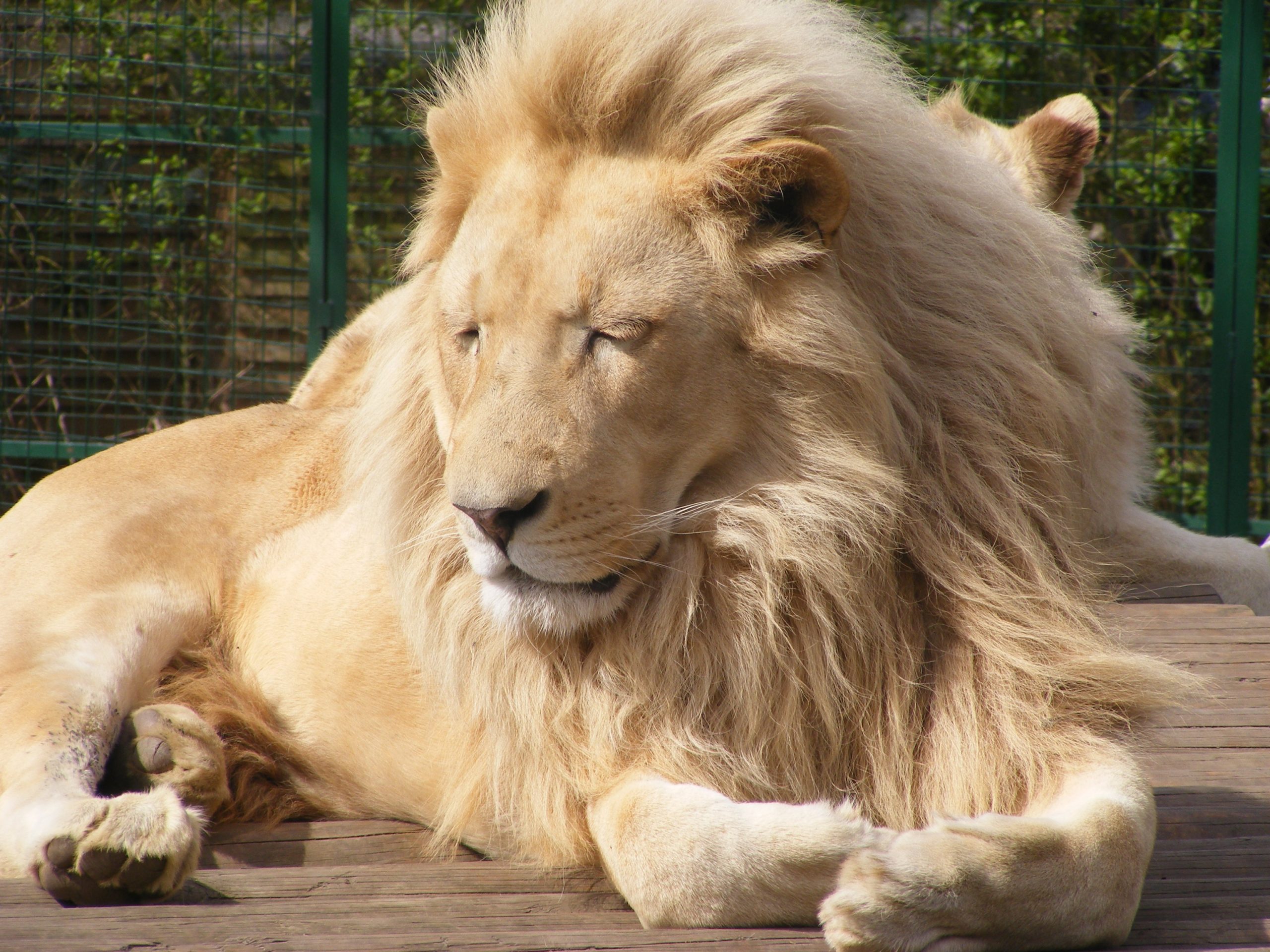
The Lion (Panthera leo), often called the “King of Beasts,” is one of the most iconic and powerful predators on Earth. Native to Africa and a small population in India, the lion is the second-largest living cat species after the tiger, distinguished by its muscular, broad-chested body, short coat ranging from tawny yellow to ochre brown, and the magnificent mane found on adult males. Lions are unique among wild cats for their highly social behavior — they live in complex family groups called prides, making them the most gregarious of all big cat species.
Physical Characteristics
Adult male lions typically weigh between 150–250 kg (330–550 lbs) and measure 1.7–2.5 meters (5.5–8.2 feet) in body length, not including the tail, which adds another 90–105 cm. Females are considerably smaller, weighing 120–180 kg (265–400 lbs). The lion’s coat is short and smooth, colored in various shades of yellow, gold, and orange with lighter underparts. The male’s mane — a distinctive ruff of longer, darker hair around the head and neck — grows darker and more impressive with age and is a key signal of fitness and testosterone levels. Some lions in hotter, drier regions have reduced manes or none at all.
The lion’s skull is robust and heavily built, with powerful jaw muscles capable of generating bite forces of approximately 650 PSI — sufficient to crush the bones of large prey. The tongue is covered in rough papillae that help rasp meat from bone and groom the coat. Lions have excellent night vision, with a reflective layer behind the retina (tapetum lucidum) that boosts light sensitivity by up to six times, making them highly effective nocturnal hunters despite their reputation as daytime animals.
Social Structure and Prides
The lion’s social system is exceptional among wild cats. A typical pride consists of related females (lionesses), their cubs, and a coalition of 1–9 males. Female lions are the primary hunters of the pride, employing coordinated group strategies to take down large ungulates such as zebras, wildebeest, buffaloes, and gazelles. Studies have shown that group hunting significantly increases hunting success rates, particularly against faster or more dangerous prey. Lions can reach speeds of 80 km/h (50 mph) in short bursts but rely on stealth and cooperation rather than sustained chases.
Male lions play a crucial role in defending the pride’s territory against rival males and other predators such as hyenas. When a coalition of males takes over a new pride, they typically kill all existing cubs sired by the previous males — a brutal but biologically rational strategy that stimulates the females to become receptive again, allowing the new males to father their own offspring. Despite this, female lions within a pride are highly cooperative, often synchronizing births and communally nursing and protecting cubs.
Diet and Hunting
Lions are obligate carnivores and apex predators that consume a wide variety of prey ranging from small rodents and reptiles to large buffalo and even young elephants. The average lion consumes approximately 5–7 kg (11–15 lbs) of meat per day, though they can go without food for up to two weeks after a large kill. Lions are versatile hunters that employ ambush tactics, working cooperatively to flank and encircle prey. Lionesses contribute the vast majority of hunting efforts, while males typically feed first on kills — a behavior that reflects their role as primary defenders rather than providers.
Unlike other large predators, lions show a remarkably broad diet that adapts to prey availability across different ecosystems. In Africa’s African savanna habitats shared with species such as the African Elephant and Cheetah, lions compete for similar prey resources. Interestingly, lions and cheetahs often avoid direct competition through temporal separation — cheetahs typically hunt during the day while lions are more active at dawn, dusk, and night.
Conservation Status
The lion is classified as Vulnerable by the IUCN, with wild populations estimated at 23,000–39,000 individuals — down from perhaps 200,000 a century ago. The species has vanished from approximately 94% of its historic range, with populations surviving primarily in sub-Saharan Africa and a small isolated population of approximately 600 Asiatic lions in India’s Gir Forest. Primary threats include habitat loss due to agricultural expansion, human-livestock conflict (lions are killed by pastoralists protecting their cattle), prey depletion from bushmeat hunting, and in some regions, trophy hunting.
Cultural Significance
Lions have been central to human culture and symbolism for millennia. From the ancient Egyptian goddess Sekhmet to the Christian lion of Judah, from the heraldic lions of medieval European royal coats of arms to the famous MGM lion, these magnificent animals have symbolized courage, royalty, strength, and ferocity across countless civilizations. In contemporary conservation, the lion serves as an flagship species — a charismatic animal whose protection benefits entire ecosystems and the countless other species that share its habitat.
the African continent, with a hunting success rate exceeding 80% — dramatically higher than the Lion (approximately 30%) or the Cheetah (approximately 50%). This efficiency is entirely dependent on
are prey for lions, spotted hyenas, leopards, and African wild dogs. When threatened, a zebra’s powerful hind
The crested porcupine, Hystrix cristata, is a large rodent found across sub-Saharan Africa and parts of Italy. It is the largest porcupine species, easily recognized by the crest of long, bristle-like hairs that runs along its head and back. When threatened, it raises this crest and rattles hollow quills to warn intruders. Should the warning fail, it charges backward, driving sharp quills into the attacker. Despite its formidable defenses, the porcupine is a strict herbivore and an important prey item for large African predators such as the lion.
[…] Its body is encased in rows of sharp, keratinous scales that provide formidable defense against predators. When threatened, the animal rolls into a tight ball, presenting a near impenetrable armored […]
[…] can survive on remarkably little sustenance, which helps them persist between cleanings. Like many insects, they require water and will die within days without it. Their feeding spreads bacteria and […]
[…] has adapted well to human-modified landscapes, including suburbs and farmland, as long as cover and insects are present. It is less common in dense rainforest and high mountains. Expanding northward, it now […]