 By st20113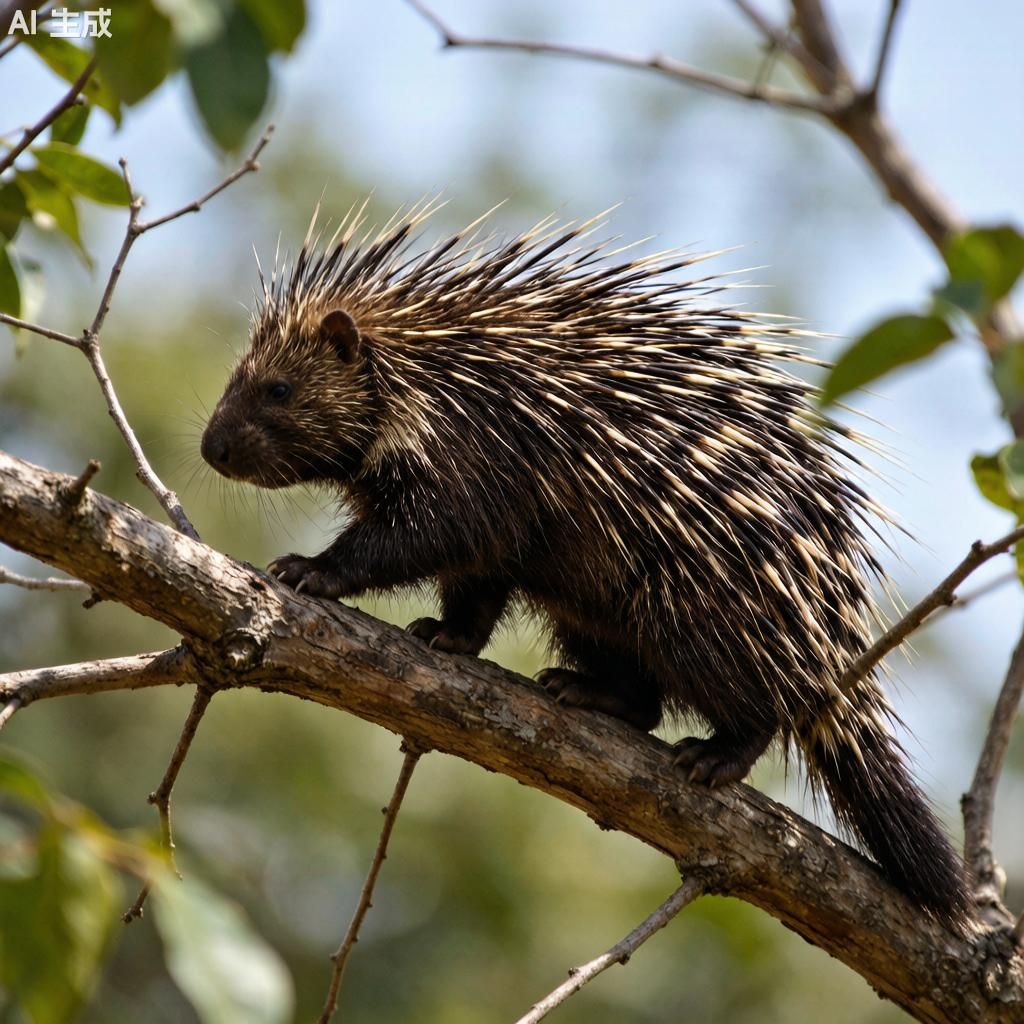
Introduction
The crested porcupine, Hystrix cristata, is a large rodent found across sub-Saharan Africa and parts of Italy. It is the largest porcupine species, easily recognized by the crest of long, bristle-like hairs that runs along its head and back. When threatened, it raises this crest and rattles hollow quills to warn intruders. Should the warning fail, it charges backward, driving sharp quills into the attacker. Despite its formidable defenses, the porcupine is a strict herbivore and an important prey item for large African predators such as the lion.
Taxonomy
Hystrix cristata belongs to the family Hystricidae, the Old World porcupines, distinct from New World porcupines in their rooted, grooved quills and terrestrial habits. The genus name derives from the Greek for “porcupine.” Fossil records indicate hystricids first appeared in Asia before colonizing Africa and southern Europe. Genetic studies place the crested porcupine’s closest relatives among other African hystricids. Unlike the agile caracal, a fellow African carnivore, the porcupine relies on armor rather than speed for survival.
Physical Characteristics
An adult crested porcupine can weigh between 13 and 30 kilograms and measure up to 90 centimeters long, excluding the tail. Its body is covered in a mix of soft underfur, stiff bristles, and sharp quills, some of which are up to 35 centimeters long on the back and flanks. The quills are loosely attached and detach easily upon contact, embedding in predators. A specialized layer of muscle allows the animal to erect its crest and rattle quill tips together as a warning. Like the honey badger, it is built for defense, though its strategy is passive rather than aggressive.
Habitat
Crested porcupines inhabit a variety of environments including savannas, forests, rocky hills, and agricultural land across Africa and southern Italy. They shelter in burrows that they dig themselves or appropriate from other animals, often emerging at night to forage. They share the African landscape with large herbivores such as the cape buffalo, though the porcupine keeps to cover and dense vegetation. They are adaptable to human-modified areas and sometimes raid crops, leading to conflicts with farmers. During the day they rest in cool, shaded dens to avoid heat.
Diet
As strict herbivores, crested porcupines feed on bark, roots, tubers, bulbs, fallen fruit, and cultivated crops such as maize and groundnuts. They use strong incisors to gnaw through tough plant material and are particularly fond of roots dug from the soil. In agricultural regions they can cause significant damage to crops, which makes them unpopular with growers. They rarely drink free water, obtaining most moisture from succulent plant parts. Foraging is solitary or in small family groups, mostly under the cover of darkness.
Reproduction
Breeding can occur year-round in warm regions, though peaks vary by locality. After a gestation of roughly 66 to 110 days, the female gives birth to one to four well-developed young in a grass-lined nest within the burrow. Newborn porcupines are born with soft quills that harden within hours, allowing them to defend themselves soon after birth. The mother nurses the litter for several weeks before they begin eating solid plant food. Young porcupines stay with the family group for some months, learning foraging routes before dispersing.
Conservation
The crested porcupine is classified as least concern by the IUCN because of its broad range and stable numbers. It remains common across much of its African distribution and persists even where habitat is heavily altered. Local threats include hunting for bushmeat and trapping where it is considered a crop pest. Its quills are sometimes used in traditional crafts and ornaments. In Italy, where it is the only native porcupine, it enjoys legal protection. The species benefits from its nocturnal habits and ability to exploit diverse plant foods across changing landscapes.
Fun Facts
Porcupine quills are coated with antibiotic fatty acids that help prevent infection if they lodge in the animal itself. Despite the myth, porcupines cannot shoot their quills, but they detach so easily that contact is enough. A group of porcupines is sometimes called a “prickle.” The crested porcupine can live more than 20 years in captivity. Its rattle warning is produced by hollow quills at the tail tip. Predators such as the African wild dog occasionally take porcupines, but often suffer painful quill injuries in the attempt.