 By st20113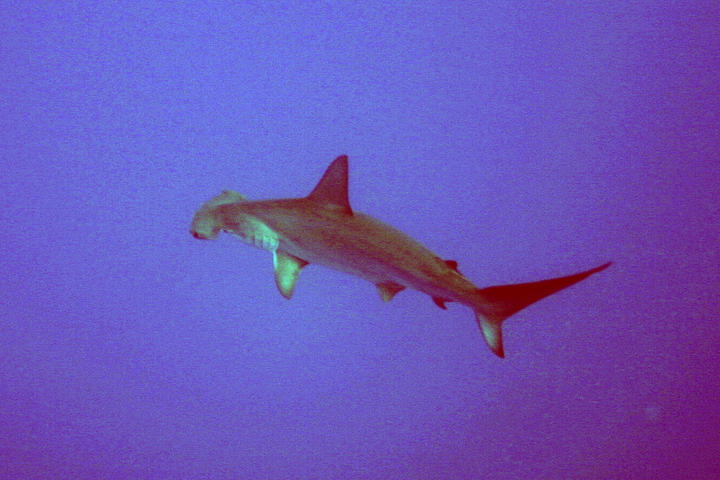
Introduction
The great hammerhead (Sphyrna mokarran) is the largest of the hammerhead sharks, reaching lengths of up to 6 meters and weights above 400 kilograms. It is found in warm coastal waters of the Atlantic, Indian, and Pacific oceans, often near reefs, continental shelves, and island slopes. Its unmistakable head, shaped like a wide hammer, gives the species both its name and its hunting advantage. As an apex predator, it helps regulate populations of rays, fish, and other sharks throughout tropical seas. It is closely related to the better-known great white shark only in the broad sense of being a large mackerel shark relative.
Taxonomy
The great hammerhead belongs to the genus Sphyrna, family Sphyrnidae, within the order Carcharhiniformes. Its distinctive cephalofoil, the broad hammer-shaped head, sets it apart from other hammerheads such as the scalloped and smooth hammerhead. The species name mokarran is taken from an Arabic word for shark. Genetic and morphological studies place Sphyrna as a lineage of carcharhinid sharks that diverged millions of years ago. Among its relatives, the tiger shark occupies a similar ecological role as a wide-ranging tropical predator.
Physical Characteristics
The great hammerhead has a tall, sickle-shaped dorsal fin and a cephalofoil that is nearly straight across the front with small lobes at the ends. This head spreads the eyes and sensory pores wide apart, improving the shark’s ability to detect the electric fields of hidden prey. The body is stout and gray above, fading to white underneath. It has serrated, triangular teeth and a strongly forked tail. Large adults can exceed 5 meters, making the great hammerhead the giant of its genus and a formidable presence on coral reefs and open ledges alike.
Habitat
Great hammerheads prefer warm temperate and tropical waters between about 1 and 80 meters deep. They are commonly seen along continental shelves, around seamounts, and near coral reefs where prey congregates. They are migratory, moving toward the equator in cooler months and returning to warmer latitudes in summer. They sometimes enter estuaries and bays but generally avoid very cold seas. Like the bull shark, they tolerate a range of salinities and may travel through coastal channels in search of food.
Diet
These sharks are specialized hunters of stingrays, which make up a large part of their diet, but they also eat other rays, skates, bony fish, smaller sharks, squid, and crustaceans. The wide head is used to pin struggling rays to the seafloor before the shark takes a bite. Their electroreceptive ampullae of Lorenzini, clustered in the cephalofoil, detect the faint signals of buried or camouflaged prey. They are swift, solitary hunters that patrol reefs and drop-offs, often at dawn and dusk when many prey species are most active.
Reproduction
Great hammerheads are viviparous, meaning the young develop inside the mother and are born live. After a gestation of roughly 11 months, females give birth to litters of 20 to 40 pups in shallow nursery areas. Newborns measure about 50 to 70 centimeters and must fend for themselves immediately. There is no parental care after birth. Females typically reproduce only every two years, a slow rate that makes populations vulnerable when adults are removed by fishing. Males reach maturity sooner than females and tend to be slightly smaller at adulthood.
Conservation
The great hammerhead is listed as Critically Endangered by the IUCN. It is heavily caught in fisheries, both as target catch and as bycatch, and is especially valued for the shark-fin trade. Its coastal habits, slow reproduction, and schooling behavior make it highly susceptible to overexploitation. Many regions have introduced protections, gear restrictions, and no-take zones to aid recovery. The gentle whale shark faces parallel pressures from finning and boat traffic, underscoring the broader plight of large sharks worldwide.
Fun Facts
The hammerhead’s oddly shaped head is not just for show; the widely spaced eyes give it nearly 360-degree vision, with only a small blind spot directly behind. Great hammerheads can swim in a distinctive rolling motion, swinging the head side to side to scan the seafloor. They are among the few sharks known to form large seasonal schools, though adults are usually solitary. Despite their fearsome look, unprovoked attacks on people remain extremely rare compared with their smaller, more nervous relatives.