 By st20113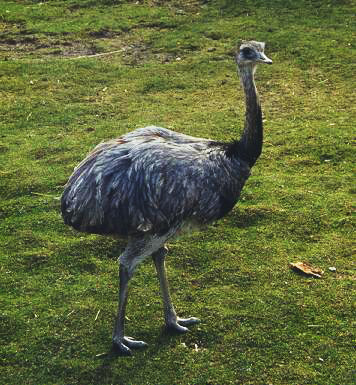
Introduction
The greater rhea (Rhea americana) is the largest bird of South America and a flightless member of the ratite group. It roams the open grasslands, known as pampas, and thorny scrub of Argentina, Brazil, Bolivia, Paraguay, and Uruguay. Reaching up to 1.5 meters tall, it is smaller than the African common ostrich but shares its long neck, powerful legs, and inability to fly. Rheas are social, often gathering in flocks that shift in size with the seasons and the availability of food.
Taxonomy
The greater rhea is the type species of the genus Rhea, family Rheidae, order Rheiformes. It is one of two genera of South American ratites, the other being the smaller lesser rhea. Within Rhea americana up to five subspecies are recognized, separated by geography across the southern cone of the continent. Genetic studies place ratites as an ancient lineage of flightless birds that also includes ostriches, emus, cassowaries, and kiwis. The group evolved separately on different continents after the breakup of the southern landmasses.
Physical Characteristics
Greater rheas stand 1.2 to 1.5 meters tall and weigh between 20 and 40 kilograms. Their plumage is gray-brown, with a paler underside and a feathered, rounded body. The wings are large but useless for flight, though they are spread like sails to balance while running. Their legs are long and strong, enabling bursts of speed up to 60 kilometers per hour. Males are generally larger than females and develop a darker, more contrasting neck during the breeding season. The head and neck are covered in sparse, hair-like feathers.
Habitat
These birds favor open habitats such as grassland, savanna, and agricultural plains, where visibility helps them spot predators. They avoid dense forest but use patches of scrub for shelter and nesting cover. Rheas range from sea level to high plateau grasslands, adapting to both temperate and subtropical climates. They are often found near water but can tolerate dry conditions by obtaining moisture from food. Seasonal movement follows rainfall and the flush of new plant growth across the pampas.
Diet
Greater rheas are omnivorous, eating a broad mix of plant and animal matter. Their diet includes grasses, seeds, fruits, leaves, and roots, supplemented by insects, small reptiles, rodents, and bird eggs when available. They swallow pebbles, called gastroliths, that help grind food in the gizzard. Like the emu, they spend much of the day walking and foraging across large home ranges, sometimes travelling many kilometers in search of fresh feeding grounds.
Reproduction
Rheas have an unusual mating system in which a single dominant male mates with several females. Each female lays her eggs in a shared ground nest that the male scrapes out and defends. A clutch can contain from a dozen to more than fifty eggs contributed by multiple hens. The male alone incubates the eggs for about five to six weeks and then cares for the striped chicks, leading them to food and shielding them from danger. The females leave to mate again, sometimes with other males in the same season.
Conservation
The greater rhea is classified as Near Threatened. Once abundant across the pampas, it has declined through habitat loss, conversion of grassland to crops, hunting, and collisions with fences and vehicles. Several subspecies are more endangered than the species as a whole. Conservation measures include protected reserves, sustainable-use ranching programs, and captive breeding for reintroduction. The related cassowary of Australia shows how vulnerable ratites can be when their habitat is fragmented by development.
Fun Facts
A male rhea can incubate eggs from numerous mothers in one giant nest, making him one of the most devoted bird fathers alive. The chicks hatch with camouflage stripes that fade as they grow. Rheas are strong swimmers and will cross rivers to escape threats or reach new feeding areas. They communicate with low booming calls and hisses. The small, nocturnal kiwi of New Zealand is a distant ratite cousin that, unlike the rhea, traded size and speed for a secretive forest life.