 By st20113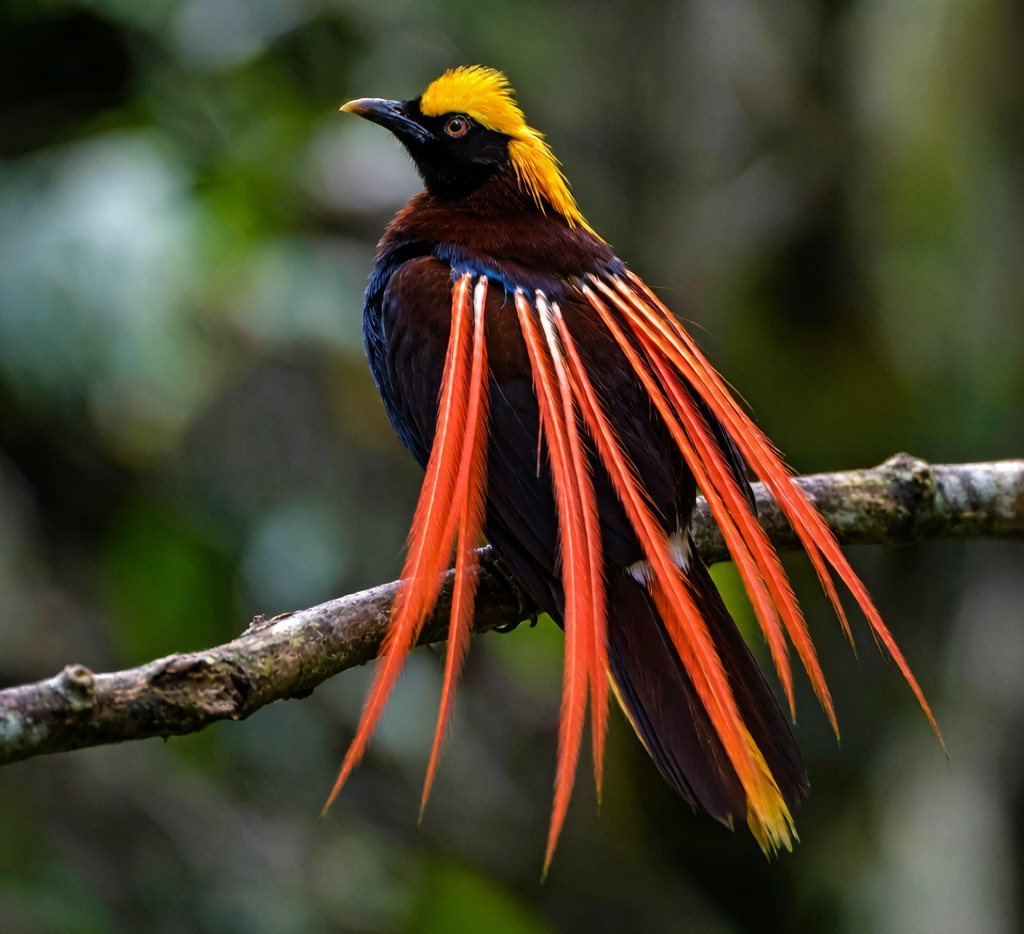
Introduction
The Raggiana bird of paradise (Paradisaea raggiana), also known as the greater bird of paradise, is one of the most extravagantly plumaged birds on Earth and the national bird of Papua New Guinea since 1971. Its striking orange and yellow plumage appears on the country’s flag and coat of arms. Males perform one of the most spectacular courtship displays in the animal kingdom, gathering in cleared forest areas to dance, pose, and call to attract females. The male’s long, wispy flank plumes, extending over 60 centimetres, create a breathtaking display when fanned and shaken. Endemic to New Guinea, the species inhabits rainforests from sea level up to mid-montane zones. It represents one of the finest examples of sexual selection in the natural world.
Taxonomy
The Raggiana bird of paradise belongs to the family Paradisaeidae within the order Passeriformes, making it a perching bird and closest relative of the crow and raven family. French naturalist Ren茅-Primev猫re Lesson described the species in 1825, naming it after the Marquis James Raggiana, patron of natural history research in New Guinea. The family contains around 40 species, almost all endemic to New Guinea and its neighbouring islands. The Raggiana bird of paradise is one of the largest and most sexually dimorphic members, with males bearing vivid ornamental plumage while females remain relatively subdued in brown and cream tones. Males acquire their full adult plumage over several years.
Physical Characteristics
Males measure approximately 35 centimetres in body length, with flank plumes adding another 60 centimetres or more. The male’s plumage combines deep scarlet and bright yellow on the body with black throat, breast, and wings, and brilliant white flank feathers forming the centrepiece of the courtship display. The head is pale blue-gray and the eyes are yellow. During display, the male fans and spreads his flank plumes into a spectacular arc, shaking and rotating his body while calling. Females and non-breeding males are dressed in brown and buff plumage with barred underparts that provide effective camouflage in the shaded forest.
Habitat
The Raggiana bird of paradise is endemic to the island of New Guinea, distributed across both the Indonesian province of Papua and the nation of Papua New Guinea. It inhabits lowland and mid-montane rainforests, monsoon forests, and secondary growth. The species is most common in hilly and mountainous terrain between elevations of 1,200 and 2,000 metres. Within the forest, males establish traditional display areas called leks: cleared ground-level courts in dense cover but with overhead canopy openings. Females visit leks to assess potential mates before retreating to build nests and raise young in the surrounding forest. The species is largely sedentary.
Diet
Raggiana birds of paradise are primarily frugivorous, with fruit making up the majority of their diet. Figs are a particular favourite and consumed year-round when available. They also eat a wide variety of other fruits, berries, and some insects and arthropods including beetles, ants, and spiders. Their fruit-based diet makes them important seed dispersers within New Guinea’s rainforests. They feed by hopping through the canopy, plucking fruit or snatching insects from leaves and bark. During fruit scarcity, they consume a higher proportion of insects, captured with the bill after brief pursuits through the foliage.
Reproduction
Males are polygynous and invest all reproductive energy in attracting and mating with as many females as possible. During the breeding season between March and May, males gather at traditional leks to perform their elaborate courtship displays. Each male maintains a small court from which he calls and dances for visiting females, fanning the white flank plumes into an elaborate skirt. After mating, the female alone builds the nest, incubates the eggs, and raises the young without any contribution from the male. The female constructs a shallow cup-shaped nest from leaves, vines, and moss, typically on a horizontal branch. She lays a single egg, incubating it for approximately 18 days. The chick fledges after roughly 20 days.
Conservation
The Raggiana bird of paradise is classified as Least Concern, with population estimates in the hundreds of thousands. Threats include habitat loss from deforestation for agriculture, logging, and mining. Hunting for feathers has been a traditional practice for millennia, though it has not yet caused measurable population declines. Papua New Guinea’s national bird enjoys strong cultural protection. Conservation efforts focus on protecting New Guinea’s remaining primary rainforests, which harbour extraordinary endemic biodiversity. Protected areas and community conservation programs in both countries safeguard key habitat.
Fun Facts
The Raggiana bird of paradise appears on the flag and coat of arms of Papua New Guinea, one of the few nations to feature a national bird so prominently in its national symbols. Male flank plumes have been prized for traditional ceremonial dress in New Guinea for thousands of years. The elaborate courtship display was first filmed by Europeans in the early twentieth century, captivating audiences worldwide with its extraordinary beauty.