 By st20113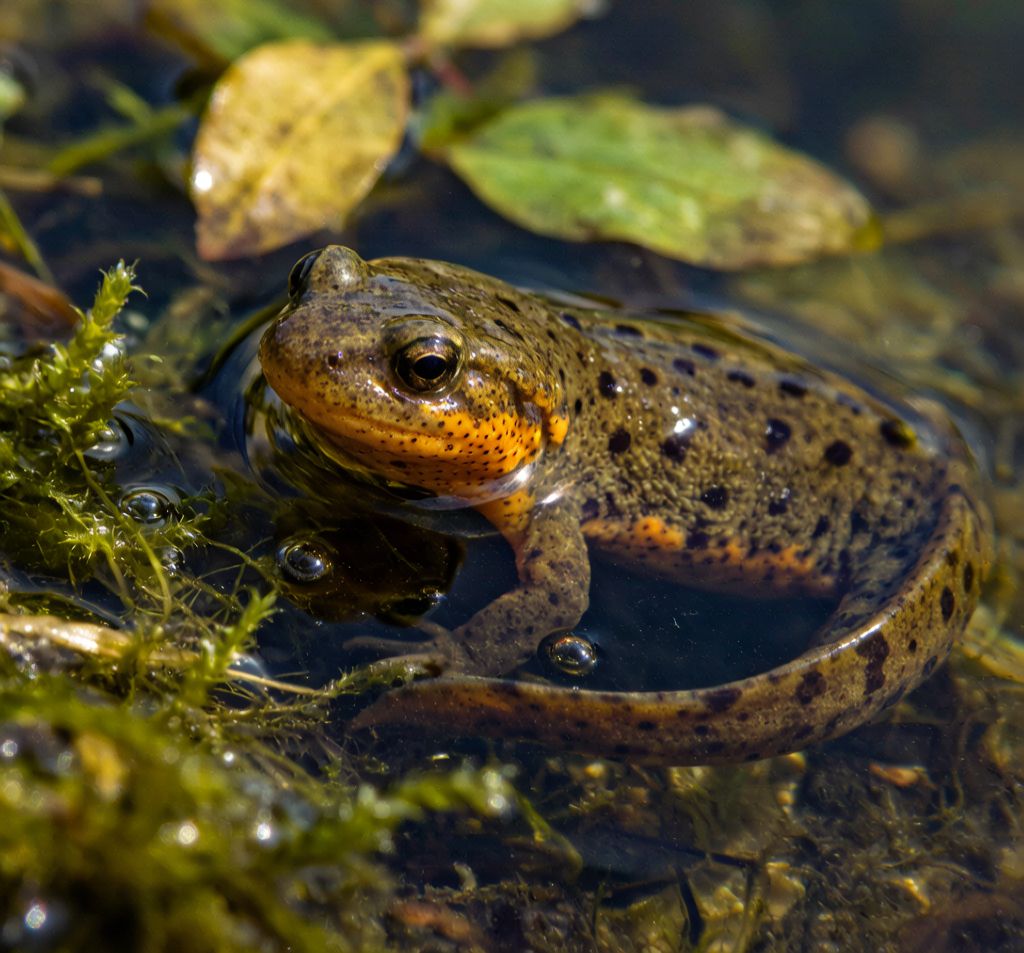
The smooth newt, also known as the common newt, is a medium-sized salamander found throughout most of Europe from the Iberian Peninsula to the Urals, and eastwards to Siberia. It inhabits ponds, lakes, damp forests, and meadows, and is one of the most widespread and frequently encountered amphibians in the region. Like all newts, it undergoes a complex life cycle with an aquatic larval stage followed by a terrestrial juvenile phase before returning to water as an adult to breed. During aquatic courtship, male smooth newts perform one of the most elaborate amphibian courtship dances in Europe.
Taxonomy
The smooth newt (Lissotriton vulgaris) belongs to the family Salamandridae, order Caudata. The genus Lissotriton contains five European newt species formerly placed in the genus Triturus. Its closest relatives include the Italian newt (Lissotriton italicus) and the Balkan newt (Lissotriton graecus), with which it hybridises in southern Europe. Three subspecies are recognised: L. v. vulgaris across most of the range, L. v. graecus in the Balkans, and L. v. meridionalis in Italy and southern France. Phylogenetic analyses indicate that Lissotriton diverged from larger-bodied Triturus newts approximately 20-30 million years ago during the Miocene. The species was formally described by Carl Linnaeus in 1758.
Physical Characteristics
Adults measure 7-11 cm in snout-to-vent length, with females slightly larger than males. The skin is smooth and slightly velvety in terrestrial phase, becoming smoother in the aquatic breeding phase. During breeding, males develop a pronounced, undulating dorsal crest from the neck to the tail tip, along with enlarged cloacal glands and webbed hind feet. Dorsal colouration is olive-green or brownish, with darker spots. The throat is orange or pinkish with dark speckles, a diagnostic feature that distinguishes it from the palmate newt, which has an unmarked yellow throat. The tail is laterally compressed in the aquatic phase.
Habitat
The smooth newt occupies a wide range of terrestrial and aquatic habitats across its range. Terrestrial habitat includes deciduous and mixed forests, hedgerows, gardens, meadows, and scrubland. Breeding requires still or very slow-moving fresh water such as ponds, lakes, and ditches, with a preference for ponds lacking fish. The species tolerates a wider range of water chemistries than many amphibians and can breed in slightly acidic or tannin-stained woodland ponds. Individuals may travel up to 1 km from their breeding pond to terrestrial foraging areas, though most remain within 200-500 m.
Diet
In the aquatic phase, smooth newts are opportunistic predators of small invertebrates found in ponds, including water fleas, mosquito larvae, water snails, oligochaete worms, and occasionally small tadpoles or fish fry. Terrestrial newts feed on slugs, earthworms, spiders, beetles, caterpillars, and woodlice. Cannibalism on smaller newt larvae by larger individuals has been documented in crowded breeding ponds. Both aquatic and terrestrial phases require access to moisture. Adults are vulnerable to birds, fish, and larger amphibians including the common toad.
Reproduction
Adults return to breeding ponds from March to May, with males typically arriving before females. Courtship is elaborate, involving the male performing a courtship dance, fanning his tail towards the female and releasing sperm packets. Fertilisation is internal. Each female lays 100-500 eggs individually, attaching each to submerged vegetation. Eggs develop into aquatic larvae within two to five weeks. Larvae metamorphose into terrestrial efts after 8-14 weeks, losing their gills and fins and developing lungs. These juvenile newts spend two to three years on land before returning to the water to breed. Maximum wild lifespan is approximately 10-14 years.
Conservation
The smooth newt is listed as a species of Least Concern by the IUCN, with an estimated European population in the tens of millions and stable overall trends. However, it faces the same pressures as other European amphibians, including pond loss and degradation, road mortality, and disease. The introduction of fish to breeding ponds can devastate newt populations through predation on eggs and larvae. Chytrid fungus has been detected across Europe but clinical disease has rarely been observed. Conservation actions include creating new breeding ponds away from fish, installing wildlife tunnels under roads, and reducing pesticide use.
Fun Facts
The smooth newt is one of only three British amphibians that can be distinguished by the pattern on the throat: the smooth newt has a speckled orange throat, the palmate newt has an unmarked yellow throat, and the great crested newt has a dark spotted throat. Like other salamanders, smooth newts can regrow lost limbs and tails through a process of cell dedifferentiation, making them a model organism in regenerative biology research. In some parts of their range, smooth newts spend the majority of their lives in water, adopting an almost fully aquatic lifestyle.