 By Iris
Desmana moschata | Russian Desman
Species Profile · Talpidae
Russian Desman
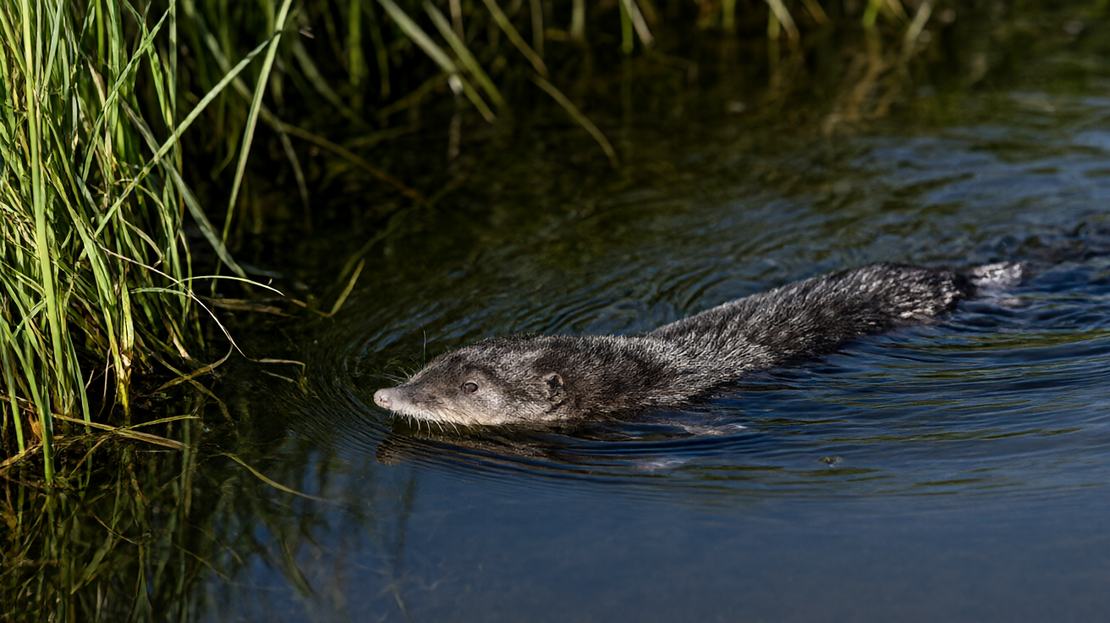
A small furry animal swims through a still backwater at dusk.
Endangered
Length
Tail
Weight
Litter
Range
Rating
The Russian Desman
The mole that swims
A small furry animal swims through a still backwater at dusk, and it leaves a trail of bubbles while nothing else shows. The snout is long and flexible, and it works like a probe in the mud. Tiny eyes sit high on the head.
No ears show, since flaps of skin close over them underwater. Russia holds almost the whole population, and the count keeps dropping, with fewer than 10,000 left across the range. Because the species needs quiet water, every drained oxbow matters.
Family tree
Talpidae, the family it shares with moles
Its proper name is Desmana moschata, one of two desmans alive today, and the other lives in the Pyrenees and looks much the same. Both belong with true moles in a single family. Because the group took to water long ago, the body changed in ways no mole shows.
The Russian animal runs larger than its western relative. Fossil desmans once lived across Europe, and only these two live. Old fur records name the animal across a dozen Russian rivers.
Fur, snout and tail
How to tell one
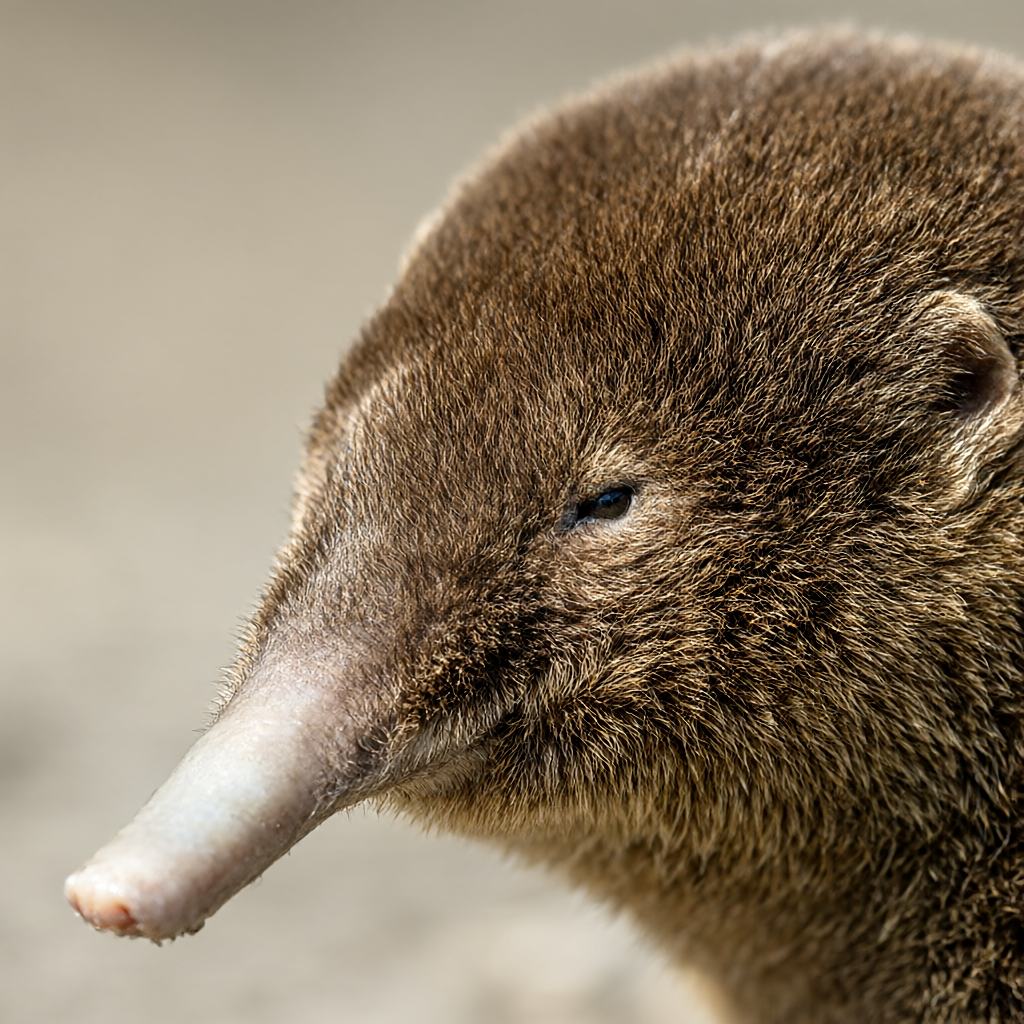
Adults run 18 to 22 cm from nose to rump. The tail adds another 17 to 21 cm, which is nearly as long as the body. Weight falls between 400 and 520 g. Dense brown fur covers the animal, and it traps a layer of air.
That trapped air keeps the skin dry, since the animal never leaves the water for long. The snout is long and mobile, and it bends in every direction. Nostrils sit at the tip, and they close underwater. Hind feet carry webbing, and the tail runs flat and scaly.
Because the tail works as a rudder, the animal turns inside a narrow channel. Front legs stay short, and the claws dig burrows in the bank.
1
2
3
Still water only
Where it lives
Slow rivers, oxbow lakes and quiet channels hold the species. Water depth matters less than stillness, since the animal avoids any current. Banks of soft soil allow burrows above the waterline.
Because floods drown the tunnels, the animal needs water that rises slowly. Frozen winters kill animals in shallow pools. The same backwaters hold an osprey in summer, though it takes fish from the surface rather than from the mud.
Larvae in the silt
What it eats
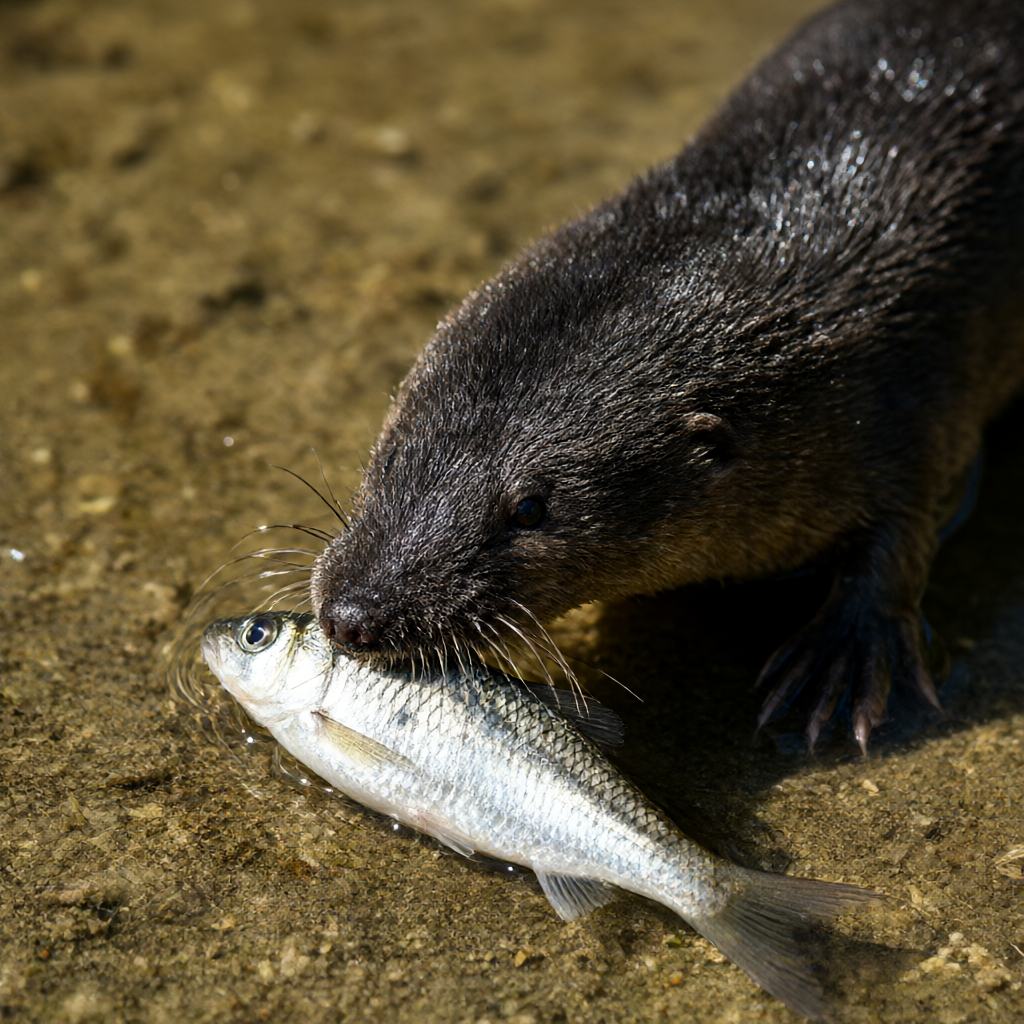
Aquatic insects make up most of the food. Larvae, leeches and small molluscs get taken from the bottom. Fish and amphibians get caught when the chance comes. Because the animal hunts by touch, it works in water too dark for sight.
Its snout probes constantly, and it finds prey hidden in silt. Feeding bouts last a few minutes, and the animal then rests. A platypus hunts the same way on the other side of the world, and both animals rely on a sensitive bill or snout.
A nest above the water
The breeding cycle
Breeding starts in spring, once the floods fall. A nest chamber sits at the end of a burrow above the water. Three to five young are born blind and hairless. Because the female feeds them for a month, she rarely leaves the burrow.
Young animals swim within weeks. Two litters in a year happen in good seasons. Soon after mating the pair separates, and the male takes no part.
Nets and drained oxbows
Conservation
The Red List calls the species Endangered across its range. Drainage removed most of the oxbows the animal needs. Because nets catch it by accident, fishing kills many animals each year.
Fur hunting ended long ago, though the trade once took millions. Dams and channels cut the quiet water into fragments. Protected reserves now hold a few thousand animals.
Side by side
How It Compares
| Trait | Russian Desman | Eurasian Water Shrew |
|---|---|---|
| Family | Talpidae | Soricidae |
| Length | 18-22 cm | 7-10 cm |
| Hind foot | webbed and fringed | fringed with hairs |
| Hunting | feels along silt with the snout | dives for insects and fish |
| Nest | chamber above the water | burrow in the bank |
| Rating | Endangered | Least Concern |
Common misreadings
What People Get Wrong
- Not an otter. The animal is smaller than a cat and nearly blind. It belongs with the true moles, and its fur traps a layer of air that keeps the skin dry through a long dive.
- Not a river animal. It avoids moving water and keeps to still channels. Oxbows, backwaters and quiet reaches suit it, and it needs soft banks where a tunnel can rise above the flood line.
- Not common anywhere. Fewer than ten thousand may remain across the range. Nets set across channels drown the animals, and every oxbow drained for farmland removes a stretch that cannot be replaced.
Going further
Sources and Further Reading
Quick hits
Five things to remember
- It has no visible ears.
- Its tail is nearly as long as its body.
- It hunts by touch alone.
- It closes its nostrils underwater.
- Fewer than 10,000 may stay.
[…] 1787. It is a member of the family Aeshnidae, the hawker dragonflies, and is closely related to the Emperor Dragonfly, another large, conspicuous species of European waters. The genus Aeshna comprises some of the […]
[…] the wing, often in sheltered sunny spots just above the vegetation. Like the related Emperor Dragonfly, the adult is a skilled, twisting flier, but on a much smaller scale, and it helps keep summer gnat […]
[…] within the genus Sympetrum—the darters and meadowhawks. It is a close relative of the Emperor Dragonfly‘s broader relatives and overlaps in habitat with the Southern Hawker, though the two differ […]
[…] to medium dragonflies. It belongs to the family Libellulidae, the skimmers, alongside the larger Emperor Dragonfly. The Common Darter forms a close complex with several similar red darters, but its straight-edged, […]
[…] Orthetrum cancellatum belongs to the family Libellulidae, the skimmers and chasers, a large group of stout, open-water dragonflies. It is one of several Orthetrum skimmers in Europe and is told from them by the combination of a blue, black-tipped male abdomen and clear wings with amber bases. It shares lakes with the Southern Hawker and other dragons, but it flies lower and more evenly, skimming the surface rather than weaving among trees. […]