 By st20113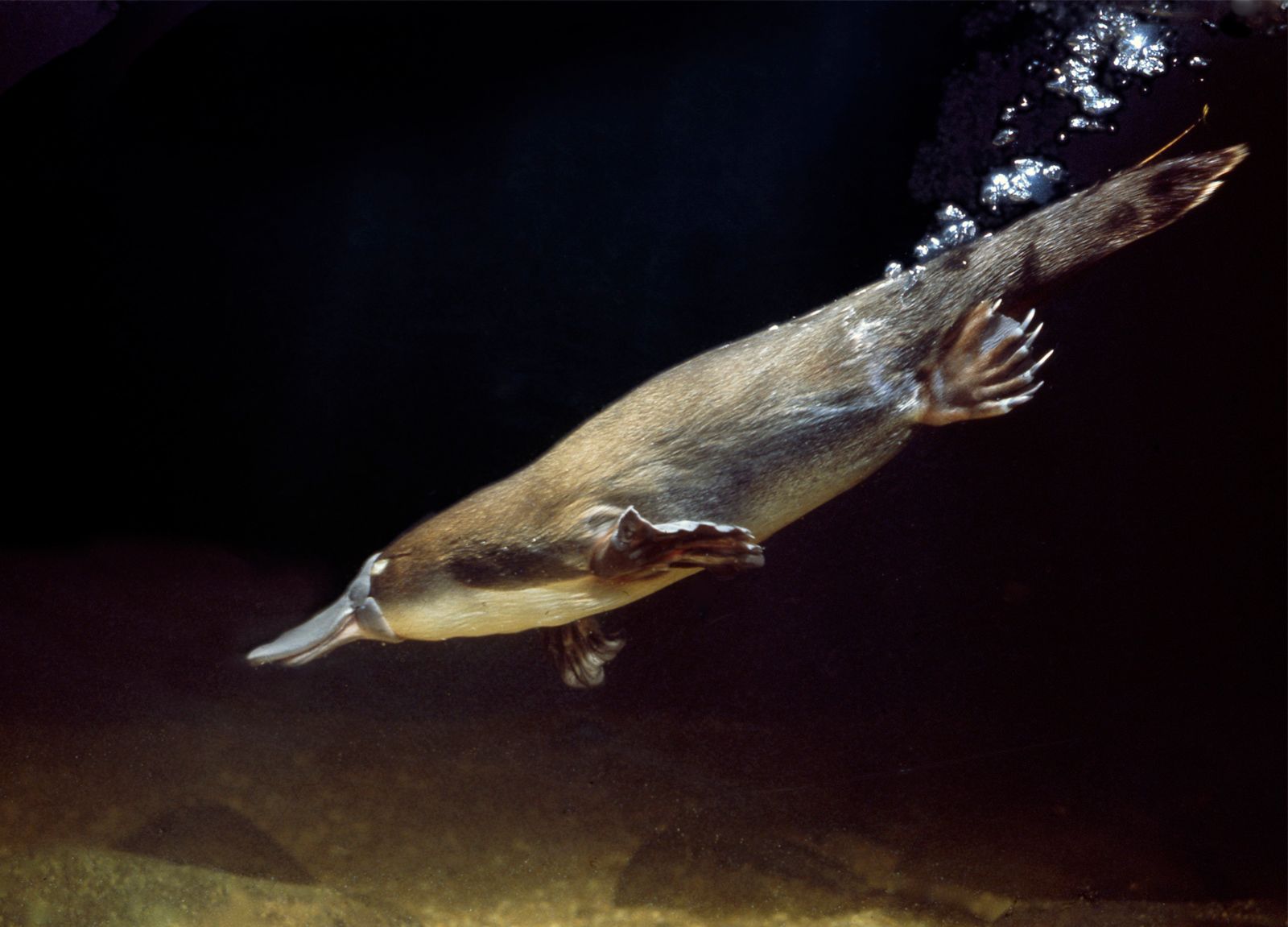
The Platypus (Ornithorhynchus anatinus) is one of the most extraordinary mammals on Earth — a venomous, egg-laying monotreme that confounded European naturalists when first described in the late 18th century. It remains one of evolution’s most remarkable contradictions.
Physical Characteristics
The Platypus possesses a unique combination of traits: the bill and webbed feet of a duck, the tail of a beaver, and the body fur of a mammal. Adults typically measure 40 to 60 centimeters in length and weigh 0.7 to 2.4 kilograms. Its dense, waterproof fur provides excellent insulation while foraging in cold waters.
One of the Platypus’s most distinctive features is the electroreceptive bill. The bill contains thousands of electroreceptors and mechanoreceptors that detect the electrical fields generated by the muscle contractions of prey hidden in muddy riverbeds — a sense unique among mammals.
Male Platypuses carry venomous spurs on their hind legs. The venom, produced seasonally, is powerful enough to cause excruciating pain to humans and is likely used in disputes between males during breeding season.
Habitat and Distribution
Platypuses are found exclusively in eastern Australia and Tasmania, inhabiting freshwater streams, rivers, and lakes. They require clean, slow-moving water with appropriate burrowing sites along the banks. They are sensitive indicators of water quality, declining in areas affected by pollution or drought.
Behavior
Platypuses are primarily nocturnal and crepuscular, spending up to 20 hours per day in their burrows during cold seasons. They are expert swimmers, using their webbed forefeet for propulsion while their hind feet and tail serve as rudders and stabilizers. Underwater, they close both eyes and ears, navigating and hunting entirely by electroreception.
As monotremes, Platypuses lay leathery eggs rather than giving live birth. Females lay one to three eggs and incubate them for about ten days before the young hatch blind and hairless. Lactating mothers produce milk secreted through skin pores rather than through nipples.
Conservation Status
Listed as “Least Concern” but with populations declining, the Platypus faces threats from habitat loss, water pollution, drought, and predation by introduced species like Red Foxes. Climate change and prolonged droughts have caused significant local extinctions in some river systems.