 By st20113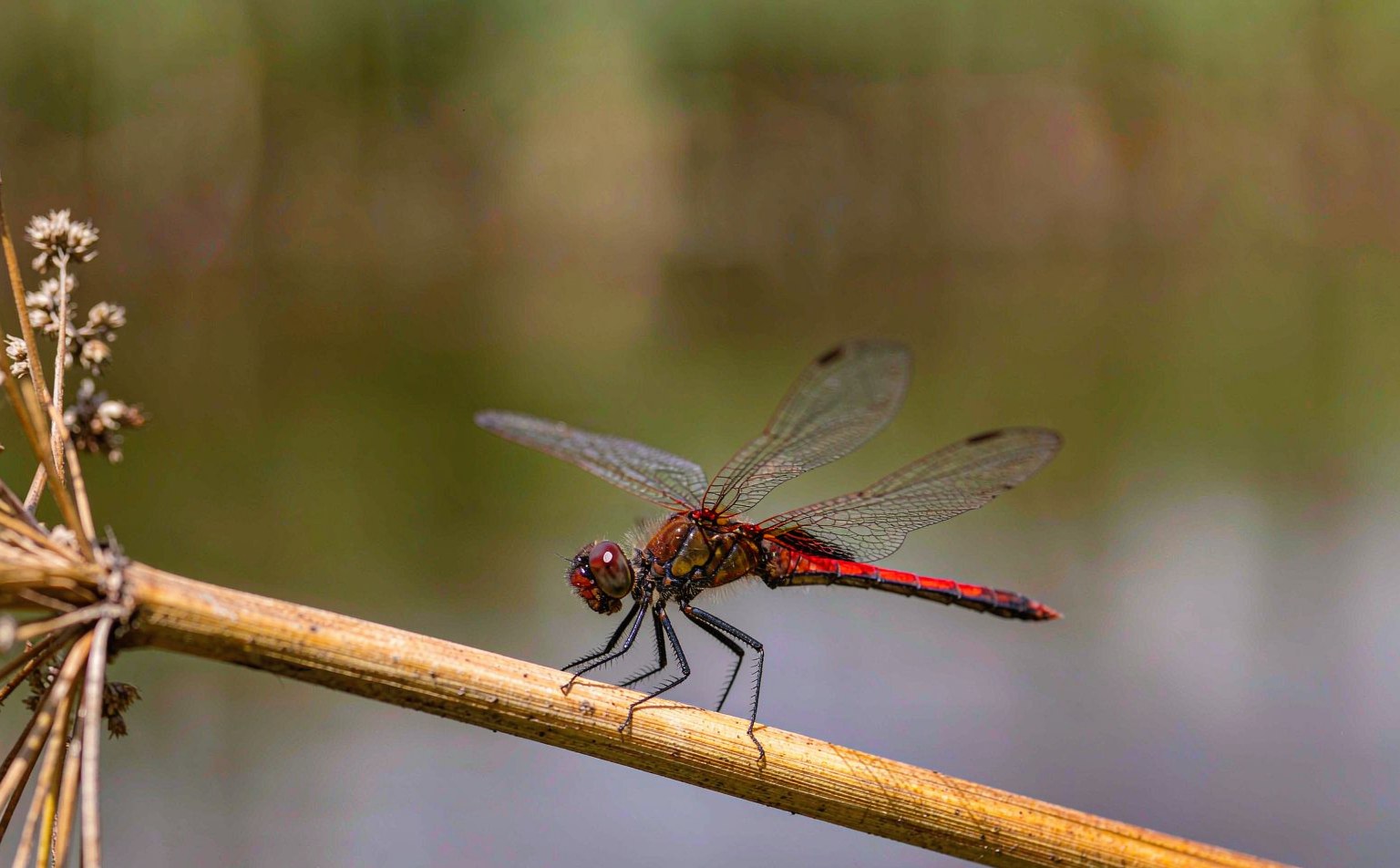
Sympetrum sanguineum | Ruddy Darter
Introduction
The Ruddy Darter (Sympetrum sanguineum) is a compact, fiery dragonfly of southern and central European ponds and lakes, named for the mature male’s blood-red abdomen. Smaller and shyer than the common darters, it hunts from a low perch at the water’s edge and is easily overlooked until the male’s red body catches the sun. It is a warm-water specialist of still, often isolated pools and is a familiar sight in late summer when it shares reed fringes with other Sympetrum species.
Taxonomy
Sympetrum sanguineum was described by Müller in 1764 and belongs to the skimmer family Libellulidae, within the genus Sympetrum—the darters and meadowhawks. It is a close relative of the Emperor Dragonfly‘s broader relatives and overlaps in habitat with the Southern Hawker, though the two differ greatly in size and behaviour. The genus Sympetrum contains many similar red, yellow and black darters across the northern hemisphere, and telling them apart often rests on abdominal markings and leg colour.
Physical Characteristics
Ruddy Darter males are about 4 centimetres long with a wingspan near 6 centimetres. The mature male is striking red—”sanguineum” means bloody—with a slightly tapered, unmarked red abdomen and a broad, black central stripe along the top. The wings are clear with a small amber tint at the base and a dark pterostigma (wing spot). Females and young males are yellow-brown, maturing to red over weeks. A key mark is the all-black legs, contrasting with the pale-legged Common Darter. The eyes are red in males, brown in females. The thorax is hairy and reddish-brown.
Habitat
This dragonfly favours warm, still or slow water: ponds, lakes, gravel pits, canals and quiet backwaters, especially those with abundant marginal reed and sedge and nearby sunny perches. It prefers sites with little water movement and often colonises newly dug or isolated pools that larger dragonflies ignore. It is less tied to moving water than hawkers and avoids fast streams. It ranges from lowlands into warm hill country but is absent from cold, exposed uplands.
Diet
Both adults and larvae are voracious predators. The aquatic nymphs hunt tadpoles, small invertebrates and mosquito larvae from the pond bed, breathing through internal gills. The airborne adult takes flying insects—midges, mosquitoes, small flies and aphids—caught in a basket formed by its legs and transferred to the mouth in flight. It hunts from a perch, darting out to seize prey and returning to the same spot, a behaviour that gives the group its name.
Reproduction
Mating takes place in summer, the male clasping the female behind the head and the pair forming the classic dragonfly “wheel” as she curves her abdomen to receive sperm. The female then oviposits alone or guarded, tapping the water surface to wash eggs into floating vegetation. The nymphs develop over one or two years before climbing a stem to emerge at night, splitting the skin to reveal the adult. Newly emerged darters are pale before colouring up.
Conservation
The Ruddy Darter is common and of Least Concern across its range, and it benefits from the many garden and farmland ponds created in recent decades. It is sensitive to heavy pollution and to the loss of unshaded, vegetated pond margins, but generally tolerates mild disturbance. Its presence in garden ponds makes it one of the more approachable dragonflies for casual observers and a useful teaching species.
Fun Facts
- The name *sanguineum* is Latin for “blood-red,” describing the male’s vivid abdomen.
- Its all-black legs separate it at a glance from the pale-legged Common Darter.
- Newly emerged adults are creamy-yellow and only redden as they mature.
- The nymph can take more than a year to develop before climbing out to transform.
- It often shares a single reed stem “perch” all afternoon between hunting flights.