 By st20113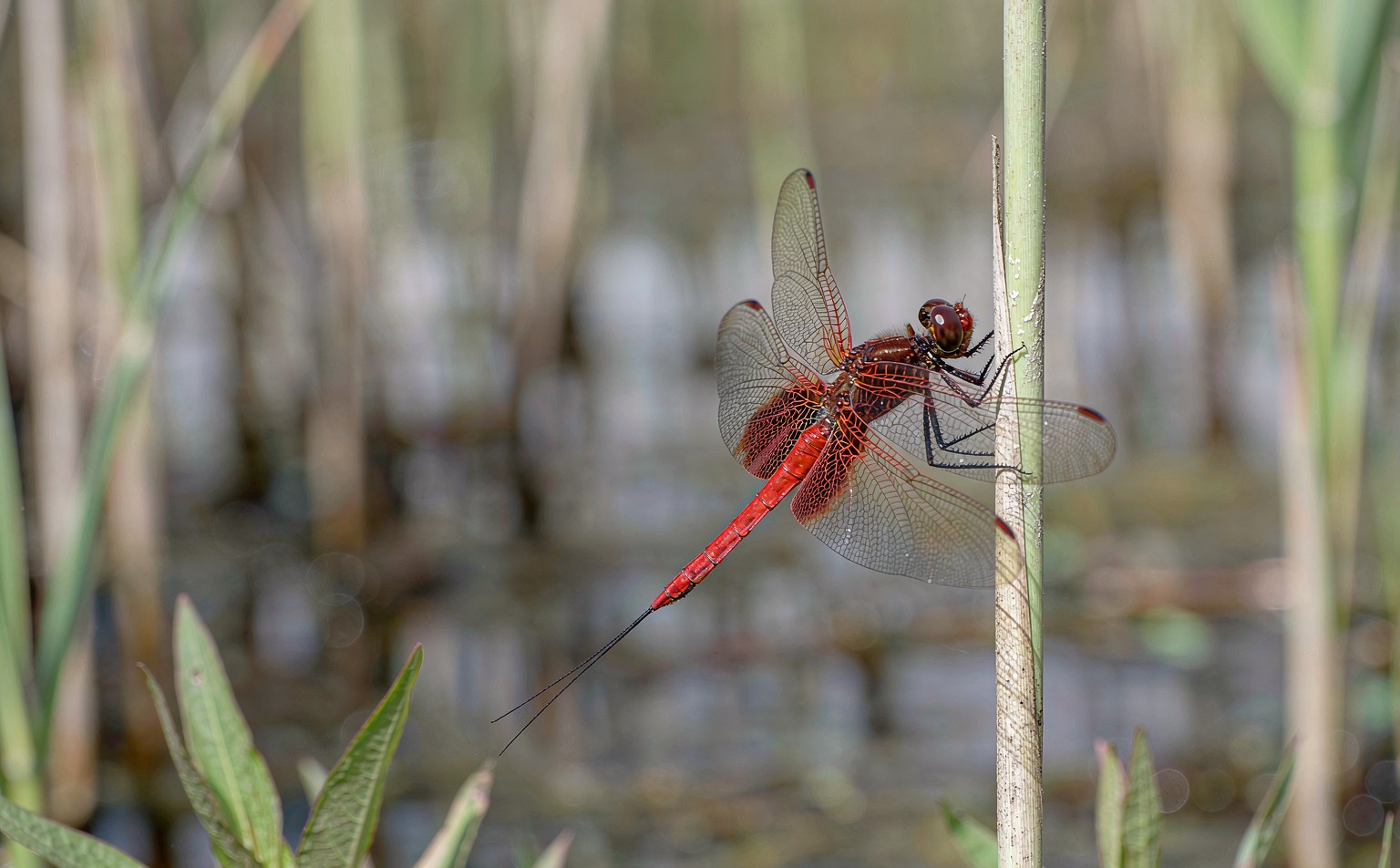
Sympetrum striolatum | Common Darter
Introduction
The Common Darter (Sympetrum striolatum) is one of the most widespread and approachable dragonflies of Europe, familiar from midsummer to late autumn around ponds, lakes, canals and slow rivers. Males are a warm brick-red and females a softer yellow-brown, and both hawk low over the water or perch prominently on reed stems and posts. As one of the last dragonflies flying in the year, it is a staple of the autumn pond scene.
Taxonomy
Sympetrum striolatum was described by Charpentier in 1840 and is a typical member of the genus Sympetrum, the “darters” or “skimmers”, a large group of small to medium dragonflies. It belongs to the family Libellulidae, the skimmers, alongside the larger Emperor Dragonfly. The Common Darter forms a close complex with several similar red darters, but its straight-edged, narrow thorax stripes and long flight season help tell it apart. No major subspecies are recognised across its European range.
Physical Characteristics
Adults are slender, with a body length of about 38 to 45 millimetres and a wingspan near 60 millimetres. Mature males are red with a faint dusting of pale markings, a black-tipped abdomen and small amber patches at the wing bases; the thorax bears fine, pale lines that give the species its name “striolatum” (little-streaked). Females and freshly emerged males are yellow-brown, gradually reddening with age. The wings are clear and held slightly forward when at rest. The eyes are red in males and olive in females, meeting broadly across the top of the head.
Habitat
Common Darters occupy almost any sunny, still or slow-flowing water with open margins: garden ponds, gravel pits, lakes, canals, river backwaters and even temporary pools. They tolerate some disturbance and mild enrichment better than many dragonflies, which explains their abundance near people. They need perches—reeds, posts, bare mud—for hunting and basking, and they shun heavily shaded, fast or acidic water. In late summer they may also turn up well away from water, hunting in warm gardens and fields.
Diet
Both larvae and adults are sharp predators. The aquatic nymphs hunt tadpoles, small invertebrates and even tiny fish among pond vegetation for a year or more before climbing out to emerge. Adults catch flying insects on the wing—midges, gnats, small flies and aphids—seizing them with a basket formed from the spiny legs. A perched darter watches, darts out, snaps up prey and often returns to the same twig, a behaviour that gives the group its name.
Reproduction
Mating takes place in flight, after which the female lays eggs by dipping the tip of her abdomen onto the water surface or onto floating vegetation, often guarded nearby by the male. The eggs sink and the nymphs develop through the summer and following year. Emergence to the adult form happens from June onward, and the flying season runs into October or November in mild years, far longer than most European dragonflies. There is no parental care once the eggs are laid.
Conservation
The Common Darter is widespread and of Least Concern, and it has even benefited from the spread of garden ponds and restored gravel workings. It is sensitive to the loss of breeding pools to infill and to heavy shading, but generally tolerant of moderate nutrient levels. The best support is simply to keep a variety of sunny, vegetated water bodies and to leave marginal plants untrimmed. Its long season makes it one of the easiest dragonflies to watch.
Fun Facts
- It is one of the last dragonflies on the wing, still flying in mild November weather.
- Freshly emerged adults are yellow and only turn red as they mature.
- It returns to the same perch again and again between hunting darts.
- The nymph can take more than a year to grow before climbing out to emerge.
- Its name comes from the fine pale streaks on the thorax of the adult.