 By st20113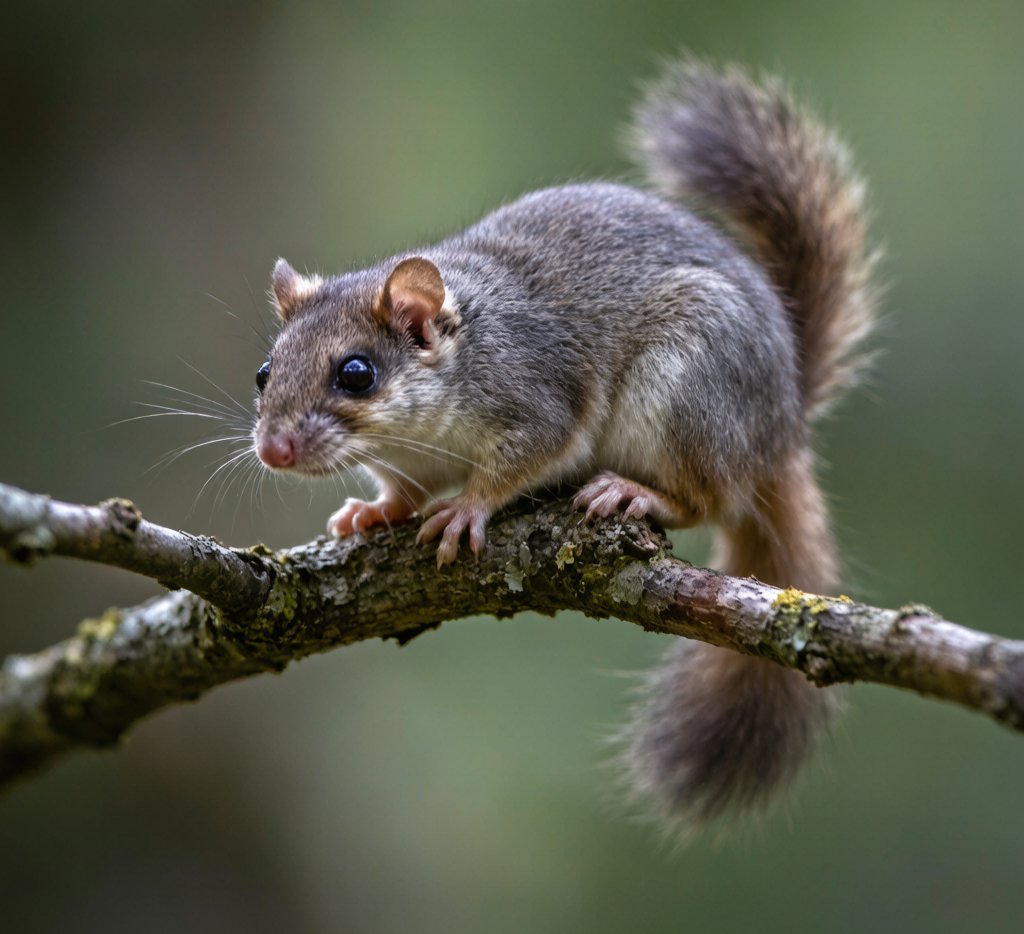
Introduction
The edible dormouse is the largest member of the dormouse family and one of the most distinctive rodents in the forests of Europe and parts of western Asia. With its large dark eyes, thick silver-grey fur, and extraordinarily long hibernation periods, this species occupies a unique niche in the woodland ecosystem. Its common name derives from the ancient Roman practice of fattening these animals in clay pots filled with nuts before eating them as a delicacy. Today, forest fragmentation and habitat loss threaten populations in parts of its range.
Taxonomy
The edible dormouse belongs to the order Rodentia, the family Gliridae—also known as the dormice—and the genus Glis. Its full scientific name, Glis glis, was established by Linnaeus in 1766. The genus Glis is currently considered to contain a single living species, making the edible dormouse a monotypic genus of particular evolutionary significance. Its closest relatives are the other dormouse genera within the family Gliridae, a group of small, nocturnal rodents widely distributed across Africa, Europe, and Asia. No subspecies are currently recognised.
Physical Characteristics
The edible dormouse is a handsome, squirrel-sized rodent with a body length of 14 to 19 centimetres and a long, bushy tail measuring 11 to 15 centimetres. Its fur is thick and soft, ranging from silver-grey to ashy brown on the upperparts and creamy white on the underparts, with a sharp demarcation line characteristic of the species. The feet are equipped with sharp claws adapted for climbing, and the species is an accomplished arboreal athlete capable of leaping considerable distances between branches. The eyes are notably large and dark, an adaptation for nocturnal vision. Weight varies dramatically across the year, from as little as 50 to 80 grams in spring to 150 to 250 grams by late autumn.
Habitat
The edible dormouse inhabits mature deciduous and mixed forests characterised by an abundance of oak, beech, and hornbeam, trees that provide the nuts and seeds on which it depends. The species is strongly associated with old-growth forest with dense understorey vegetation, which provides cover and a rich supply of fruits and invertebrates. It has adapted to secondary habitats and is frequently found in parks, orchards, and large suburban gardens where mature trees provide food and shelter.
Diet
The edible dormouse is an opportunistic omnivore whose diet varies with the seasons. In spring and early summer it feeds on the buds, flowers, and young leaves of trees and shrubs, supplemented by insects and occasionally small vertebrates. From midsummer onward the diet becomes dominated by berries, fruits, and the seeds of forest trees, with acorns, beech nuts, and chestnuts forming the staple in autumn. Its habit of caching food in scattered locations makes it an important disperser of tree seeds. In years of oak or beech mast, edible dormouse populations can increase dramatically.
Reproduction
The edible dormouse has a short, tightly synchronised breeding season beginning in late June or July, shortly after the animals emerge from spring hibernation. Gestation lasts approximately 22 to 30 days, and the female gives birth to a litter of typically three to seven pups in a nest of leaves, grass, and moss inside a tree cavity or rock crevice. The young are born blind and naked but develop rapidly; eyes open at around 21 days, and they are fully weaned by six to eight weeks. Juveniles remain with their mother through their first winter and disperse the following spring. The species breeds only once per year, which limits its reproductive potential and makes it vulnerable to population declines driven by poor mast years. Red fox and red deer are among the most significant predators.
Conservation
The edible dormouse is classified as Least Concern by the IUCN, reflecting its wide distribution and large overall population. However, in parts of its eastern range—including the Balkans and Caucasus—populations have declined as old-growth forest has been converted to agriculture and settlement. Forest management practices that remove old trees and deadwood eliminate the tree cavities the species requires for nesting. In Britain, the edible dormouse was introduced in 1902 and has since spread across England, where its impact on native species is a subject of active research. Conservation in the native range focuses on protecting old-growth forest and retaining dead and dying trees.
Fun Facts
The edible dormouse’s most extraordinary characteristic is its prolonged hibernation, which can last for up to seven months in cold climates. During hibernation, body temperature falls to within a degree or two of ambient temperature, heart rate slows to a few beats per minute, and breathing becomes shallow and infrequent. The species is one of the longest-lived small mammals relative to its body size: individuals in the wild regularly reach five to seven years of age. Its common name refers to the ancient Roman practice of fattening edible dormice in special enclosures called gliraria, where they were fed chestnuts and millet before being served as a delicacy.
[…] array of predators, and it shares the ground and the leaf litter with other rodents such as the edible dormouse and the water vole, each occupying a slightly different niche within the same mosaic of […]
[…] the hazel dormice. It is a true dormouse, belonging to the family Gliridae, alongside the Edible Dormouse, the larger, greyer relative found in central and southern Europe. The Hazel Dormouse is the […]
[…] to Europe and is the only member of its genus found on the continent. It is a close relative of the Edible Dormouse, which shares its arboreal habits but lacks the garden dormouse’s striking facial mask. […]