 By st20113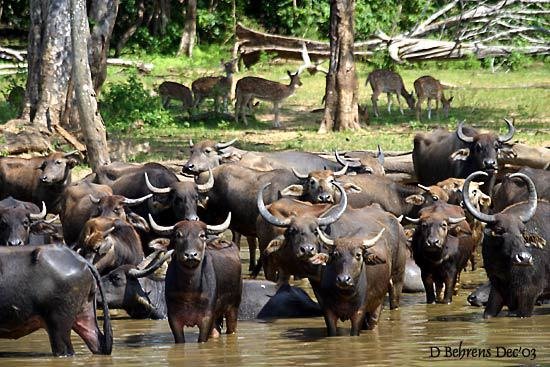
Introduction
The water buffalo (Bubalus bubalis), also known as the domestic buffalo or Asian buffalo, is a large bovid native to the Indian subcontinent and Southeast Asia that has been domesticated for more than five thousand years. Today it is one of the most economically important livestock animals in the world, providing milk, meat, hides, and draft power to hundreds of millions of people. Two principal types are recognized: the river buffalo of the Indian subcontinent and the swamp buffalo of Southeast Asia and China, each adapted to different agricultural traditions.
Taxonomy
The species belongs to the genus Bubalus within the family Bovidae and the subfamily Bovinae. Its closest wild relative is the wild water buffalo (Bubalus arnee), now endangered. The river and swamp types were once considered separate species but are now classified as subspecies, Bubalus bubalis bubalis and Bubalus bubalis carabanesis. Genetic studies confirm their shared ancestry despite clear differences in horn shape, body size, and behavior. The closely related African buffalo belongs to a different genus, while the American bison and the domestic yak share the same tribe but diverged millions of years ago.
Physical Characteristics
Adult water buffalo are massive animals with a broad, sloping back and relatively short, stout legs. River buffalo are usually black, have tightly curled horns, and weigh between 400 and 900 kilograms, while swamp buffalo are slate gray, heavier in the forequarters, and possess lyre-shaped horns that can span more than two meters. Both types have splayed hooves suited to soft, muddy ground and a sparse hair coat that helps them tolerate heat. A distinctive feature is the large, flattened muzzle and wide nostrils that close underwater, an adaptation for their semi-aquatic lifestyle. Their skin is sparsely haired and prone to sunburn, which explains the animal’s famous fondness for wallowing in mud and water.
Habitat
Domestic water buffalo thrive in hot, humid lowlands where rivers, marshes, and rice paddies provide both food and relief from heat. They are especially associated with flooded rice cultivation across India, Pakistan, Bangladesh, China, and Southeast Asia. Wild populations once ranged through river valleys and grasslands, but today only small relic herds survive in protected reserves. The wild boar shares a similar tolerance for wetlands, yet buffalo depend far more directly on open water for thermoregulation and parasite control.
Diet
Water buffalo are grazers that feed chiefly on grasses, aquatic plants, and agricultural by-products such as rice straw and sugarcane tops. Their wide muzzle and muscular tongue allow efficient cropping of coarse vegetation that cattle often reject. In rice-growing regions they are frequently pastured on field stubble and aquatic weeds, converting low-quality forage into valuable milk and meat. Like all ruminants they possess a four-chambered stomach that ferments fibrous plant material through symbiotic microbes, enabling them to extract nutrition from vegetation unsuitable for monogastric animals.
Reproduction
Females reach sexual maturity at around two to three years of age, while males mature slightly later. The gestation period lasts approximately ten and a half months, and a single calf is normally born, though twins are rare. Newborn calves weigh between 25 and 45 kilograms and begin nursing within hours. Mothers are highly protective and may charge perceived threats. In traditional herds, bulls are selected for size, temperament, and working ability, and calves stay with the mother for six to eight months before weaning onto solid forage.
Conservation
Because the domestic water buffalo is abundant and intensively managed, it faces no global extinction risk. The situation is starkly different for its wild ancestor, the wild water buffalo, which the International Union for Conservation of Nature lists as endangered with fewer than four thousand individuals remaining. Habitat loss, hybridization with domestic stock, and disease transmission threaten the remaining wild populations. Conservation programs in India and Thailand protect sanctuary herds and monitor genetic purity to prevent further introgression from domestic animals.
Fun Facts
Water buffalo produce the majority of the world’s buffalo milk, the basis of mozzarella cheese and many South Asian dairy products. Their milk contains more fat and protein than cow milk, making it ideal for butter and ghee. Despite their placid reputation, buffalo are strong swimmers and can cross wide rivers. In parts of Asia they are still used to thresh grain and pull carts, and a single animal can provide a year of draft power for a small farm. Perhaps most surprising, the water buffalo’s fondness for mud is not laziness but a clever cooling strategy that also shields its sensitive skin from biting insects.