 By st20113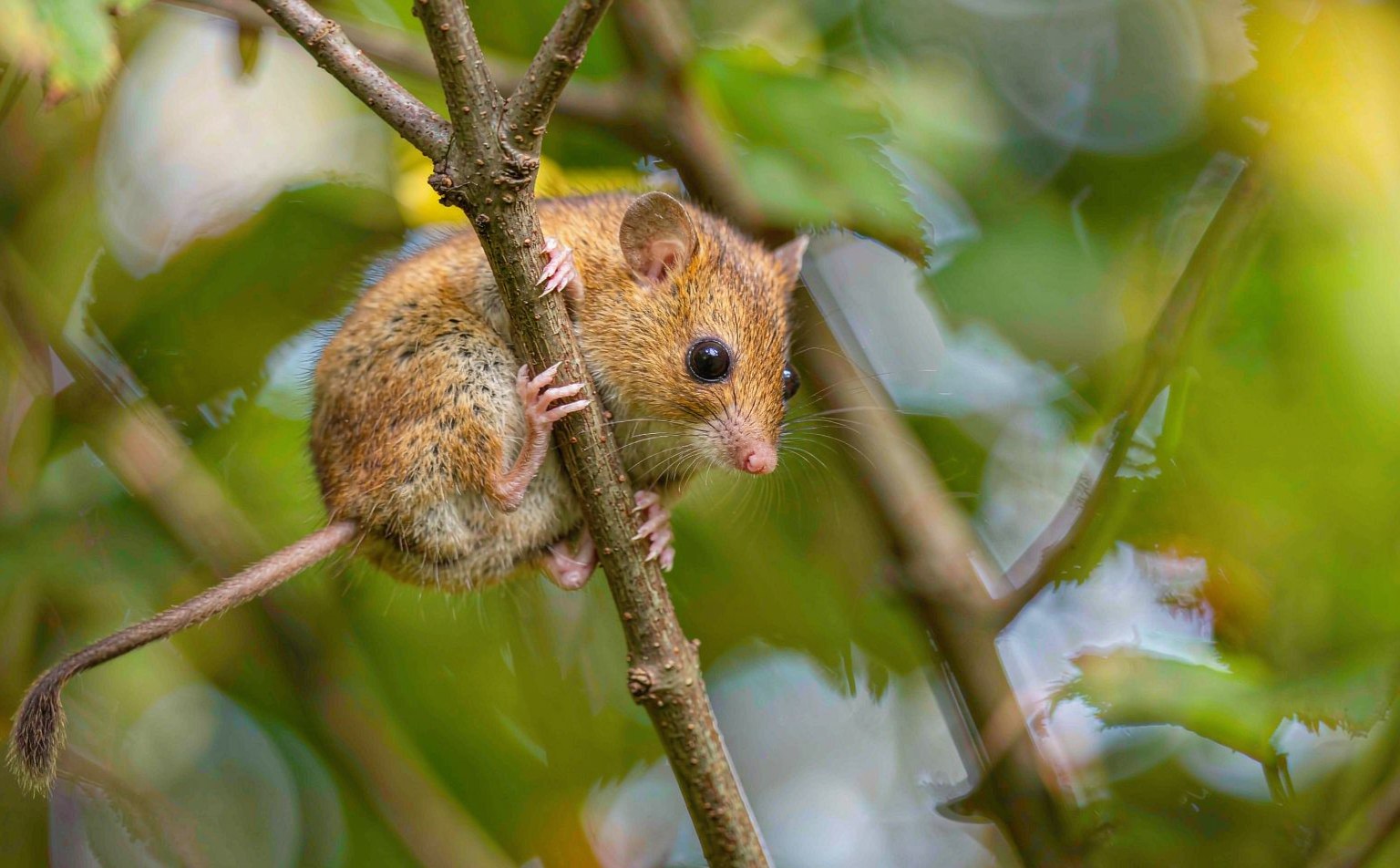
Muscardinus avellanarius | Hazel Dormouse
Introduction
The Hazel Dormouse (Muscardinus avellanarius) is a small, golden-brown rodent and one of the most charming mammals of European woodland, best known for its long, furry tail and its habit of deep, months-long hibernation. An agile climber of hazel, honeysuckle and bramble, it spends most of its life among the twigs and leaves of dense scrub. In Britain it is a protected species and a much-loved symbol of well-managed coppice and hedgerow.
Taxonomy
Muscardinus avellanarius was described by Carl Linnaeus in 1758 and is the only living species in the genus Muscardinus, the hazel dormice. It is a true dormouse, belonging to the family Gliridae, alongside the Edible Dormouse, the larger, greyer relative found in central and southern Europe. The Hazel Dormouse is the smallest and most arboreal of the European dormice. It has no widely accepted subspecies across its range, though animals from warmer regions tend to be slightly larger.
Physical Characteristics
Adults weigh 15 to 30 grams and measure about 60 to 90 millimetres in head-and-body length, with a tail almost as long again. The fur is soft and a warm golden or orange-brown above, paler cream below. The most distinctive features are the long, elegantly tufted tail and the large black eyes set in a rounded face, adaptations for nocturnal, branch-walking life. The ears are small and rounded, and the feet are narrow with sharp claws for gripping bark and stems. In winter the animal becomes cool, limp and barely breathing while it hibernates.
Habitat
Hazel Dormice depend on dense, connected deciduous scrub and woodland with a changing structure of stems: coppiced hazel, thorn thickets, hedgerows and the tangled growth where honeysuckle twines through the canopy. They need flowers and insects in spring, ripening fruits in late summer, and safe, insulated nests for breeding and hibernation. They shun open grassland, conifer plantation and heavily grazed or fragmented land. A mosaic of ages in the same wood, provided by traditional coppicing, suits them best.
Diet
Dormice are flexible feeders that shift with the seasons. In spring they eat the nectar and pollen of early trees such as hazel, willow and oak, becoming important pollinators of some blossoms. Through summer they take insects, especially aphids and caterpillars, with soft fruits and berries as these ripen. In late summer and autumn they gorge on blackberries, honeysuckle berries, hazelnuts and hips to build the fat reserves needed for hibernation. They drink little free water, obtaining moisture from food.
Reproduction
After waking in spring, dormice build woven, football-sized nests of shredded bark and grass in low branches or hedgerow thickets. Females usually raise one, sometimes two, litters of three to seven blind, hairless young between May and September. The young are weaned in about a month and soon climb for themselves. Because breeding depends on a good supply of flowers and fruit, poor seasons lead to smaller or single litters. By October the adults have fattened and descend to the leaf litter or a low nest to hibernate.
Conservation
The Hazel Dormouse has declined across much of northern and western Europe as old coppice and species-rich hedgerows have been lost or over-managed. It is protected in Britain and the subject of reintroduction and monitoring schemes that reconnect woods with hedgerow “corridors”. Conservation works by keeping thick, flowering, fruiting scrub, laying hedges instead of flailing them, and linking habitats so the animals can move. Where these steps are taken, dormouse numbers can recover.
Fun Facts
- It can hibernate for more than half the year, from October almost to May.
- Its tail is nearly as long as its body and helps it balance on the finest twigs.
- It is a handy pollinator, nibbling hazel and oak catkins for pollen in early spring.
- A male may mate with several females across a single active season.
- It nests in a tidy woven ball of grass and bark hidden low in the thicket.