 By st20113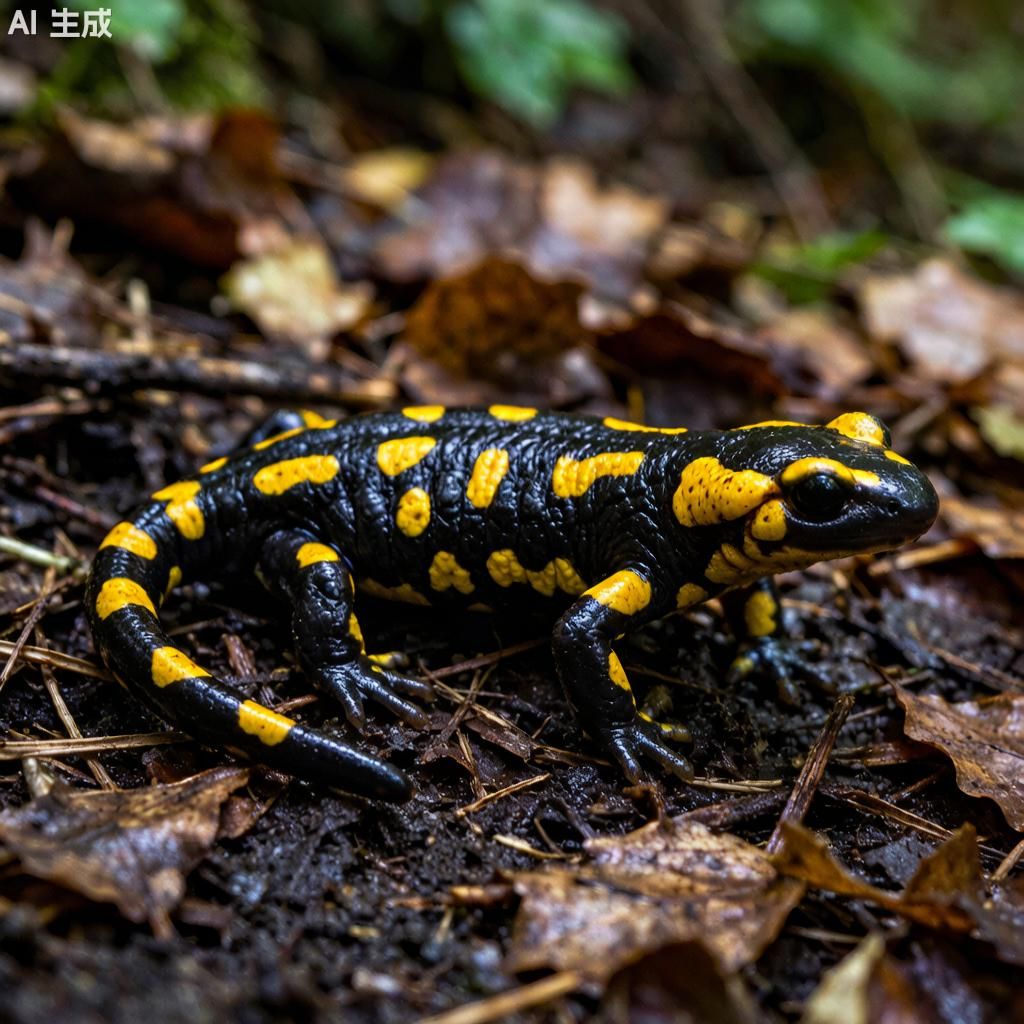
Introduction
The Fire Salamander is one of Europe’s most recognizable amphibians, famous for its striking black body covered with bright yellow or orange spots and stripes. This bold coloration serves as a warning to predators that the salamander is toxic, a defense strategy known as aposematic coloration. Found throughout central and southern Europe, the Fire Salamander inhabits cool, damp forests near streams and springs. It can grow up to 25 centimeters in length, making it one of the largest salamanders in Europe. The name “Fire Salamander” comes from ancient myths that these creatures could survive in fire, a belief that arose because they would flee from logs thrown into fires. In reality, fire kills salamanders quickly, as it does most amphibians.
Taxonomy
The Fire Salamander belongs to the family Salamandridae, which includes newts and other salamanders. Its scientific name, Salamandra salamandra, reflects its status as the type species of its genus. There are numerous recognized subspecies, with variations in spot patterns and coloration across different geographic regions. Some populations display more yellow, while others have more orange markings. The Fire Salamander is closely related to other European salamanders and shares many characteristics with its relatives. Unlike the aquatic octopus vulgaris, salamanders represent ancient amphibian lineages that bridged aquatic and terrestrial life.
Physical Characteristics
Fire Salamanders are robust amphibians with a thick body and relatively short legs. Adults typically measure 15 to 25 centimeters in length, with females generally larger than males. Their most distinctive feature is the contrasting pattern of black background with bright yellow or orange markings, which varies considerably between individuals and populations. The skin contains glands that secrete a toxic substance called samandarin, which can cause convulsions and death in predators. Unlike the monarch butterfly which accumulates toxins from its food, Fire Salamanders produce their own defensive chemicals. They have smooth, moist skin typical of amphibians and prominent parotoid glands behind their eyes that produce toxins.
Habitat
Fire Salamanders inhabit deciduous and mixed forests in hilly or mountainous regions throughout Europe. They require cool, moist environments and are typically found near streams, springs, and other water sources. During the day, they hide under logs, rocks, leaf litter, or in burrows, emerging at night or during rain to hunt. They are most active in spring and autumn when temperatures are moderate and humidity is high. In summer, they may estivate in cool underground refuges during hot, dry periods. Their forest habitats overlap with those of the red fox, though the two species rarely interact. Fire Salamanders are relatively sedentary and often remain within the same small area for years.
Diet
Fire Salamanders are carnivorous predators that feed on a variety of invertebrates. Their diet includes earthworms, slugs, snails, insects, spiders, and centipedes. They hunt primarily by sight and use their sticky tongue to capture prey, similar to how some frogs feed. Unlike most salamanders that must swallow prey in water, Fire Salamanders can eat on land due to their specialized tongue and jaw structure. They are most active during damp nights when invertebrate prey is abundant on the forest floor. Young salamanders have slightly different diets, focusing on smaller prey. While the polar bear hunts larger animals, the Fire Salamander specializes in abundant invertebrate prey.
Reproduction
Fire Salamanders have one of the most unusual reproductive strategies among amphibians. Unlike most salamanders that lay eggs in water, Fire Salamanders are ovoviviparous, meaning females retain eggs inside their bodies until they hatch. Depending on the subspecies, females give birth to either fully formed miniature salamanders or aquatic larvae. Larvae are born in cool streams or springs, where they develop for several months before metamorphosing into terrestrial juveniles. Mating occurs on land, with males depositing a spermatophore that the female picks up. Females can store sperm for extended periods and may produce multiple litters from a single mating.
Conservation
Fire Salamanders are currently listed as a species of Least Concern by the International Union for Conservation of Nature, though populations are declining in many areas. Major threats include habitat destruction, pollution of water sources, and climate change. A emerging threat is the fungal disease caused by Batrachochytrium salamandrivorans, which has caused catastrophic declines in some European salamander populations. Road mortality during seasonal migrations also kills significant numbers. Conservation efforts include habitat protection, maintaining water quality in breeding streams, and monitoring for disease outbreaks. Captive breeding programs serve as insurance against population loss, similar to programs protecting the African lion.
Fun Facts
Fire Salamanders can live for over 50 years in captivity, making them among the longest-lived amphibians. Their toxic skin secretions are so potent that merely handling a salamander and then touching one’s mouth can cause illness. The bright yellow spots are unique to each individual, like fingerprints in humans. Ancient Europeans believed Fire Salamanders could extinguish fire with their cold bodies, a myth that persisted for centuries. These salamanders have been featured in art and mythology throughout European history. Unlike most amphibians, some Fire Salamander subspecies give birth to fully terrestrial young that never have an aquatic larval stage.
[…] This species exemplifies the remarkable metamorphosis characteristic of many amphibians. salamander […]
[…] Spotted Salamander is a strikingly patterned mole salamander of the deciduous forests of eastern North America. […]
[…] fire salamander is the most visually similar species to the spectacled salamander, and both have toxic skin […]
[…] fire salamander overlaps with the golden-striped salamander in Atlantic forest habitats, and both have toxic skin […]