 By Iris
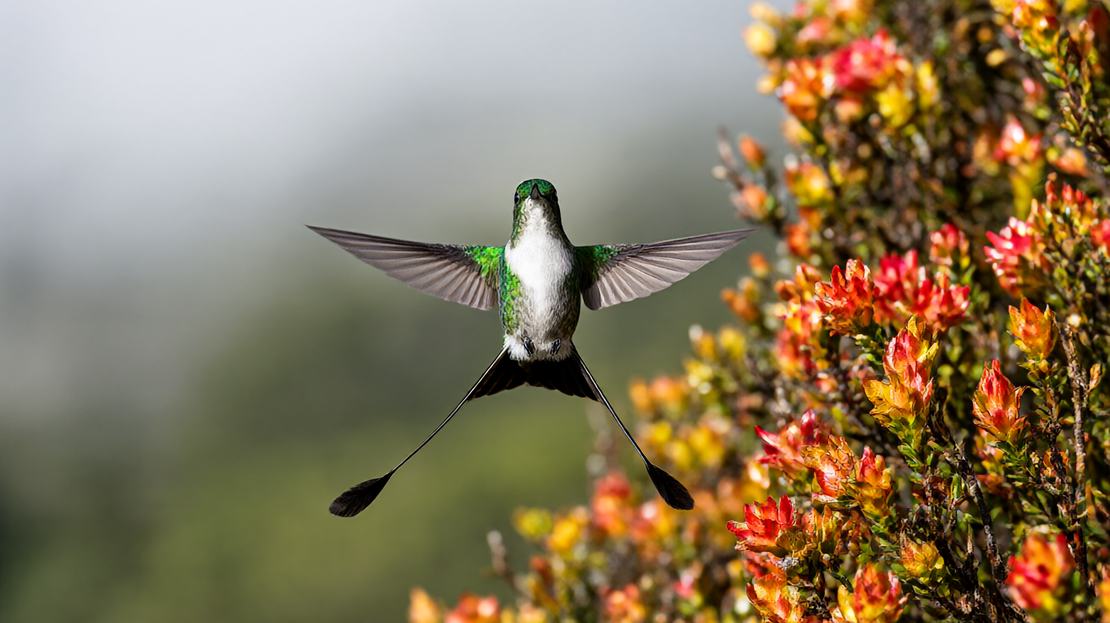
Loddigesia mirabilis | Marvelous Spatuletail
Species Profile · Trochilidae
Marvelous Spatuletail
A hummingbird hovers in front of a red flower.
Endangered
Length
Weight
Tail
Clutch
Range
Rating
The Marvelous Spatuletail
Two rackets on a thread
A hummingbird hovers in front of a red flower. Two feathers trail behind it, each ending in a blue racket. They cross and swing as the bird holds position.
Few birds look stranger. The marvelous spatuletail lives in one valley in northern Peru. Its whole range fits inside a few hillsides.
Because the male’s tail runs longer than his body, he looks unbalanced in flight. That odd shape is the reason the bird is famous.
Family tree
Trochilidae, two feathers and a racket
Its proper name is Loddigesia mirabilis, and it sits alone in its genus. Trochilidae is the family, the hummingbird group. A Ruby-throated Hummingbird crosses a whole gulf on its own wings, though it carries no rackets at all.
Both live on nectar and both hover, and that shared skill came from one ancestor. Only the male grows the rackets. Females look like a different species.
Two blue rackets
How to tell one
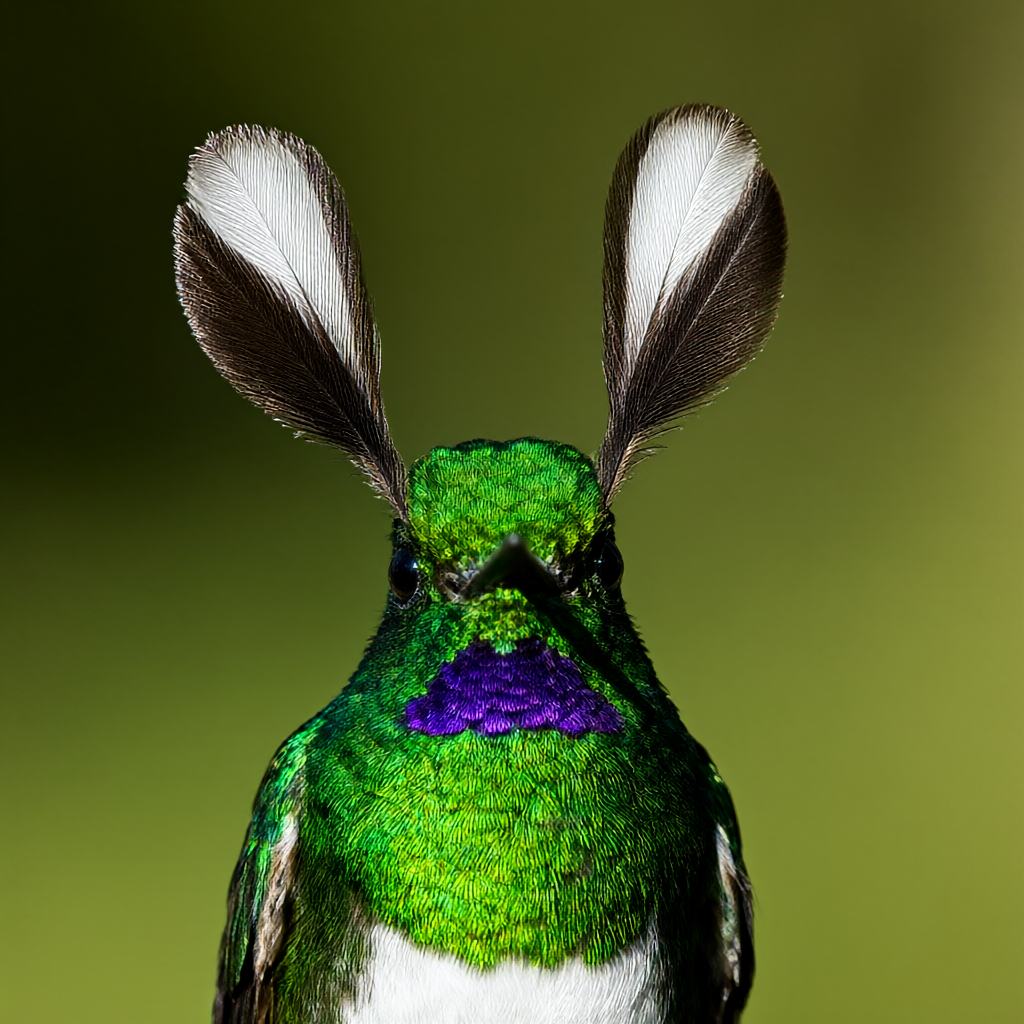
Males run 15 to 16 cm, and most of that is tail. Weight stays near 5 g. Body plumage is bronze-green, with a purple throat that catches the light. The outer tail feathers bend outward, then end in a bare shaft and a flat disc.
Because only two of the tail feathers carry discs, the male’s flight looks uneven. Females stay smaller. They carry short tails and duller colours.
1
2
3
One valley in Peru
Where it lives
Scrub and forest edge in the Utcubamba valley hold the species. The valley sits between dry slopes and cloud forest. Flowering bushes matter more than tall trees, since the bird needs open air beneath the blooms.
Because the bird feeds on scattered blooms, it moves along a daily route that shifts with the rains. That route crosses fences, fields and roads, and none of them offer the cover a hummingbird needs. Loss of the valley floor cut the range into pieces, and each piece now holds a separate group.
Nectar and small insects
What it eats
Nectar supplies most of the food. Small insects add protein, especially when a female is breeding. The bird feeds by hovering, so each flower costs energy.
Because the wings beat so fast, the animal must eat almost constantly through the day. A single bush may draw several birds in one morning. Males defend the best blooms, though they spend more time displaying than feeding.
Two eggs, female alone
The breeding cycle
Males gather at leks and fight with their rackets. Each bird swings the tail forward, then back. Because the rackets are delicate, a fight rarely causes real damage.
Females nest alone, in a tiny cup of moss and lichen. Two eggs go into the cup. Incubation runs about 16 days, and the chicks fledge three weeks later.
Endangered
Conservation
Red List status is Endangered. Deforestation removed much of the valley floor. Because the range is so small, one cleared slope can wipe out a lek that took decades to build. Fires set for pasture reach the scrub above the fields.
Protected land covers part of the valley. Local farmers now leave flowering hedges standing, and the bird has moved into those strips. A single bad season could still undo years of work, since a tiny population has no spare animals.
Side by side
How It Compares
| Trait | Marvelous Spatuletail | Ruby-throated Hummingbird |
|---|---|---|
| Family | Trochilidae | Trochilidae |
| Length | 15-16 cm | 7-9 cm |
| Tail | two blue rackets | notched and short |
| Range | one valley in Peru | eastern North America |
| Migration | none | crosses the Gulf of Mexico |
| Rating | Endangered | Least Concern |
Common misreadings
What People Get Wrong
- Not a display built on colour alone. Shape carries the message. Two outer feathers bend outward and end in flat discs, and the male swings them overhead rather than spreading a coloured fan.
- Not a tail that helps in flight. It costs the bird speed. The rackets add drag at every turn, so the male trades some manoeuvring for a shape that no rival can match.
- Not a wide ranging nectar feeder. The valley holds it. Flowering scrub shifts with the rains inside one small drainage, and the bird follows those blooms rather than any long route.
Going further
Sources and Further Reading
Quick hits
Five things to remember
- The two racket feathers are the longest tail feathers of any bird, measured against body size.
- A male swings his rackets overhead during a display flight.
- The bird weighs less than a sheet of paper folded a few times.
- Its heart beats more than a thousand times a minute while hovering.
- The species was described from a single trade skin, and no one knew the living bird for years.
[…] to fish, birds, and mammals. Mobile and schooling, it shows the success of cephalopods such as the common octopus […]
[…] system of tubes connected to the cloaca — through which it draws oxygenated water. Like the common octopus, this species relies on specialized respiratory adaptations to meet its oxygen demands in […]
[…] pink, or purple depending on the symbiotic algae it hosts. Like other reef organisms such as the common octopus, it depends on healthy reef habitat for shelter and […]
[…] across, marked with brown bands over a creamy background. Along with relatives such as the common octopus, it belongs to the phylum Mollusca, though snails live on land rather than in the […]