 By Iris
Procnias nudicollis | Bare-throated Bellbird
Species Profile · Cotingidae
Bare-throated Bellbird
A white bird opens its beak and the forest goes quiet.
Vulnerable
Length
Weight
Call
Clutch
Incubation
Rating
The Bare-throated Bellbird
One of the loudest birds alive
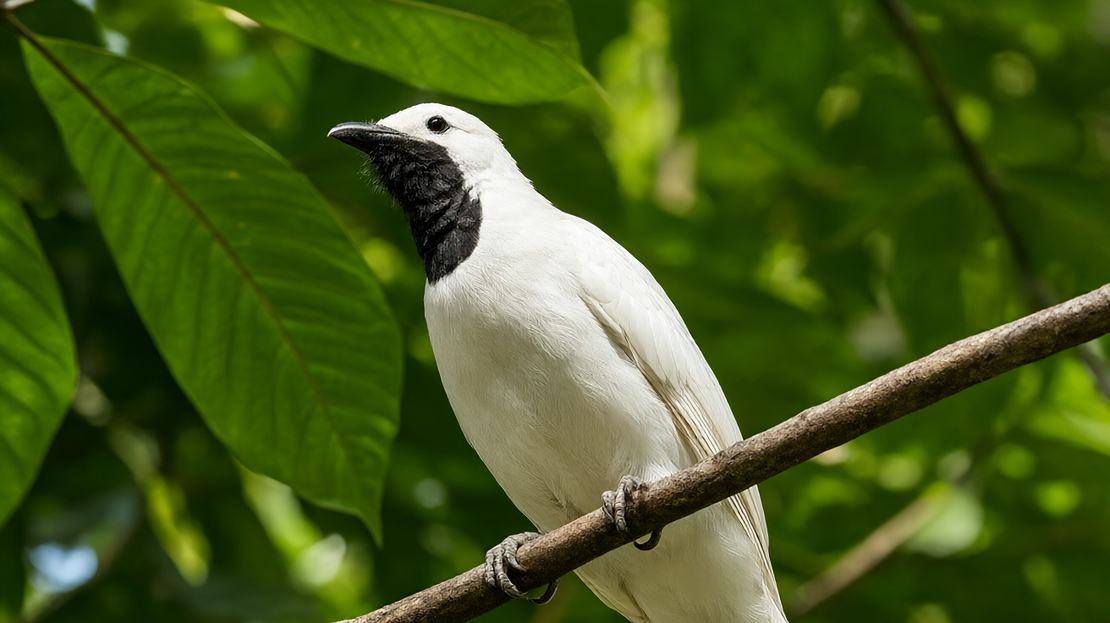
A white bird opens its beak and the forest goes quiet. The call carries a kilometre, and it hurts at close range. Its throat stays bare and green, and the skin shines in the sun.
Nothing else in the Atlantic Forest sounds like it. Males call from a high perch, and they repeat the note for hours. A single male can reach 110 decibels, which makes the species one of the loudest birds on earth.
Family tree
Cotingidae, near the manakins
Procnias nudicollis sits in the cotinga family, Cotingidae. Three other bellbirds share the genus, and all of them live in the Neotropics. Its name joins two Latin words, where nudus means bare and collum means neck. Workers place the family near the manakins, though the two groups differ in build.
The genus split from its relatives several million years ago, since the Atlantic Forest has stayed isolated for most of that time. No subspecies are recognised, and the bird varies little across its range. One rival, the Raggiana Bird of Paradise, displays with plumes instead of a bare throat.
Bare throat, wide gape
How to tell one
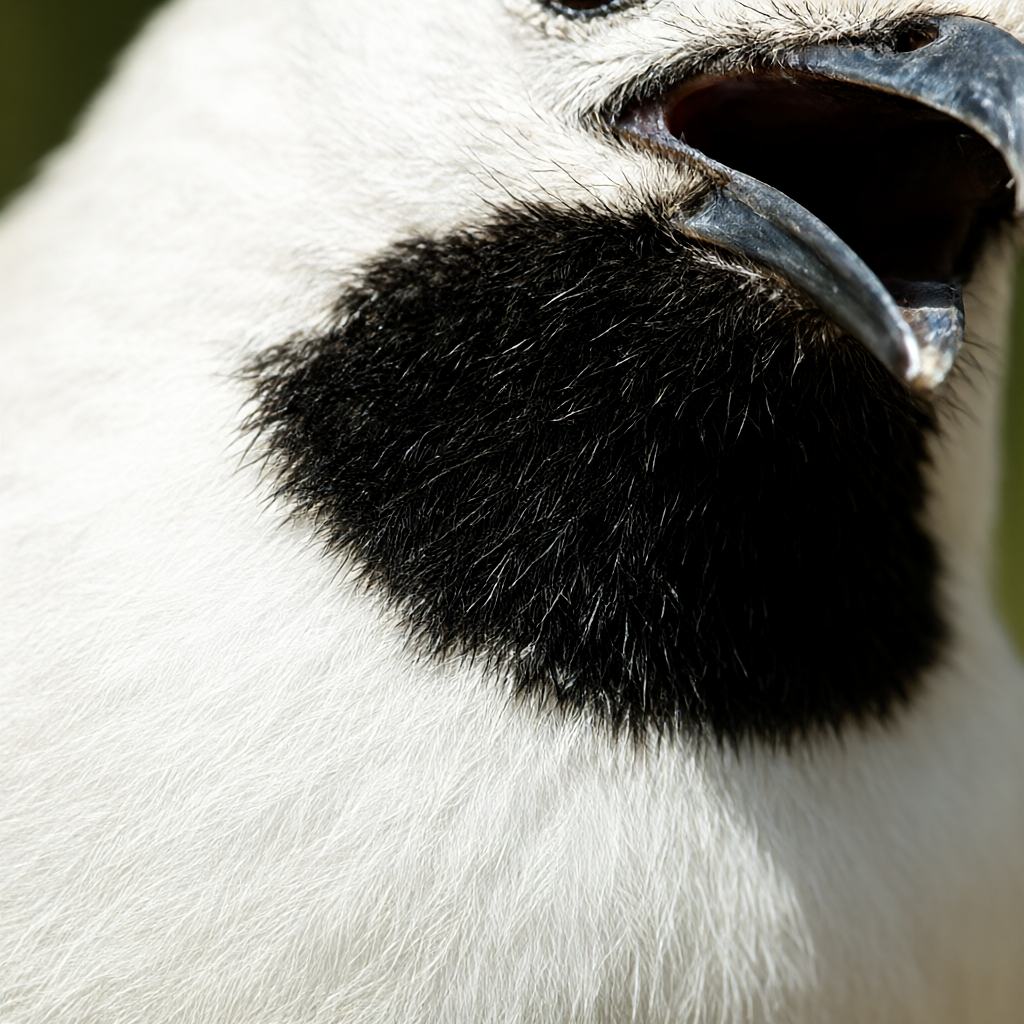
Adults measure 27 to 29 cm, and the tail adds little. Males stay white, and the bare throat shows pale green. Females wear olive green, and they carry streaked underparts. A broad gape helps the bird swallow fruit whole, and the mouth opens wide.
Its legs stay short, since the bird hops rather than walks. Weight runs near 200 g, which is heavy for a bird of that size. The beak stays wide and black, and it looks too big for the head.
1
2
3
Tall Atlantic forest
Where it lives
Montane Atlantic Forest holds the species. It keeps to the canopy. Descent stays rare. Fruiting trees matter most, because the bird follows the crop.
Its range has shrunk to fragments in Brazil, Paraguay and Argentina, and the largest patches now sit far apart. Altitude matters, since the bird breeds above 500 m. Fragments hold few birds, and a clearing between patches stops movement, so each population drifts toward isolation.
Fruit, swallowed whole
What it eats
Fruit forms nearly the whole diet. Seeds pass through the gut, and the bird spreads them across the forest. The bird takes fruit on the wing, and it swallows without chewing.
Because the crop ripens in patches, the bird moves long distances to find it, and one fruiting tree can hold a dozen birds. Insects enter the diet by accident, though the bird does not hunt them. A feeding bird stays silent, since the call would give its perch away.
One egg, female alone
The breeding cycle
Breeding runs from September to February. A male displays from a fixed perch, and he calls until a female arrives. She builds alone, and the nest sits in a fork well hidden by leaves, which keeps the single egg out of sight.
One egg arrives, and incubation takes about three weeks. Because the male offers no care, the female raises the chick alone. The young bird leaves after a month, though it stays dull coloured for a year.
Trapped for cages
Conservation
The Red List calls the species Vulnerable. Trapping drives the decline, because the call makes the bird easy to find, and a single recorded whistle can empty a valley. Its range keeps breaking apart, and each fragment loses birds.
Cage birds sell well, yet the species rarely breeds in captivity. Because the bird needs tall forest, logging removes nest sites for decades. Reserves protect some populations, though enforcement stays weak outside them.
Side by side
How It Compares
| Trait | Bare-throated Bellbird | Raggiana Bird-of-paradise |
|---|---|---|
| Family | Cotingidae | Paradisaeidae |
| Length | 27-29 cm | about 34 cm |
| Display | bare green throat | flank plumes |
| Call | 110 decibels | loud but softer |
| Range | Atlantic Forest | New Guinea |
| Rating | Vulnerable | Least Concern |
Common misreadings
What People Get Wrong
- Not a bird of paradise. Bare skin stands in for plumes. Cotingas and birds of paradise sit far apart on the family tree, though both use display and voice to draw a mate.
- Not a quiet forest bird. The call carries a kilometre. Because the note repeats for hours, a single male gives his position away to anyone within hearing.
- Not a bird of the lowlands. Breeding happens above 500 m. The species needs tall forest, so cleared ground between fragments stops young birds from reaching new patches.
Going further
Sources and Further Reading
Quick hits
Five things to remember
- Its call has been measured above 110 decibels, which rivals a chainsaw.
- The bare throat gives the bird its name, and the skin looks varnished.
- A male returns to the same perch each morning for years.
- Females look so different that early workers took one for another species.
- Locals once kept the bird as a songbird, and the trade emptied whole valleys.
where unrelated species develop similar traits to exploit similar ecological niches. Unlike the African lion, which hunts large prey, numbats specialize on tiny termites. Their closest relatives include other
reached within one to two years. These reproductive habits differ significantly from those of the African lion or other
[…] Old World. It is classified within the family Felidae and shares a recent common ancestry with the African lion, Panthera leo, of the savannas. Closer relatives adapted to cold mountain habitats include the snow […]
[…] range, they are often observed alongside other large African wildlife, including African elephants, African lions, and cape […]
[…] including savannas, grasslands, scrub forests, and rocky mountainous regions. Unlike the African Lion, which prefers open savannas, Striped Hyenas thrive in more rugged landscapes where they can find […]
technique allow them to catch prey that larger predators often overlook. Unlike the more famous African Lion, servals hunt alone and rely on stealth and agility rather than raw