 By st20113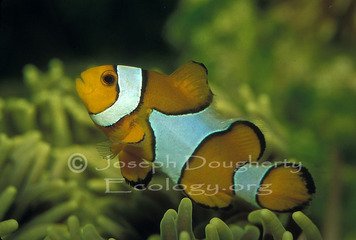
Introduction
The clownfish (Amphiprion ocellaris), also known as the common clownfish, is among the most recognizable marine fish in the world. Native to the warm waters of the Indo-Pacific Ocean, this small but vibrant species measures just 4.3 inches (11 cm) in length. Its striking orange body with distinctive white bars has made it a symbol of coral reef biodiversity and a flagship species for marine conservation worldwide.
Taxonomy
The clownfish belongs to the family Pomacentridae, which includes all damselfishes and anemonefishes. Its scientific classification is Amphiprion ocellaris, with the genus name meaning “around fire” in Greek. The clownfish is one of approximately 30 recognized species within the genus Amphiprion, all sharing the ability to form symbiotic relationships with sea anemones. A closely related species is the clown anemonefish, which occupies similar ecological niches across the Indo-Pacific.
Physical Characteristics
The clownfish displays a bold orange color pattern interrupted by three broad white bars edged with thin black lines. This aposematic coloration warns potential predators of its toxicity, derived from its symbiotic partner’s nematocysts. The clownfish has a deeply compressed, oval-shaped body and rounded caudal fin. Unlike most marine fish, clownfish are protandrous hermaphrodites — all individuals are born male, with the dominant fish in a group transforming into a female. They possess a mucus coating that prevents the sea anemone’s stinging cells from recognizing them as prey.
Habitat
Clownfish are exclusively reef-dwelling species found in association with coral reefs across the Indo-Pacific. Their range extends from the Great Barrier Reef to Southeast Asia, the Philippines, and north to Japan. They inhabit shallow lagoons and reef flats at depths rarely exceeding 50 meters. The clownfish is entirely dependent upon its symbiotic sea anemone for shelter, feeding, and reproduction. Coral reef degradation poses an existential threat to clownfish populations as it reduces suitable anemone habitat. Other reef-dependent marine species include the green sea turtle and the great white shark.
Diet
The clownfish is an omnivorous feeder with a varied diet reflecting the bounty of the coral reef ecosystem. Its primary food sources include zooplankton such as copepods and larval fish, filamentous algae, and small benthic crustaceans. Clownfish are diurnal feeders, active during daylight hours when they venture out from the protective cover of the anemone to forage in the surrounding reef. Their relationship with sea anemones is a classic example of mutualism, where both partners derive survival benefits from the association.
Reproduction
Clownfish exhibit social hierarchy-based reproduction. Within each anemone, a dominant female and her male partner form the breeding pair, while smaller subordinate males form a waiting queue for dominance. The female lays a batch of 100 to 1,000 eggs on a cleaned section of rock or anemone base, which the male fertilizes and guards. The male aerates the eggs by fanning them with his pectoral fins and removes dead eggs to prevent fungal spread. Eggs hatch after approximately 6 to 11 days, releasing larvae that drift in the water column before settling onto a suitable reef and locating a host anemone.
Conservation
While not currently classified as endangered, the clownfish faces significant threats from the global aquarium trade, with millions harvested annually from wild reef populations. Unsustainable collection practices can deplete local populations and damage reef ecosystems. Climate change poses a longer-term threat through coral bleaching, which destroys the sea anemones that clownfish depend upon. Marine conservation organizations promote captive breeding programs and several countries have established marine protected areas. A flagship species rallying ocean conservation efforts is the blue whale, the ocean’s largest inhabitant, while the orca represents the apex predator driving protection of healthy marine ecosystems.
Fun Facts
The clownfish earned the nickname “Nemo” from popular media, though this fame has had mixed consequences for the species. Each clownfish is born male, but if the dominant female of a group dies, her male partner changes sex to become the new female — one of the most remarkable biological transformations in the animal kingdom. Clownfish are extraordinarily site-faithful and rarely venture more than a few meters from their host anemone throughout their lives. A single sea anemone can host an entire community of clownfish, with multiple species sometimes sharing the same host.
[…] of four polyp types working as one. Unlike the social structure seen in reef fish such as the clownfish, the zooids of Physalia cannot survive independently. Recent genetic work continues to clarify […]
[…] the leafy seadragon is more closely related to the weedy seadragon than to the colorful clownfish, which occupies an entirely different branch of reef fishes. Genetic research indicates that […]
in gardens, though separated by immense evolutionary distance and habitat. Unlike the reef-dwelling clownfish, which thrives in sunlit shallows, the giant isopod is adapted to perpetual darkness. Several