 By st20113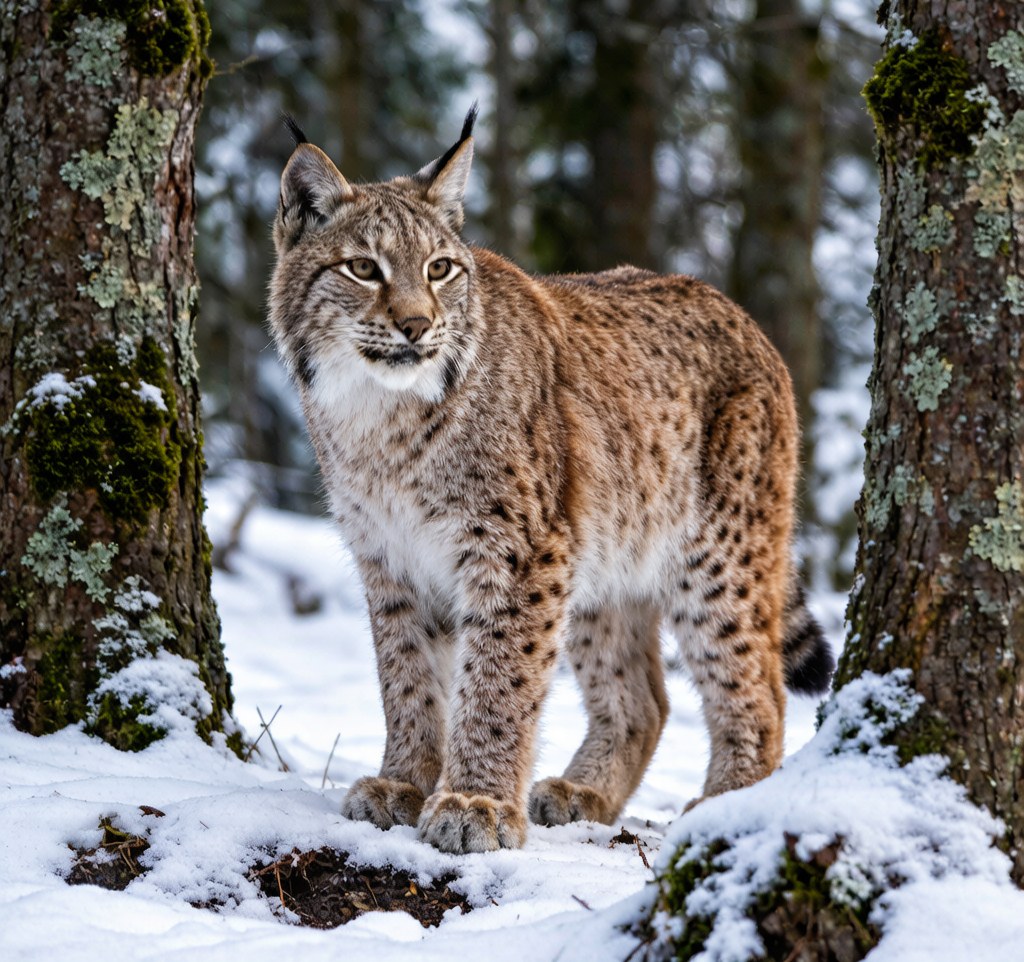
Introduction
The Eurasian lynx (Lynx lynx) is the largest of the four lynx species and a top predator across Europe, Siberia, and Central Asia. Known for its striking tufted ears, short tail, and powerful build, this elusive feline has survived centuries of persecution and now represents one of the most successful large carnivore conservation stories in Europe. Eurasian lynx populations have rebounded in several countries through protection and reintroduction programs. Their presence in an ecosystem indicates healthy forest environments with abundant prey. Unlike the snow-dwelling snow leopard, which inhabits high-altitude mountains, the Eurasian lynx occupies temperate and boreal forests across a vast latitudinal range.
Taxonomy
The Eurasian lynx belongs to the family Felidae and the genus Lynx, which also includes the bobcat, Canada lynx, and Iberian lynx. Swedish naturalist Carl Linnaeus first described the species in 1758. Several subspecies are recognized across the lynx’s extensive range, including Lynx lynx lynx in Northern Europe, Lynx lynx martinoi in the Balkans, Lynx lynx dinniki in the Caucasus, and Lynx lynx wrangeli in Siberia. Genetic studies have helped clarify the relationships between these subspecies. As a member of the Felidae family, the Eurasian lynx shares a common ancestry with the lion, though the two lineages diverged millions of years ago to occupy very different ecological niches.
Physical Characteristics
The Eurasian lynx is a medium to large cat with a sturdy body, long legs, and large broad paws adapted for walking on snow. Adult males weigh between 18 and 30 kilograms, while females are smaller at 12 to 21 kilograms. Their coat varies seasonally and geographically, ranging from reddish-brown in summer to thick silver-grey fur in winter. The most recognizable features include prominent black ear tufts, a short black-tipped tail, and distinctive sideburns of fur framing the face. Their large padded paws function like natural snowshoes, distributing body weight over soft snow. Unlike the soaring bald eagle which hunts from the sky, the Eurasian lynx relies on exceptional hearing and vision to locate prey in dense forest undergrowth.
Habitat
Eurasian lynx occupy a wider range of habitats than any other feline species. They inhabit dense boreal forests, temperate woodlands, mountainous regions, and even tundra edges. Their range extends from Western Europe through Russia to the Pacific coast, and from the Arctic Circle south to the Himalayas. They are highly adaptable but prefer areas with dense vegetation cover for stalking prey and raising young. Lynx territories can span from 100 to over 1,000 square kilometers depending on prey density. The brown bear shares much of the Eurasian lynx’s range, and these two large carnivores coexist across vast tracts of boreal forest in Scandinavia and Russia.
Diet
Eurasian lynx are obligate carnivores that primarily hunt roe deer, their preferred prey throughout most of their range. They also take chamois, musk deer, young wild boar, hares, squirrels, birds, and occasionally foxes. Lynx are ambush hunters that rely on stealth and a short powerful sprint to catch their prey. They typically kill with a bite to the throat and may cache uneaten food for later consumption. A single lynx kills approximately 40 to 70 deer per year. In areas where roe deer are scarce, they subsist on smaller prey. The red fox often falls victim to lynx predation, as both species compete for similar food resources in forest ecosystems.
Reproduction
Eurasian lynx reach sexual maturity at around two years of age, though males typically do not breed until they establish a territory. The mating season occurs from January to March with a gestation period of 67 to 74 days. Females give birth to one to four kittens in a well-concealed den, often among rocks or under tree roots. Kittens weigh around 250 to 300 grams at birth and have spotted coats that provide excellent camouflage. They open their eyes after 10 to 12 days and begin eating solid meat at about six weeks. Young lynx remain with their mother until the following breeding season, learning essential hunting skills. During spring, the calls of ravens often signal a lynx kill, and the common raven is a frequent scavenger at lynx kills throughout the forest.
Conservation
The Eurasian lynx is classified as Least Concern on the IUCN Red List, with an estimated population of 50,000 to 80,000 individuals across its vast range. However, populations in Western and Central Europe remain fragmented and vulnerable. In several countries including Switzerland, Slovenia, and France, reintroduction programs have successfully re-established lynx populations. The main threats include habitat fragmentation, poaching, and road mortality. Public attitudes have shifted positively in many areas, reducing persecution. Conservation efforts focus on maintaining habitat corridors between populations, regulating hunting quotas, and mitigating conflicts with livestock farmers through compensation programs. The Eurasian lynx’s recovery demonstrates that large carnivores can coexist with human activities when properly managed.
Fun Facts
- The tufts on a lynx’s ears are thought to enhance their already exceptional hearing by funneling sound inward.
- Their broad furry paws act as natural snowshoes, allowing them to hunt effectively in deep winter snow.
- Eurasian lynx are mostly solitary, with male and female territories overlapping only for breeding.
- They can leap up to four meters horizontally when ambushing prey in the forest undergrowth.
- Unlike most cats, lynx are not averse to water and will swim across rivers when necessary.
[…] elevations up to 3,000 meters. The dense vegetation offers protection from predators such as the Lynx, which shares much of its range with this hare. Habitat quality significantly influences population […]