 By st20113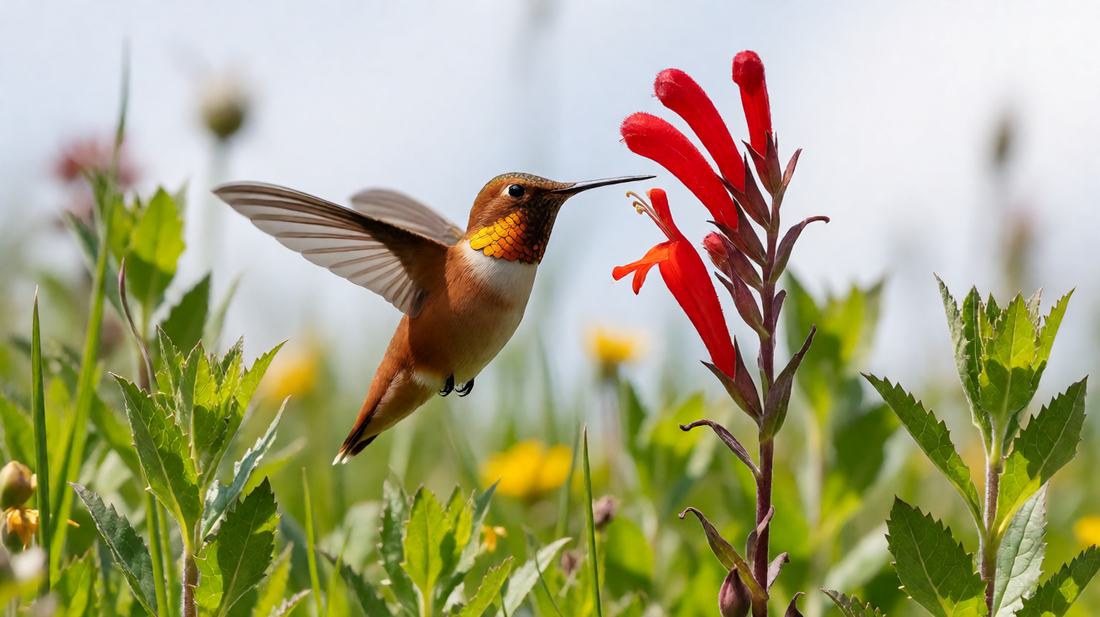
Selasphorus rufus | Rufous Hummingbird
Species Profile · Trochilidae
Rufous Hummingbird
A 4 gram migrant that hovers at western meadow flowers, beats its wings some 50 times a second, and flies up to 3200 km between Alaska and Mexico.
Near Threatened
Body length
Weight
Wingspan
Migration
Clutch
Rating
The Rufous Hummingbird
The longest journey for its size
A tiny bird hovers at a flower in a western mountain meadow. Its wings blur too fast to see. The throat patch flashes orange-red.
That flash is a warning to rivals. Weight sits between 2 and 5 g. Summer is spent far to the north.
Winter is passed in southern Mexico, in fact. The trip covers up to 3200 km. Because the bird weighs less than a coin, that long journey is one of the greatest feats of travel in the whole bird world.
Family tree
Trochilidae, the hummingbirds
The species belongs to the family Trochilidae. Johann Friedrich Gmelin named it in 1788. Nine species now sit in the genus Selasphorus. All are small, feisty North American birds.
The butterfly is an insect, not a bird at all. Both hover at flowers and sip nectar. One flies on wings of thin clear membrane, however, while the other beats its small feathers some 50 times every second.
Smaller than a coin
How to tell one
Body length runs 7 to 9 cm. Weight sits between 2 and 5 g. Wingspan is about 11 cm.
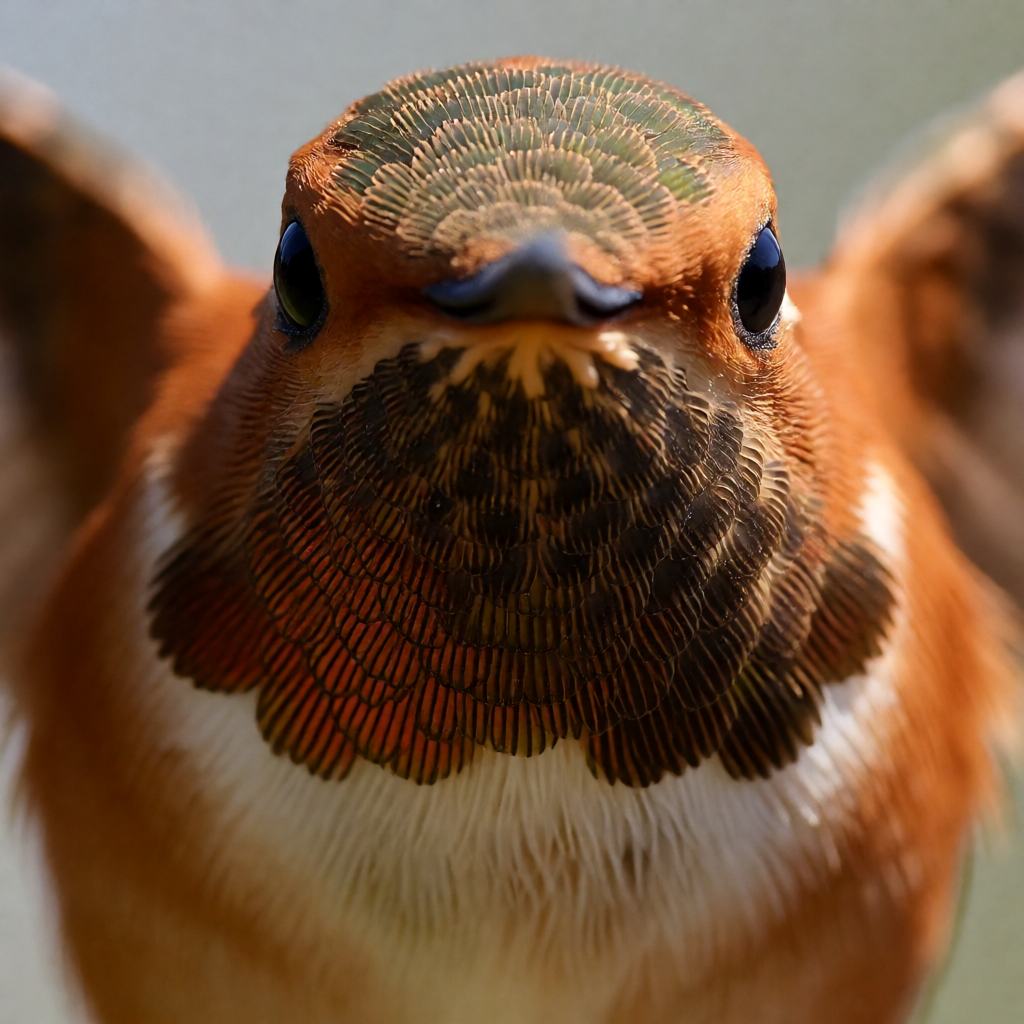
Males are rusty orange on the back. A red gorget covers the throat. Females are green above, with orange flanks.
The bill is straight and very thin. In addition, tail feathers come to a point. Nothing about the bird is heavy, and the whole skeleton weighs far less than the feather coat that covers it.
1
2
3
Meadows that follow the bloom
Where it lives
Breeding ground lies in western North America. Alaska marks the northern edge. Montane meadows are prime summer habitat.
Open conifer forest is used as well. Winter is spent in Mexican pine-oak woods. Gardens and feeders help along the way.
Migrants funnel through the Rocky Mountains. Because the bird follows blooming flowers north each spring, it tracks the season rather than any fixed place on the map.
Nectar and small insects
What it eats
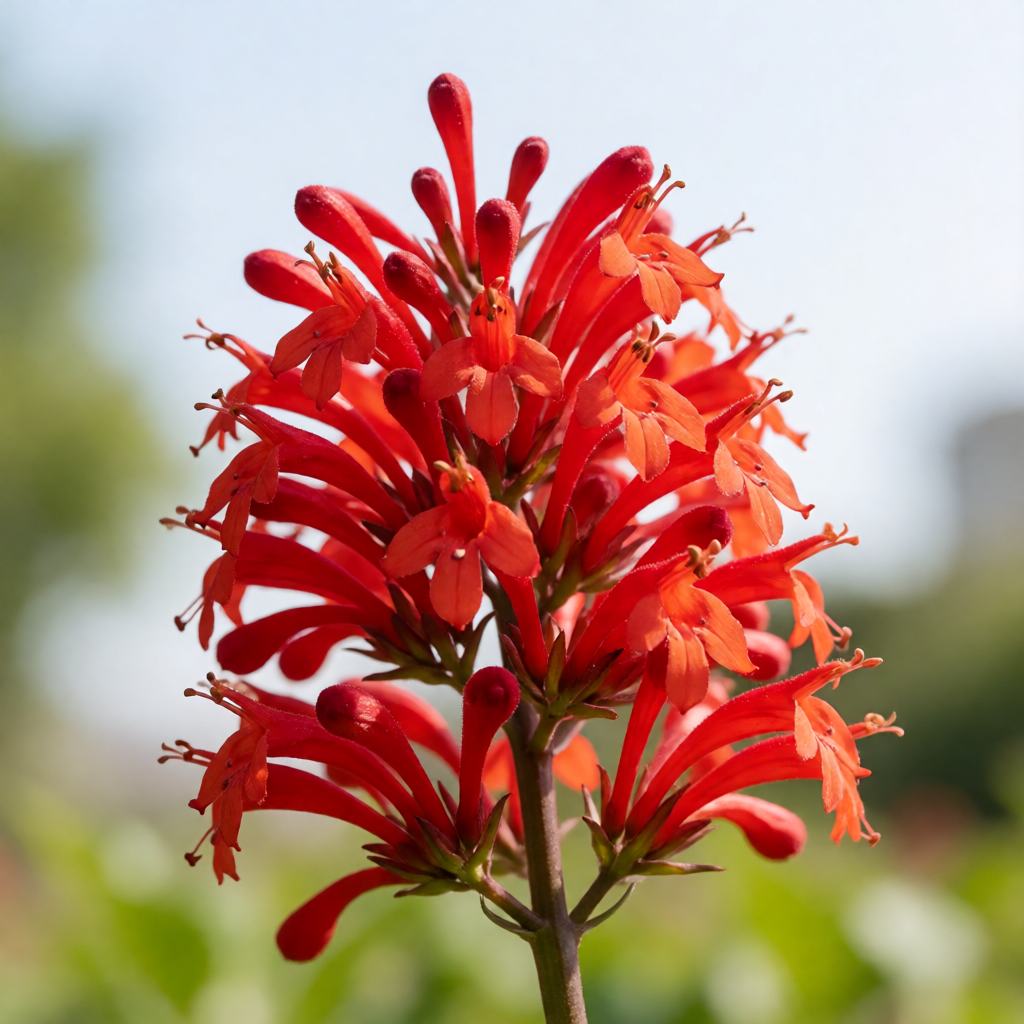
Nectar is the main fuel. Flowers with red tubes are preferred. Small insects are eaten too.
Spiders are taken from leaves. Tree sap is used at times, of course. Feeding happens every 10 to 15 minutes.
A bird may visit 1000 flowers a day. Sugar water at feeders helps in cold snaps. Because hovering burns energy faster than almost any other way to move, the bird must feed all day and then fall into torpor at night.
A nest the size of a walnut
The breeding cycle
Males arrive first in spring. Each one claims a patch of flowers. They dive at rivals and at intruders. Females build the nest alone.
Plant down and spider silk are used. Lichens are stuck on the outside. Two eggs are laid, each one tiny. Incubation lasts 15 to 17 days.
Young fledge at about 25 days, even so. Because the nest is the size of a walnut shell, two chicks fill it completely and the mother must feed them every few minutes.
Near Threatened
Conservation
The IUCN lists the species as Near Threatened. It was Least Concern until 2020. Numbers sit near 22 million birds.
The trend is down, however. Counts show a fall of about 2.1% a year. Climate change is the likely cause.
Pesticides cut the insect supply. Unlike the peacock, which lives well on farms and in towns, this bird needs wild flowers along a very long migration route. That long route makes it hard to help, since no single park or garden can protect the whole chain of stops the birds rely on.
Side by side
How It Compares
| Trait | Rufous Hummingbird | Anna’s Hummingbird |
|---|---|---|
| Migration | up to 3200 km, Alaska to Mexico | mostly resident year-round |
| Throat | red-orange gorget in males | iridescent rose-pink crown and throat |
| Weight | 2 to 5 g | 3 to 6 g |
| Range | western North America | Pacific coast, North America |
| Status trend | Near Threatened, declining | Least Concern, expanding |
| IUCN status | Near Threatened | Least Concern |
Common misreadings
What People Get Wrong
- Hummingbirds drink only nectar. They also eat insects and spiders.
- A tiny bird cannot migrate far. This one flies up to 3200 km.
- The throat is always red. Only adult males flash the gorget.
Going further
Sources and Further Reading
- Wikipedia, Rufous hummingbird
- IUCN Red List, Selasphorus rufus. The IUCN Red List of Threatened Species.
- Animal Diversity Web, University of Michigan. Selasphorus rufus.
- Healy, S. and W. A. Calder. 2020. Rufous Hummingbird. Birds of the World.
Quick hits
Five things to remember
- The migration covers up to 3200 km each year.
- Heart rate can pass 1200 beats a minute.
- Birds fall into torpor on cold nights to save energy.
- One bird may visit 1000 flowers in a day.
- A nest is about the size of a walnut shell.