 By st20113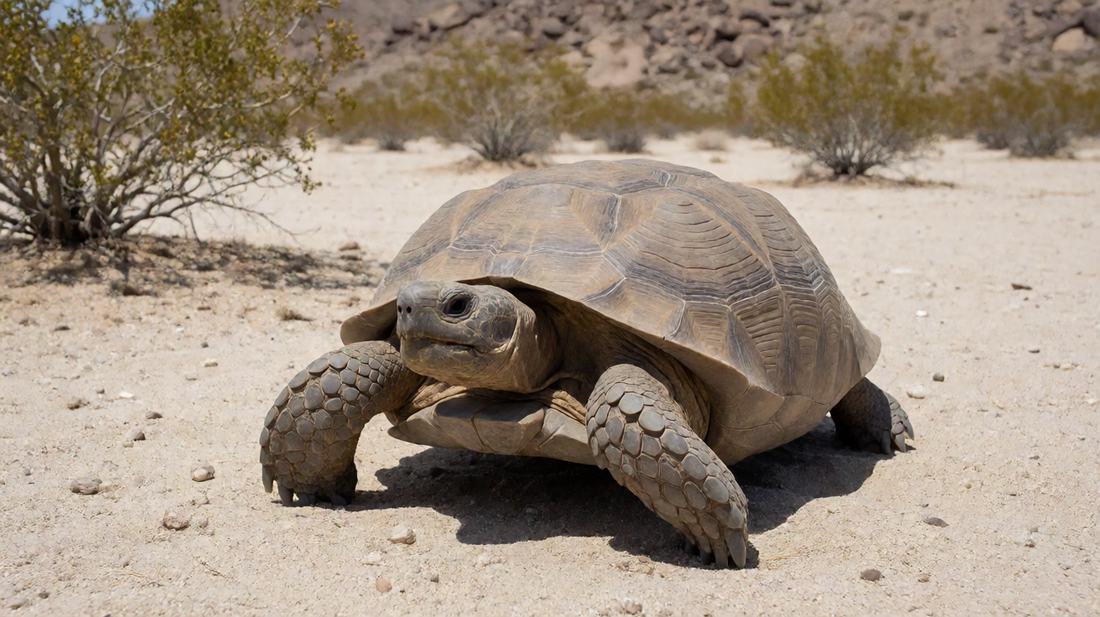
Gopherus agassizii | Mojave Desert Tortoise
Species Profile · Testudinidae
Mojave Desert Tortoise
A dome-shelled tortoise of the Mojave that spends most of its life underground, stores a year of water in its bladder, and takes 15 to 20 years to breed.
Critically Endangered
Shell length
Weight
Clutch
Incubation
First breeding
Rating
The Mojave Desert Tortoise
A tortoise that lives on stored water
A dome-shelled tortoise moves slowly across the Mojave Desert. Its shell is high and brown. Short, scaly legs carry the weight.
Heat is the enemy here. So the animal digs. Burrows run deep into sandy soil, of course.
Most of life is spent underground. Winter and summer are both passed below. Because the desert gives food for only a few weeks each year, the tortoise lives on a budget of water and energy few animals could match.
Family tree
Testudinidae, the tortoises
The species belongs to the family Testudinidae. James Graham Cooper named it in 1861. Six species now sit in the genus Gopherus, in addition. All live in dry parts of North America.
The crocodile sits in a very different reptile order. Its eggs are laid in nests of rotting plants. Both animals bury or guard their clutch, yet only one of them leaves the young to dig out on their own.
Domed shell, blunt head
How to tell one
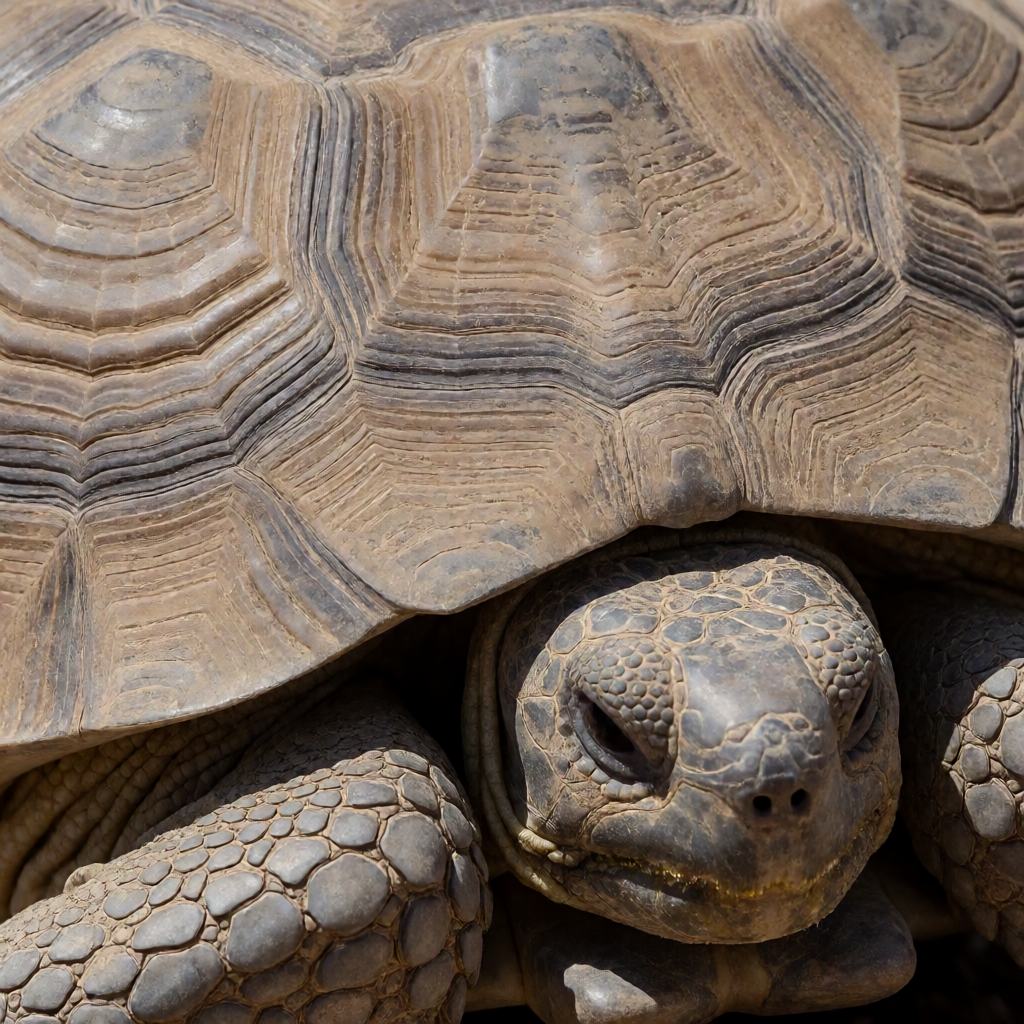
Shell length runs 25 to 36 cm. Weight sits between 4 and 15 kg. The carapace is high and domed.
Growth rings mark each plate. Front legs are flat and scaly. Nails are thick, built for digging.
In addition, skin is grey-brown and dry. The head is small and blunt. Nothing about the shape is fast, and the whole animal is built to carry water and shade its own soft parts from the desert sun.
1
2
3
Mojave Desert and its sandy flats
Where it lives
The Mojave Desert is the whole range. South-east California holds most animals. Southern Nevada and south-west Utah follow.
North-west Arizona marks the eastern edge. Creosote flats and rocky slopes both serve, as well. Sandy soil is needed for burrows.
Shelter from summer heat matters most. The saguaro cactus grows in the hotter Sonoran Desert to the south, where a different tortoise lives. Because the animal cannot cross a highway, one paved road can cut a whole population off from the burrow sites it has used for centuries.
Grasses and wildflowers
What it eats
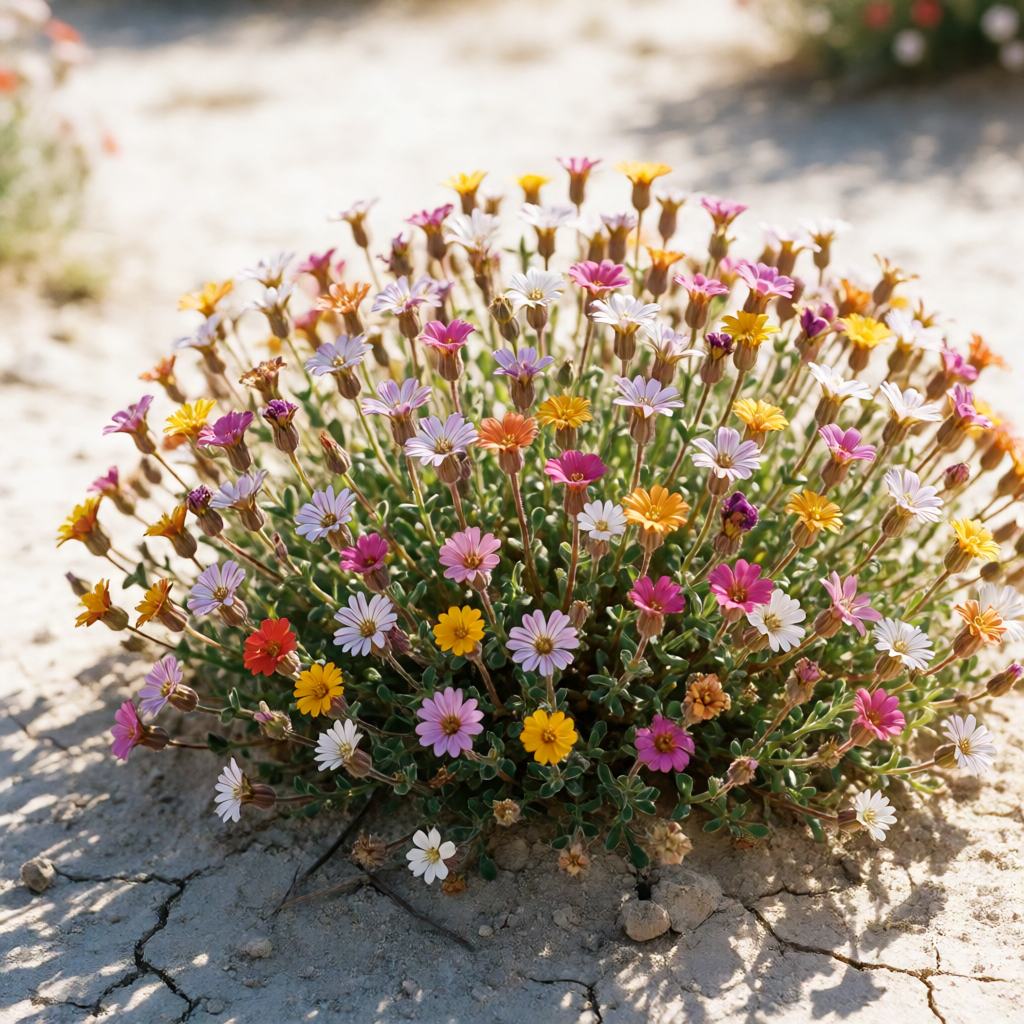
Grasses are the staple in spring. Wildflowers are eaten when they bloom. Herbs and young cactus pads follow.
Cactus fruit is taken when available, though. Water is stored in the bladder. One drink can last a whole year.
Most moisture comes from food, in fact. Because green food appears for only a few weeks, the tortoise must store water and fat in its shell and then wait the dry months out.
Eggs left to hatch alone
The breeding cycle
Males fight by ramming shells. Courtship is slow and noisy. Females lay eggs near the burrow mouth. Clutches hold 4 to 8 eggs.
Some females lay twice a year. Eggs are left to hatch on their own. Incubation lasts 90 to 120 days. Hatchlings face very heavy losses.
Ravens, kit foxes and roadrunners all take them. Because the shell of a young tortoise stays soft for years, a single raven can wipe out most of one season’s hatch from a whole valley.
Critically Endangered
Conservation
The IUCN lists the species as Critically Endangered. Numbers fell about 90% over 3 generations. Cars and trucks kill many adults.
Disease spreads fast where tortoises meet. Ravens thrive on human rubbish, however. Even so, wildfire now burns desert that rarely burned before.
Solar farms and towns take more ground each year. In addition, a slow breeder cannot replace losses quickly, since females may take 15 to 20 years before they lay their first clutch.
Side by side
How It Compares
| Trait | Mojave Desert Tortoise | Sonoran Desert Tortoise |
|---|---|---|
| Desert | Mojave, cool winters | Sonoran, hotter summers |
| Range | SE California, Nevada, Utah, NW Arizona | Arizona south into Sonora |
| Shell | high and domed | flatter and wider |
| Burrows | deep, used most of the year | shallower, less reliance |
| First breeding | 15 to 20 years | about 12 to 16 years |
| IUCN status | Critically Endangered | Near Threatened |
Common misreadings
What People Get Wrong
- All desert tortoises are one species. They were split into separate species.
- The shell is armour only. It also stores water and shade.
- Tortoises drink often. One drink can last a whole year.
Going further
Sources and Further Reading
- Wikipedia, Mojave desert tortoise
- IUCN Red List, Gopherus agassizii. The IUCN Red List of Threatened Species.
- Animal Diversity Web, University of Michigan. Gopherus agassizii.
- Murphy, R. W. et al. 2011. The dazed and confused identity of Agassiz’s land tortoise. ZooKeys.
Quick hits
Five things to remember
- A tortoise can store water worth 40% of its body weight.
- Most of its life is spent inside a burrow.
- Females may not breed until they are 15 to 20 years old.
- Wild animals can live past 50 years of age.
- Shell rings mark growth, but they do not give the exact age.