 By st20113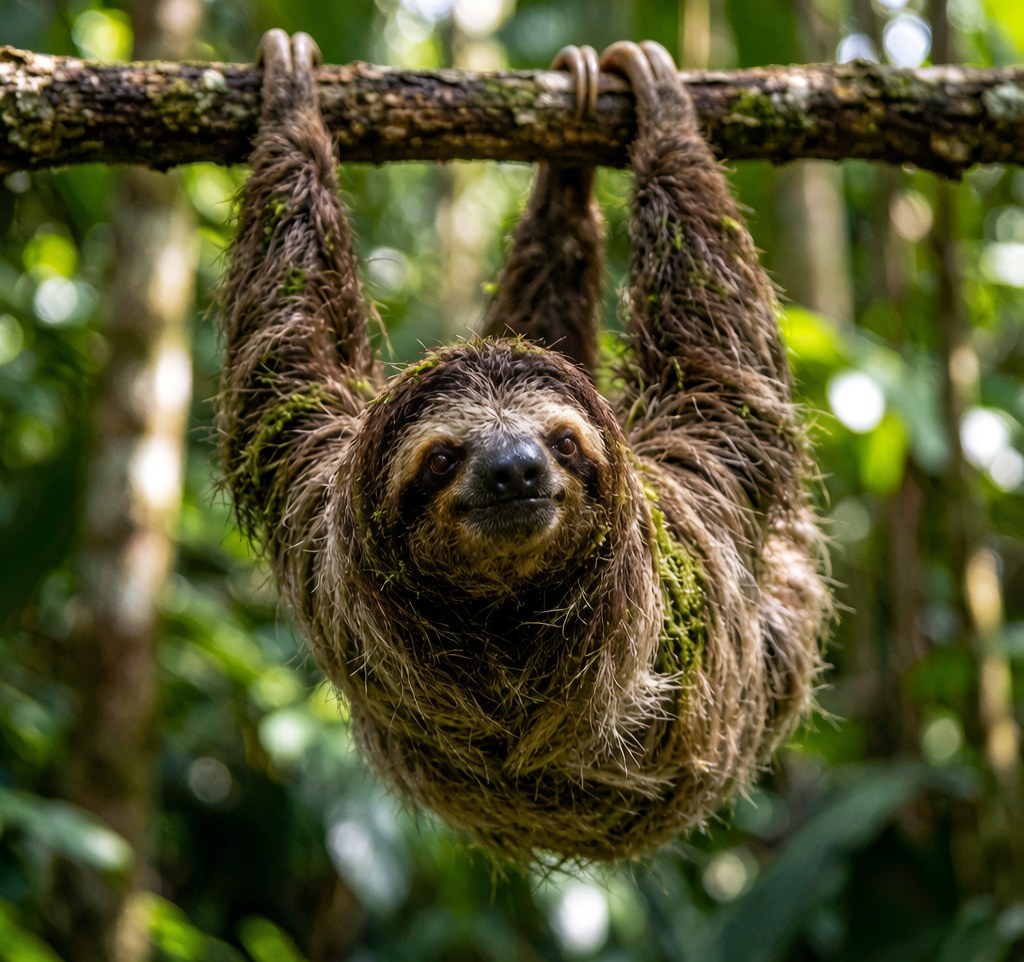
Introduction
The brown-throated three-toed sloth (Bradypus variegatus) is one of the most iconic rainforest inhabitants of Central and South America. Famous for their slow deliberate movements and perpetual smile-like expression, these arboreal mammals have evolved a lifestyle unlike any other. Three-toed sloths spend nearly their entire lives hanging upside down in the forest canopy, descending to the ground only about once a week to defecate. Their sluggish reputation belies a remarkable set of adaptations for survival in the treetops. In the same tropical forests of Costa Rica, the red-eyed tree frog shares the canopy environment, making its home among the same branches where sloths rest.
Taxonomy
The three-toed sloth belongs to the family Bradypodidae within the order Pilosa, which also includes anteaters. French zoologist Johann Heinrich Friedrich Link described the species in 1795. The genus Bradypus contains four species: the brown-throated sloth, the pale-throated sloth, the maned sloth, and the pygmy three-toed sloth. Two-toed sloths belong to a separate family, Megalonychidae, and are more closely related to extinct ground sloths. Together with tree-dwelling reptiles such as the green iguana, sloths represent a lineage that has adapted remarkably to life in the tropical forest canopy.
Physical Characteristics
Three-toed sloths are medium-sized mammals weighing between 2.5 and 5 kilograms, with a body length of 40 to 60 centimeters. Their most distinctive feature is the three long claws on each forelimb, which hook over branches to support their weight while hanging. They have long coarse outer fur that grows in the opposite direction to most mammals, from belly to back, allowing rainwater to run off while hanging upside down. Their fur hosts symbiotic algae that give it a greenish tint, providing excellent camouflage in the canopy. Sloths have extremely slow metabolisms, the lowest of any non-hibernating mammal. Much like the giant panda, sloths have evolved a specialized low-energy lifestyle to survive on a nutrient-poor diet.
Habitat
Brown-throated three-toed sloths are found from Honduras through Central America into South America, as far south as Bolivia and Brazil. They inhabit lowland tropical rainforests, cloud forests, and mangrove forests, always staying high in the canopy where they are safe from ground predators. Sloths prefer trees with dense foliage, particularly Cecropia trees, which provide both food and cover. Each sloth has a small home range of a few hectares and uses only a handful of favorite trees. Their green-tinted fur makes them nearly invisible against the canopy backdrop. These forests also host the colorful poison dart frog, though sloths share little of the frog’s vibrant coloration and active lifestyle.
Diet
Three-toed sloths are strict herbivores, feeding almost exclusively on leaves, primarily from Cecropia trees. Their diet consists of leaves, buds, and tender shoots. Leaves are low in nutrients and difficult to digest, so sloths have developed a specialized multi-chambered stomach where symbiotic bacteria break down cellulose. Digestion is an extremely slow process, taking up to a month to fully process a single meal. Sloths eat only about 0.35 kilograms of leaves per day, far less than similarly sized mammals. They supplement their water intake by licking dew and moisture from leaves. Like the migratory monarch butterfly, sloths depend on specific plant species for survival, though their relationship with host trees is far more localized.
Reproduction
Three-toed sloths breed year-round, though births often coincide with the rainy season when food is abundant. After a gestation period of approximately five to six months, a single infant is born. The baby sloth clings to its mother’s belly for the first several weeks of life, learning which leaves are safe to eat by observing what she consumes. At around five months, the young sloth begins to eat solid food but remains with its mother for up to a year. Female sloths reach sexual maturity at around three years of age. Their low metabolic rate extends to reproduction as well, as females typically give birth only once every one to two years. The coastal waters of Central America, where the humpback whale undertakes one of the longest migrations in the animal kingdom, provide an interesting contrast to the slow-paced life of the sloth that rarely moves more than a few dozen meters in a day.
Conservation
The brown-throated three-toed sloth is classified as Least Concern on the IUCN Red List due to its wide distribution across Central and South America. However, local populations face threats from deforestation, habitat fragmentation, road mortality, and the illegal pet trade. As forests are cleared for agriculture and urban development, sloths become increasingly vulnerable to predators and vehicle collisions. Electrical lines also pose a significant threat, as sloths use them as travel routes between forest fragments. Rescue centers in Costa Rica treat hundreds of injured and orphaned sloths each year. Conservation efforts emphasize habitat preservation, wildlife corridors, and public education about responsible wildlife viewing and pet ownership.
Fun Facts
- Sloths can rotate their heads up to 270 degrees, giving them an exceptional field of vision without moving their bodies.
- They only descend to the ground about once a week to defecate, traveling to a specific spot they use repeatedly.
- Sloths are surprisingly good swimmers and can move three times faster in water than on land.
- Their fur is a mini-ecosystem, hosting algae, moths, beetles, and small arthropods.
- A sloth’s top speed on the ground is only about 2 meters per minute, making them the slowest mammal on Earth.