 By st20113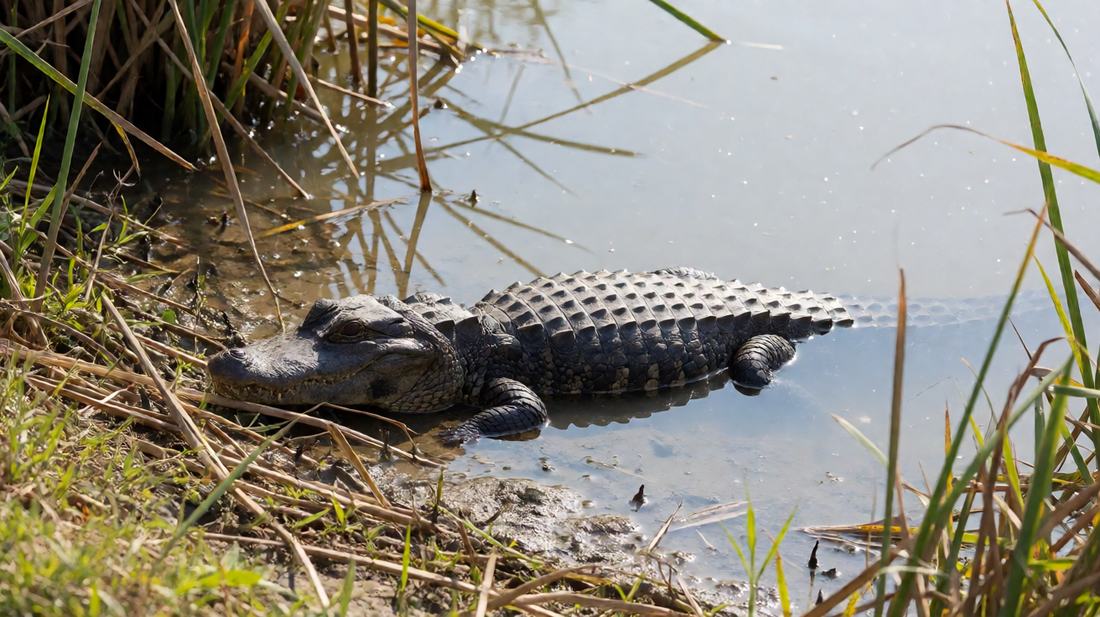
Alligator sinensis | Chinese Alligator
Species Profile · Alligatoridae
Chinese Alligator
A small, armoured reptile of the lower Yangtze that digs bank burrows, sleeps through winter underground, and now survives in the wild by a few hundred animals.
Critically Endangered
Length
Weight
Clutch
Incubation
Wild population
Rating
The Chinese Alligator
The rarest of the crocodilians
A small, rare reptile slips into a pond in the Yangtze basin. It is one of the smallest of its kind. Adults reach just 1.4 to 2.1 m. Weight stays near 40 kg.
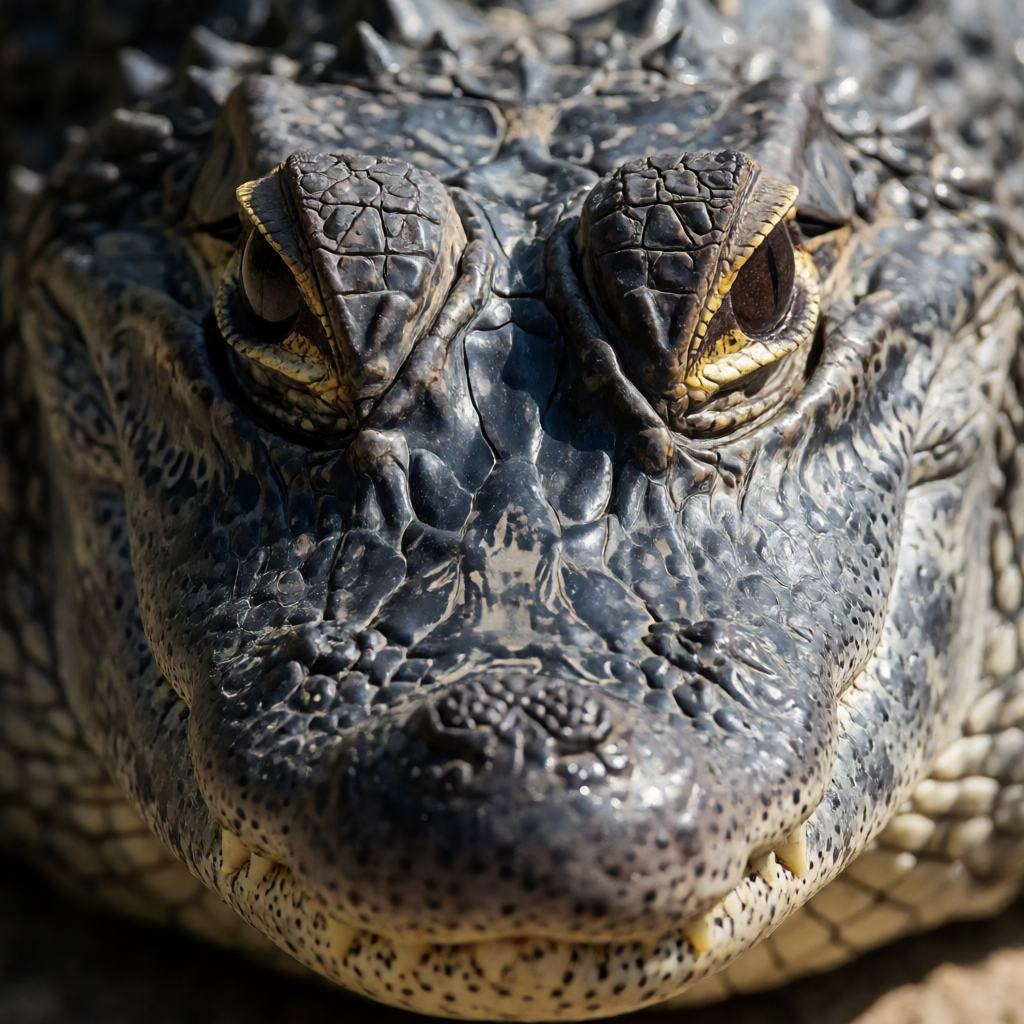
The snout turns up. A bony plate sits in each eyelid. It is quiet. Burrows are dug into the banks above the water.
Winter is spent underground, in fact. It keeps to itself. Because the wild population now numbers only a few hundred animals, every pond and bank left counts twice as much as before.
Family tree
Alligatoridae, the alligators
The species belongs to the family Alligatoridae. Albert Fauvel described it in 1879. Only 2 living species now sit in the genus Alligator. Its kin lives in the south-eastern United States.
The crocodile belongs to a separate family of its own. Its snout is longer and more V-shaped, of course. Both groups carry the young to water, yet only this family hides the fourth tooth inside the jaw.
Small, armoured and dark
How to tell one
Adults measure 1.4 to 2.1 m. Females run smaller than males. Weight falls near 36 to 45 kg. That snout is short and slightly upturned.
Bony plates armour both back and belly. Dark olive skin carries faint bands. Colour is dark, so the animal blends into still water. Young show bright yellow stripes.
Those stripes fade with age, though. Nothing about the armour is soft, and even the eyelids hide a small plate of bone under the skin.
1
2
3
Yangtze lowland wetlands
Where it lives
Lowland wetlands are the only home. Ponds, lakes and slow streams all serve. Rice paddies are used where banks remain. Its range sits in Anhui, Zhejiang and Jiangsu.
Burrows are dug above the waterline. Winter is passed inside them. Quiet, shallow water is best. In addition, warm, shallow, weedy water is best.
Big rivers and deep lakes hold none at all, however. Unlike the hippopotamus, which grazes on land and rests in water by day, this reptile hunts in water and sleeps in a hole. Because the animal needs soft banks and shallows, a straight concrete drain takes away both at once.
Snails, clams and fish
What it eats
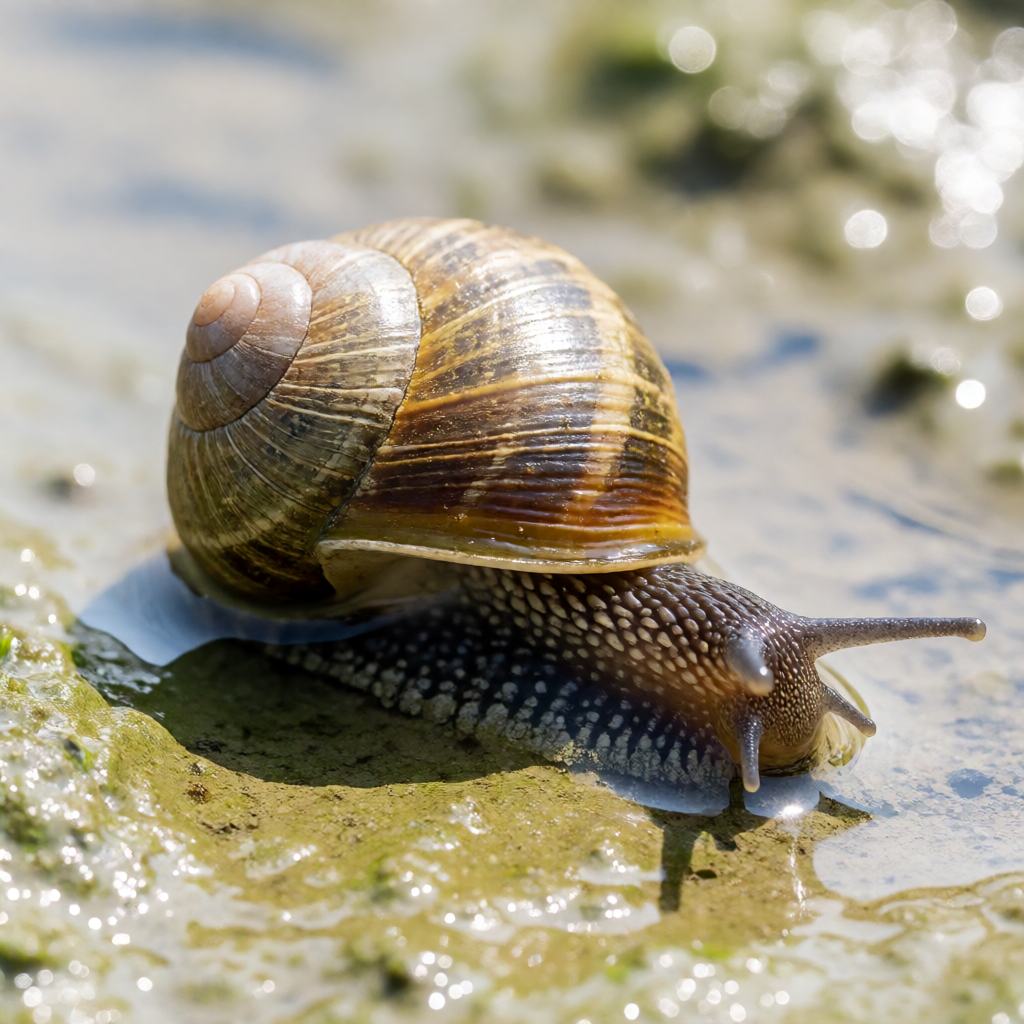
Snails and clams are staples. Fish and shrimp follow close behind, as well. Insects and larvae are eaten. Frogs and tadpoles are taken too.
Water birds are caught at the surface. Small mammals are grabbed near the bank. Meals are small. Young eat mostly insects and small snails.
Adults crush shells with broad back teeth. Meals are swallowed under water, since the animal cannot chew anything that it catches.
Nest heat sets the sex
The breeding cycle
Breeding begins in June. Males bellow and slap the water. Nests are mounds of dead plants. Each mound sits near the burrow mouth.
Ten to 50 eggs are laid. Eggs need about 70 days to hatch. Nest heat sets the sex of the young. Even so, the young call from inside the eggs.
The young squeal. When the eggs are ready, the mother digs out the young and carries them to the water in her jaws.
Critically Endangered
Conservation
The IUCN lists the species as Critically Endangered. Fewer than 300 animals remain in the wild. Captive herds hold more than 10000 animals. Numbers are low in the wild.
Releases began in 2003 and go on. Farm work destroyed most wetland habitat. Rat and fish poisons still kill a few. CITES lists the species on Appendix I, so all trade is banned.
The work goes on. Because the wild population fits into a few small reserves, one bad winter or one disease could undo decades of careful work.
Side by side
How It Compares
| Trait | Chinese Alligator | American Alligator |
|---|---|---|
| Wild population | fewer than 300 | over a million |
| Length | 1.4 to 2.1 m | up to 4 m or more |
| Range | Yangtze basin, China | south-eastern United States |
| Snout | short and upturned | broad and rounded |
| Winter | spent in bank burrows | also uses dens, less digging |
| IUCN status | Critically Endangered | Least Concern |
Common misreadings
What People Get Wrong
- All alligators are American. The genus holds one Asian species too.
- A small alligator is a young one. This species simply stays small.
- The wild numbers are stable. Fewer than 300 remain in the wild.
Going further
Sources and Further Reading
- Wikipedia, Chinese alligator
- IUCN Red List, Alligator sinensis. The IUCN Red List of Threatened Species.
- Animal Diversity Web, University of Michigan. Alligator sinensis.
- Thorbjarnarson, J. and X. Wang. 2010. The Chinese Alligator. Johns Hopkins University Press.
Quick hits
Five things to remember
- Adults rarely pass 2.1 m, so this ranks among the smallest of its kin.
- A plate of bone sits inside each eyelid.
- Young show bright yellow bands that fade with age.
- Nest heat decides whether the young are male or female.
- Captive herds now hold far more animals than the wild does.