 By st20113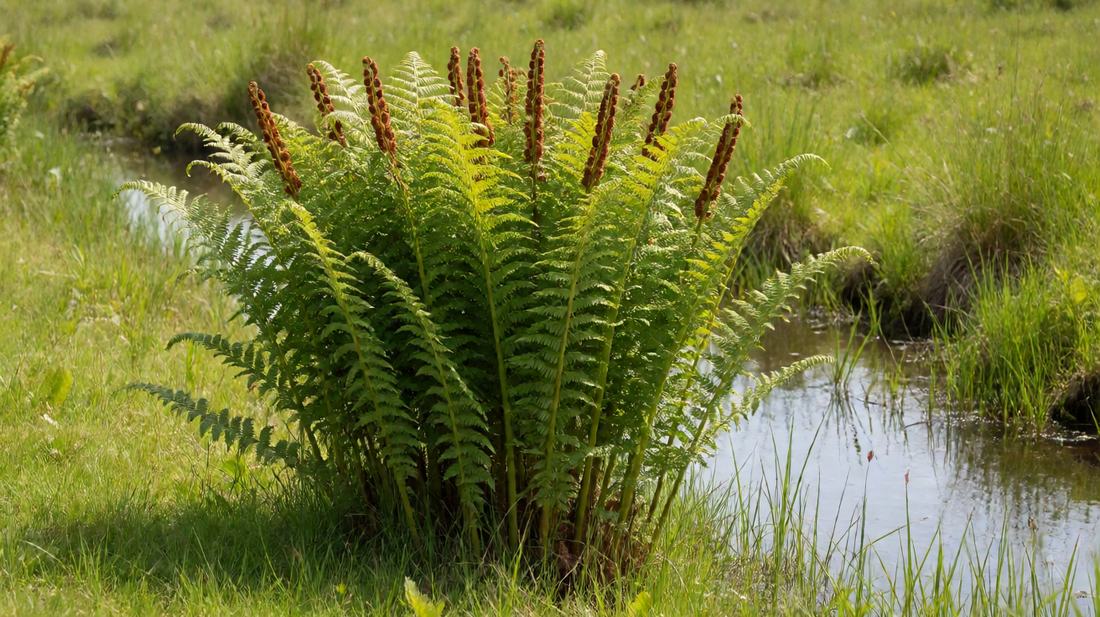
Osmunda regalis | Royal Fern
Species Profile · Osmundaceae
Royal Fern
A tall arching fern of wet acid ground, sending up bright green fronds each spring and holding the same root stock for a century or more.
Least Concern
Sterile fronds
Fertile fronds
Root stock
Spores
Range
Rating
The Royal Fern
A fern that never flowers
A tall fern rises from a wet hollow in an old European wood. Its fronds arch out in two ranks. Bright green and finely cut.
Some fronds stand upright and turn brown. Those carry the spores. Wet ground is the only place it grows.
Bogs, stream banks and wet woods all suit it. Winter cuts the fronds back to the root, of course. Because the plant needs wet, acid ground that has never been drained, it marks the health of a whole wetland in one look.
Family tree
Osmundaceae, the royal fern family
The species belongs to the family Osmundaceae. Carl Linnaeus named it in 1753. About 10 species now sit in the genus Osmunda, in addition. All carry spores on separate upright fronds.
The bamboo is a grass, not a fern at all. Both grow fast from underground stems. One spreads by runners and flowers once, however, while the other sends up fronds every spring and never flowers at all.
Green fronds, brown spore tips
How to tell one
Sterile fronds reach 60 to 160 cm. Very large ones pass 400 cm. Each frond is cut twice into leaflets.
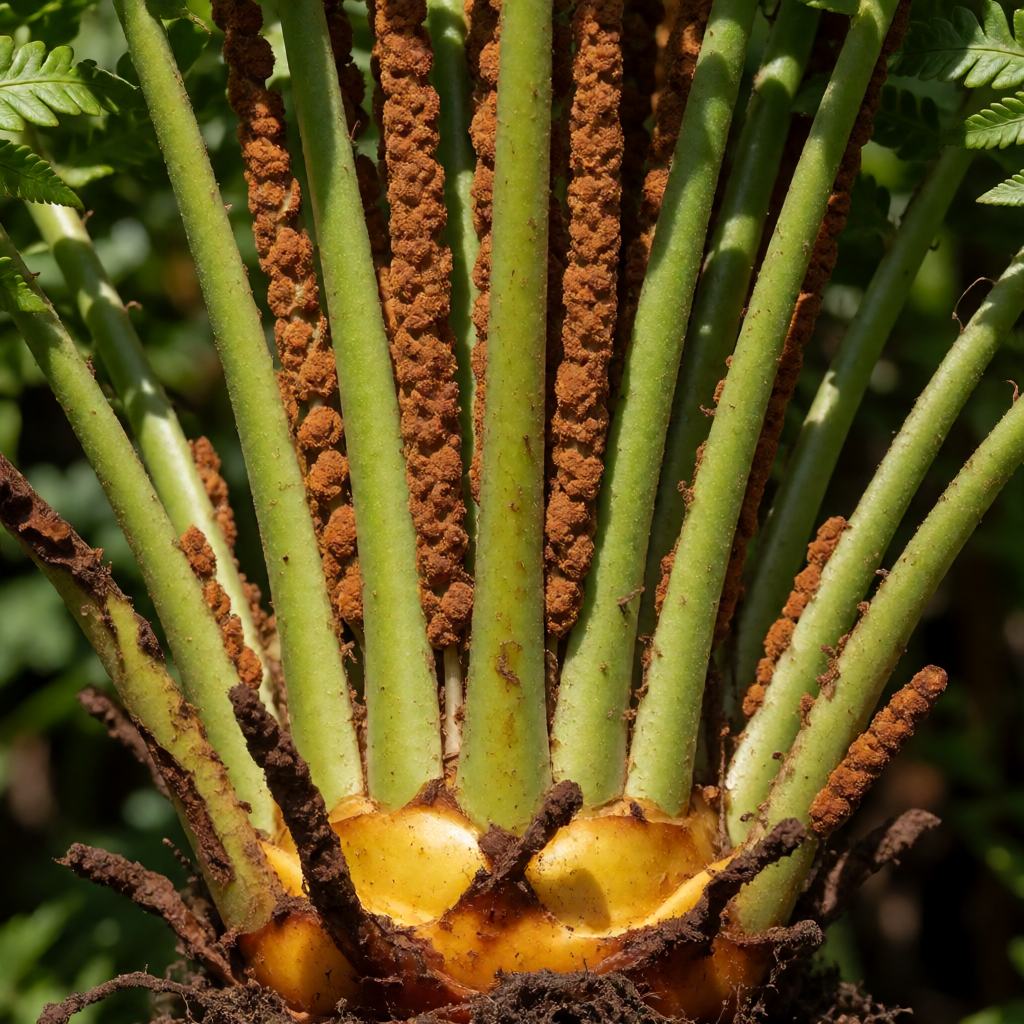
Fertile fronds stand 20 to 50 cm. Their tips are dense with brown spore cases. The root stock is thick and woody.
It can rise a metre above the ground. In addition, stems are smooth and pale green. Nothing about the plant is woody above ground, and the tall trunk-like base is made of old leaf stalks packed tight around each other.
1
2
3
Bogs, wet heath and stream banks
Where it lives
Wet acidic ground is the only home. Bogs and wet heath suit it well. Stream banks and ditch sides work too.
Alder carr and wet oakwood are used as well. Its range covers Europe, North Africa and West Asia. Iran marks the eastern edge.
Shade is welcome, though sun is tolerated. Because the fern cannot stand dry soil, one drainage ditch on a hillside above can kill a whole colony within a few dry summers.
Light, water and minerals
What it eats
No food is taken in at all. Light, water and soil minerals do the work. Roots anchor the plant and draw up water. The thick root stock stores starch.
Fronds feed the plant through photosynthesis. Even so, acid, peaty soil suits it best. Because it makes its own food, the fern needs only light and wet ground, and it will hold one spot for a century or more.
Spores need free water
The breeding cycle
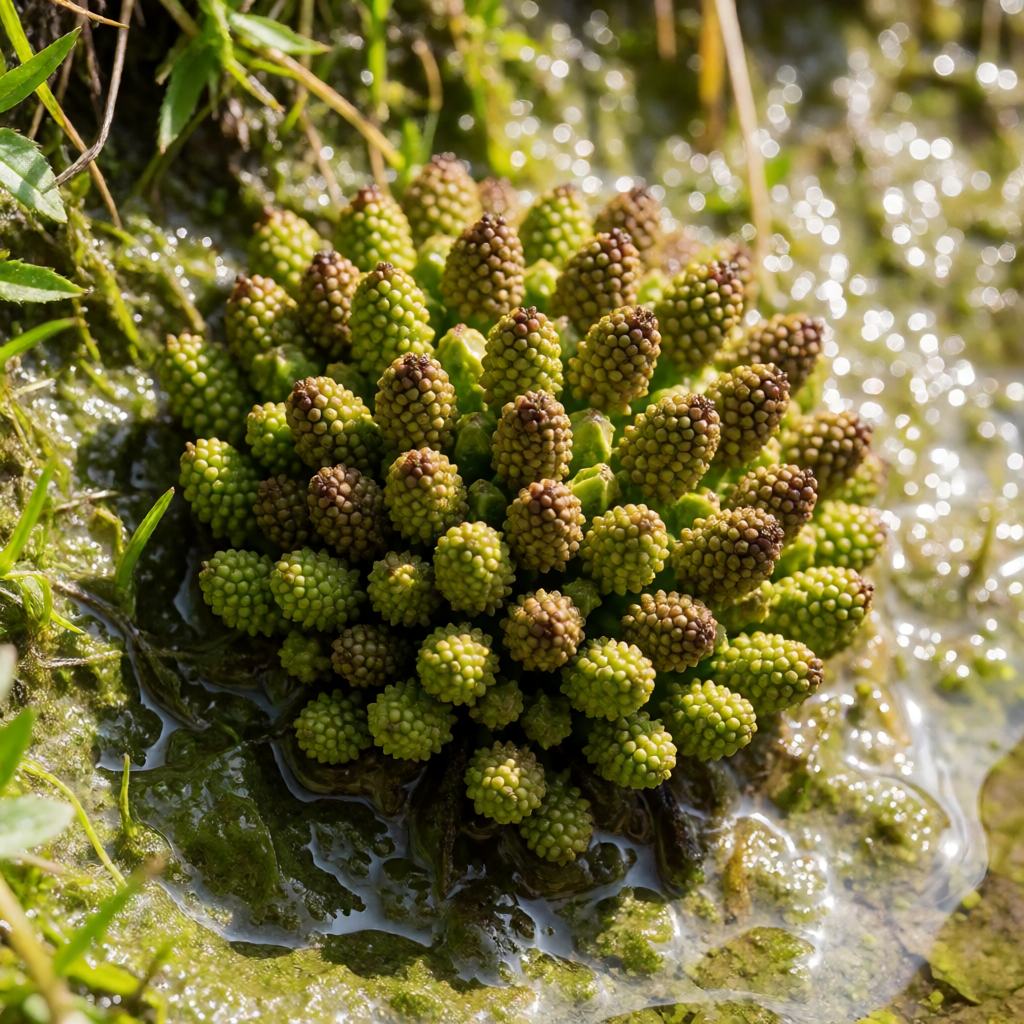
Spores ripen in early summer. They are shed from the brown fronds. Wind carries them away.
Water is needed for the next step. Each spore grows a tiny green plate. That plate holds the sex cells.
A film of water lets them meet. Ferns have no seeds at all, in fact. Because the whole cycle needs free water to work, this fern cannot spread into dry ground the way a seeding plant can.
Least Concern
Conservation
The IUCN lists the species as Least Concern. The world range is large. Local losses have been heavy, however.
Drainage of wet ground did the damage. Collecting for gardens took many plants. The root fibre was dug for orchid growing.
Unlike the redwood, which needs huge old forest to survive, this fern can thrive in a roadside ditch or a small wet hollow. That tolerance helps, since a handful of wet spots can keep a whole district stocked with plants for a very long time.
Side by side
How It Compares
| Trait | Royal Fern | Bracken |
|---|---|---|
| Kind | true fern, spores only | also a fern, spores only |
| Fronds | arch out in two ranks, green | large triangular fronds |
| Spore fronds | upright brown fertile tips | spores under the leaf edges |
| Habitat | wet acid bogs and stream banks | dry open ground and woodland |
| Range | Europe, North Africa, West Asia | worldwide |
| IUCN status | Least Concern | Least Concern |
Common misreadings
What People Get Wrong
- The brown tips are dead leaves. They are the fertile spore fronds.
- Ferns flower in spring. They have no flowers and spread by spores.
- Any wet spot will do. This fern needs acid, undrained ground.
Going further
Sources and Further Reading
- Wikipedia, Osmunda regalis
- IUCN Red List, Osmunda regalis. The IUCN Red List of Threatened Species.
- GBIF Backbone Taxonomy, Osmunda regalis L.
- Page, C. N. 1997. The Ferns of Britain and Ireland. Cambridge University Press.
Quick hits
Five things to remember
- The plant is also called the flowering fern.
- Fertile fronds turn brown and hold dense spore cases.
- Root fibre was once dug up for growing orchids.
- Fossil kin from the Jurassic show cells preserved in stone.
- One root stock can hold the same spot for over 100 years.