 By st20113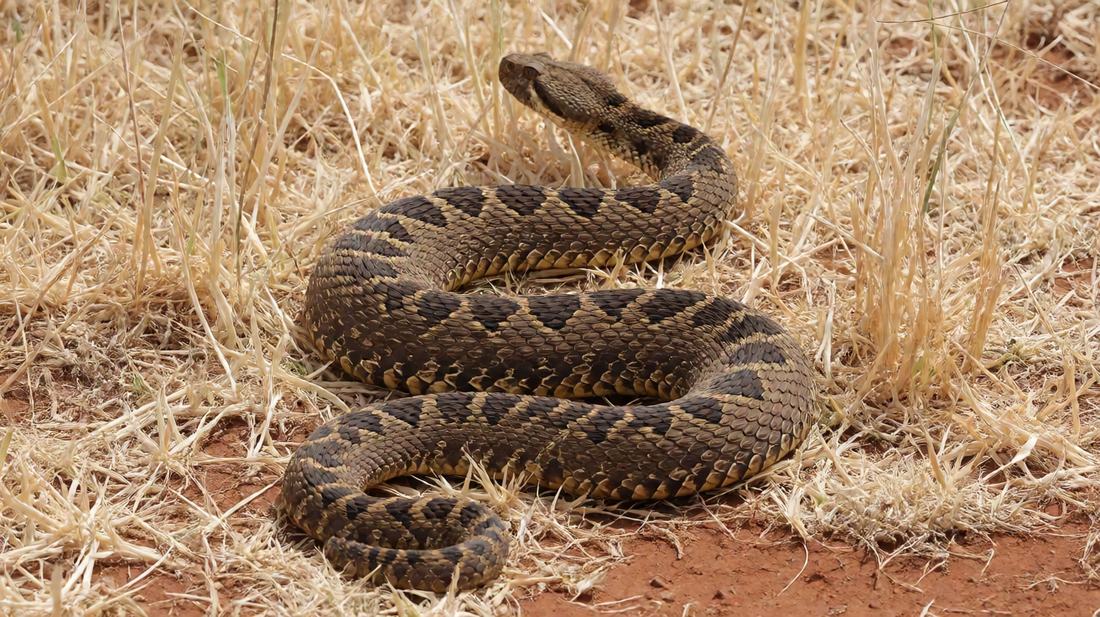
Bitis arietans | Puff Adder
Species Profile · Viperidae
Puff Adder
A thick, motionless snake of the African savanna that waits on paths, strikes without warning, and causes more serious bites than any other snake on the continent.
Least Concern
Length
Maximum
Weight
Litters
Newborns
Rating
The Puff Adder
The snake that waits instead of hunting
A thick snake lies still on a path in the African savanna. Its brown chevrons match the dust. Nothing about it looks alive.
The animal waits rather than hunts. Most movement happens after dark, in fact. Rodents make up the bulk of the diet.
A strike comes without warning. Then the body swells and a loud hiss follows. Because the adder sits where people walk, it causes more serious bites across Africa than any other snake on the continent.
Family tree
Viperidae, the vipers
The species belongs to the family Viperidae. Blasius Merrem named it in 1820. About 18 species now sit in the genus Bitis. All are African, and all are thick-bodied.
The king cobra belongs to a different family, Elapidae. Its venom attacks nerves instead of tissue. Both snakes are dangerous to people, yet their venoms work in completely different ways inside the human body.
Thick, banded and still
How to tell one
Most adults measure about 1 m. Big animals reach 1.9 m. Weight can pass 6 kg.
Its body is heavy and short-tailed. A broad head sits on a narrow neck. Chevron bands run down the back.
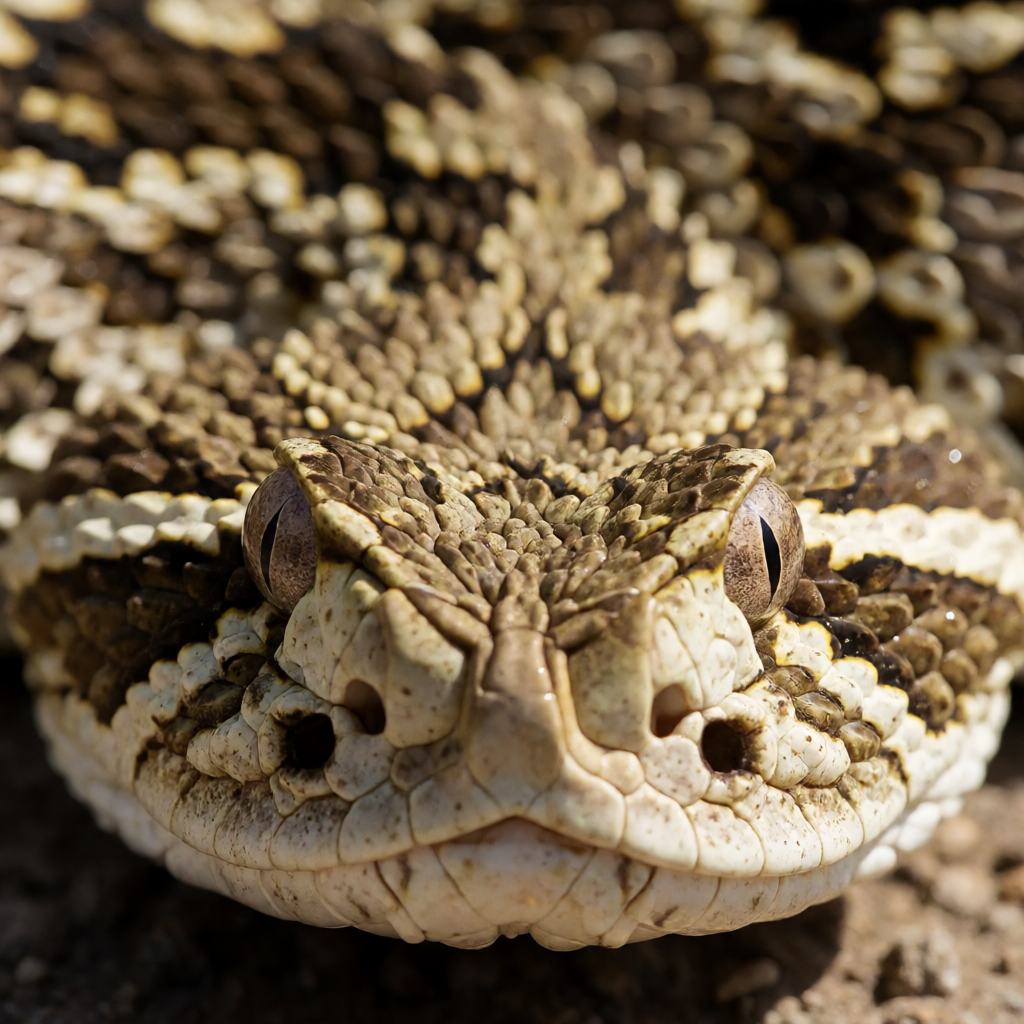
Eyes have vertical pupils. In addition, fangs are long and fold away. Nothing about the shape hints at speed, and the whole animal is built to sit still for hours and strike once.
1
2
3
Savanna, scrub and rocky hills
Where it lives
Savanna is the core habitat. Grassland and rocky hills also suit it. Open woodland is used as well.
Desert edges and forest clearings both work. Its range covers most of sub-Saharan Africa. Morocco and south-west Arabia are included.
Dense rainforest holds none, however. Rock outcrops give the best basking spots. Because the snake relies on camouflage rather than flight, it does best in places with leaf litter and low cover everywhere.
Rodents above all
What it eats
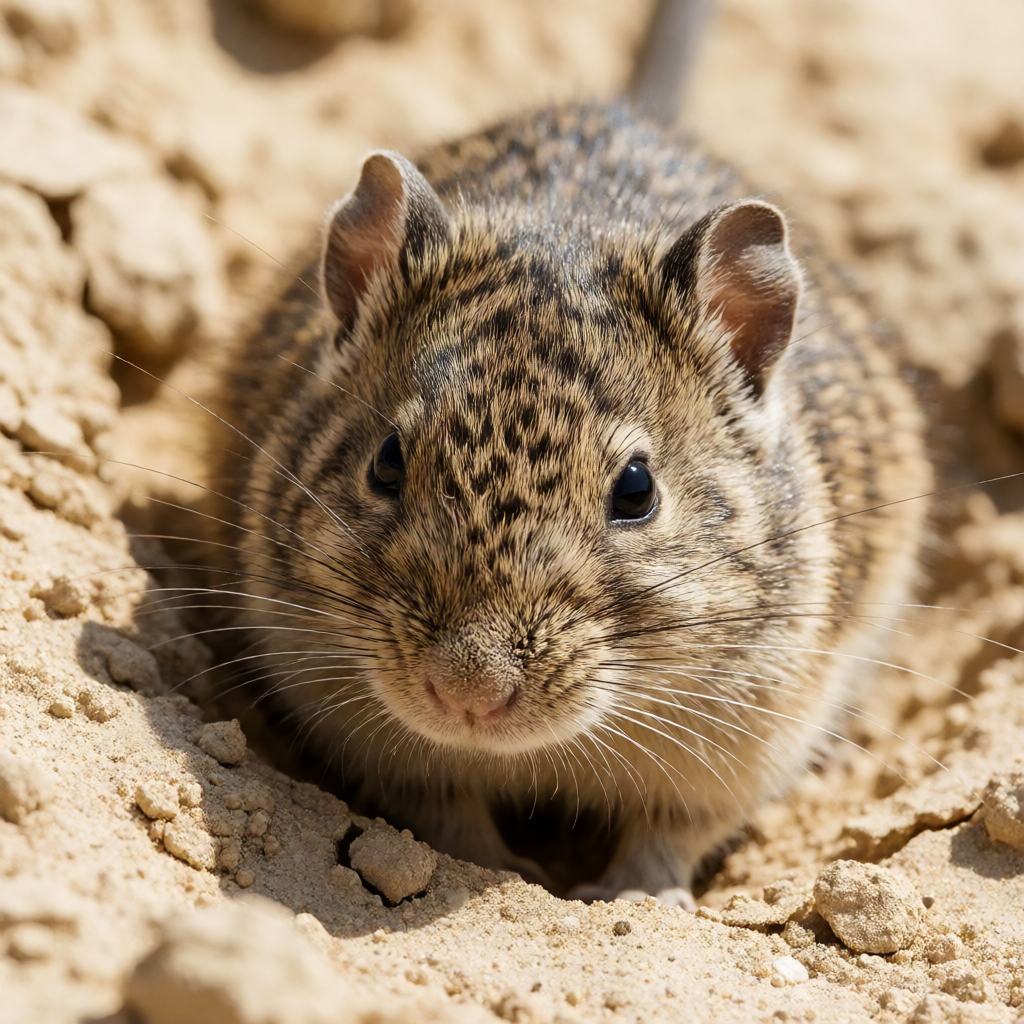
Rodents are the main prey. Rats, mice and gerbils are taken. Birds are eaten when they land.
Lizards and frogs follow. Even so, toads are swallowed whole. Hunting is done from one spot.
It waits, then lunges. Prey is released right after the strike, since the venom does the hard work of tracking the animal down.
Live young, never eggs
The breeding cycle
Males follow scent trails to females. Rival males wrestle with raised heads. Mating happens in the warmer months, though.
Females give birth to live young. No eggs are laid at all. Litters run 20 to 50 young.
Some reach 80 or more. Newborns are 15 to 25 cm long. Unlike the African rock python, which coils around a clutch of eggs for weeks, this snake carries its young inside and drops them ready to hunt.
Least Concern
Conservation
The IUCN rates the species as Least Concern. Its range is enormous. Numbers stay high across it.
People kill far more adders than habitat loss does, however. Roads take a heavy toll at night. Bush clearing removes cover and prey.
Collection for the pet trade is minor, at least. Very little protection is needed in practice, since a snake this widespread can absorb heavy losses and still hold its ground.
Side by side
How It Compares
| Trait | Puff Adder | Gaboon Viper |
|---|---|---|
| Venom | cytotoxic, tissue damage | also cytotoxic, very large yield |
| Length | about 1 m | up to 2 m and heavier |
| Pattern | brown chevrons | intricate leaf-like markings |
| Young | 20 to 50 live young | up to 40 live young |
| Temperament | sits still, relies on camouflage | docile, rarely moves |
| IUCN status | Least Concern | Least Concern |
Common misreadings
What People Get Wrong
- The adder chases its prey. It waits in one spot and strikes once.
- A loud hiss means it will flee. The hiss is a warning, not a retreat.
- Venom kills prey on the spot. The snake tracks the bitten animal after releasing it.
Going further
Sources and Further Reading
- Wikipedia, Puff adder
- IUCN Red List, Bitis arietans. The IUCN Red List of Threatened Species.
- Animal Diversity Web, University of Michigan. Bitis arietans.
- Spawls, S. and B. Branch. 1995. The Dangerous Snakes of Africa. Ralph Curtis.
Quick hits
Five things to remember
- One hiss can be heard several metres away.
- Females give birth to live young, not eggs.
- A single litter may hold more than 50 babies.
- The snake strikes, lets go, and then tracks the bitten prey.
- Fangs fold back against the roof of the mouth.