 By st20113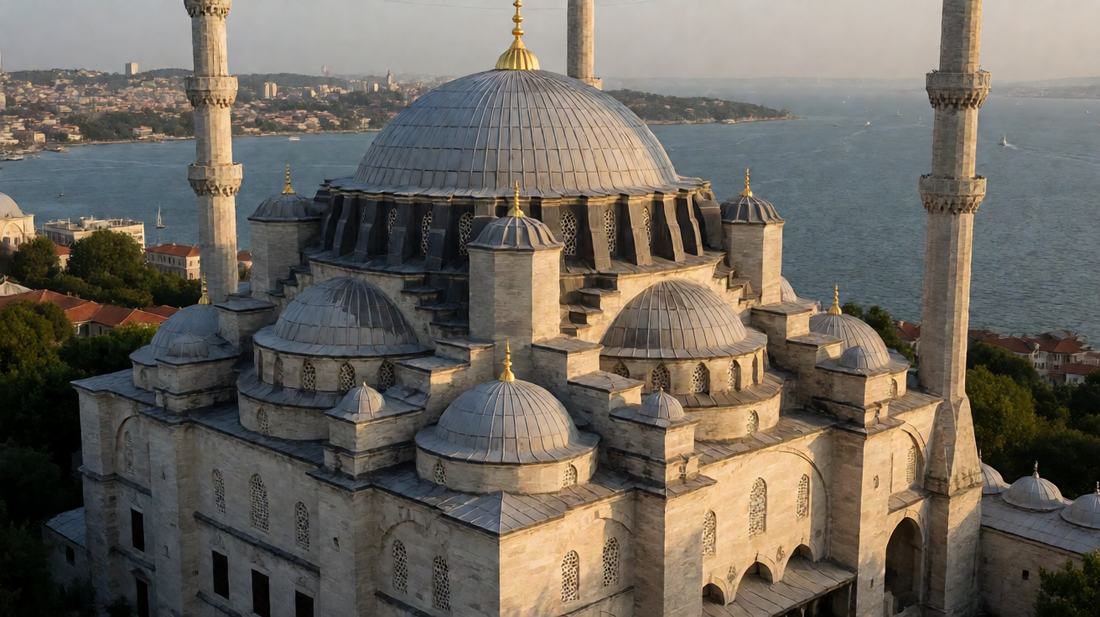
The Ottoman Empire | The Sublime Porte
Historical Profile · Anatolia and the Balkans
The Ottoman Empire | The Sublime Porte
A frontier band grew into a state that held south-east Europe and the Middle East for 600 years, and its borders still shape the map.
c. 1299-1922
Founded
Constantinople
Egypt taken
Suleiman
Sultanate ended
The big picture
Introduction
Around 1299 a chief named Osman led a small band. They fought in the north-west of Asia Minor. Within 150 years his heirs ruled the whole peninsula. They also ruled most of the Balkans.
In 1453 they took the great city on the Bosphorus. By 1600 their empire ran from the plains of Hungary. It reached the Persian Gulf and the Crimea. It reached the Nile as well.
It held most of those lands for 300 years more. The state was still standing in 1922. That year the last sultan gave up his throne.
Setting
Historical Context
The old order in western Asia had broken down. The Mongols beat the Seljuk state in 1243. That left a patchwork of small lords. The Byzantine Empire had lost its Asian lands. It was short of money and men.
Between the two lay the hill country of the north-west. Bands of frontier fighters made their own small states there. They were called ghazis. They fought for land, for plunder and for faith. Europe gave Byzantium little help.
A crusade in 1204 had sacked the capital itself. Italy’s trading cities took what was left of Byzantine trade. Classical Greece lay inside the old empire. Its cities were among the richest in the region. The sultans who followed Osman used that wealth and those skills.
Turning points
Key Events
Osman’s son Orhan took the first walled towns. He made Bursa his seat. Under Murad I the state crossed into Europe. At Kosovo in 1389 the Ottomans broke a Balkan army. That opened the road north. Bayezid I pushed further. In 1402 he met Timur at Ankara. He lost both the battle and his freedom. The state almost fell apart. It took 20 years to put it together again. The greatest prize fell to Mehmed II. In 1453 his guns broke the land walls of Constantinople.
The last Byzantine emperor died in the fighting. Mehmed made the city his capital. He filled it with people of every faith. He also took the remaining Greek lands. His grandson Selim I turned east. He beat the Persian shah in 1514. In 1517 he took Ancient Egypt from the last of its Mamluk rulers. That win brought the holy cities of Arabia under Ottoman control. It brought the trade of the Red Sea as well. His son Suleiman took Baghdad in 1534. He also took the old cities of Mesopotamia. Suleiman ruled from 1520 to 1566.
He was the greatest of the line. He took Belgrade in 1521. He broke the Hungarian army at Mohacs in 1526. In 1529 his army stood outside Vienna and failed to take it. He also rebuilt the legal system. His subjects called him the Lawgiver. In 1571 a great Ottoman fleet was destroyed at Lepanto. In 1683 a second siege of Vienna failed. The long retreat had begun. By the treaty of Karlowitz in 1699 the empire had lost Hungary for good.
1
2
3
Who held power
People and Powers
The sultan held all power in theory. In practice he ruled through a grand vizier. He also ruled through a palace staff. Most of his soldiers came from a levy of boys. These boys were taken from Christian villages. They were converted and trained for service. The best of them rose to the highest posts.
The famous foot soldiers, the janissaries, came from this system. Their power grew so large that they could make and unmake sultans. The empire also had a body of judges and scholars. They were called the ulema. They ran the courts and the schools. Land was held by riders who served in war. Over time tax farming took the place of this.
Local families grew strong. Non-Muslims were put into groups called millets. Each group ran its own courts for family matters. It collected its own taxes. Greeks, Armenians and Jews each had their own leader. This let a small ruling group hold a very mixed empire together.
Everyday world
Daily Life and Society
A large Ottoman town had a bath house, a market, a mosque and a court. The bath house was a meeting place as much as a place to wash. Officials watched the markets. They fixed prices and checked weights. Trade guilds set standards and settled quarrels. Craftsmen in one trade lived and worked on the same street. In the countryside most people worked the land.
A village paid a share of its produce to the holder of the estate. It paid a tax to the state as well. The village headman dealt with the officials. Households were large. Several generations often lived under one roof. Women could own property and take a case to court. Some ran businesses and endowments of their own.
Law came from two sources. One was the religious law, worked out by the ulema. The other was the sultan’s own code. It dealt with taxes, land and crime. A subject could take a case to a judge. The records of those courts survive in large numbers.
Craft and ideas
Trade, Technology and Ideas
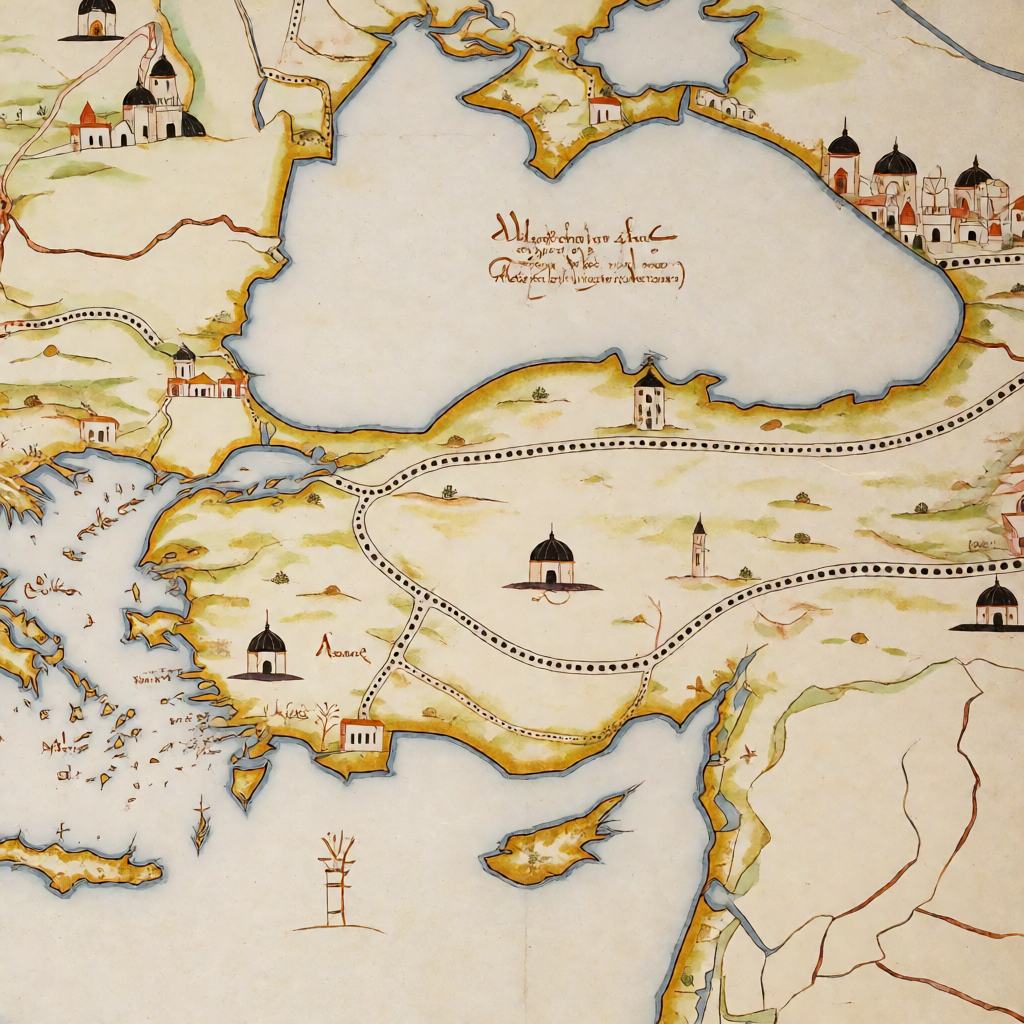
Trade was the base of the whole system. The roads from the east ended at the Ottoman ports. Those roads are later called the Silk Road. The sea routes from India ended there too. Bursa grew rich on cloth. Aleppo and Cairo handled the trade in rare goods. The state signed deals with Venice and France.
Foreign merchants got special terms. Ideas moved more slowly. Ottoman scholars read Persian and Arabic works. They wrote on law, history and the sky. Medicine and astronomy had their own schools. Printing arrived very late, in 1727. It ran into strong opposition.
That delay cost the empire in the long run. The state was good at building and at water. Great mosques with wide domes were built across the empire. So were bridges, fountains and public kitchens. The sultan’s family paid for many of them. That habit shaped the look of every Ottoman city.
What lasted
Legacy
The empire left borders that are still in use. Most of the states of the modern Middle East came from its lands. So did most of the Balkans. Its system of millets shaped how later states dealt with minorities.
Its kitchens, baths, music and cooking spread across three continents. The end came after the First World War. In 1922 the sultanate was abolished. The Turkish Republic was founded in 1923 under a new leader.
The empire had begun with a frontier band in 1299. It had lasted more than 600 years.
Quick hits
Five Things to Remember
- The Ottoman state began around 1299 under Osman I.
- Constantinople fell to Mehmed II in 1453.
- Selim I took Egypt from the Mamluks in 1517.
- Suleiman the Magnificent ruled from 1520 to 1566.
- The sultanate was abolished in 1922.