 By st20113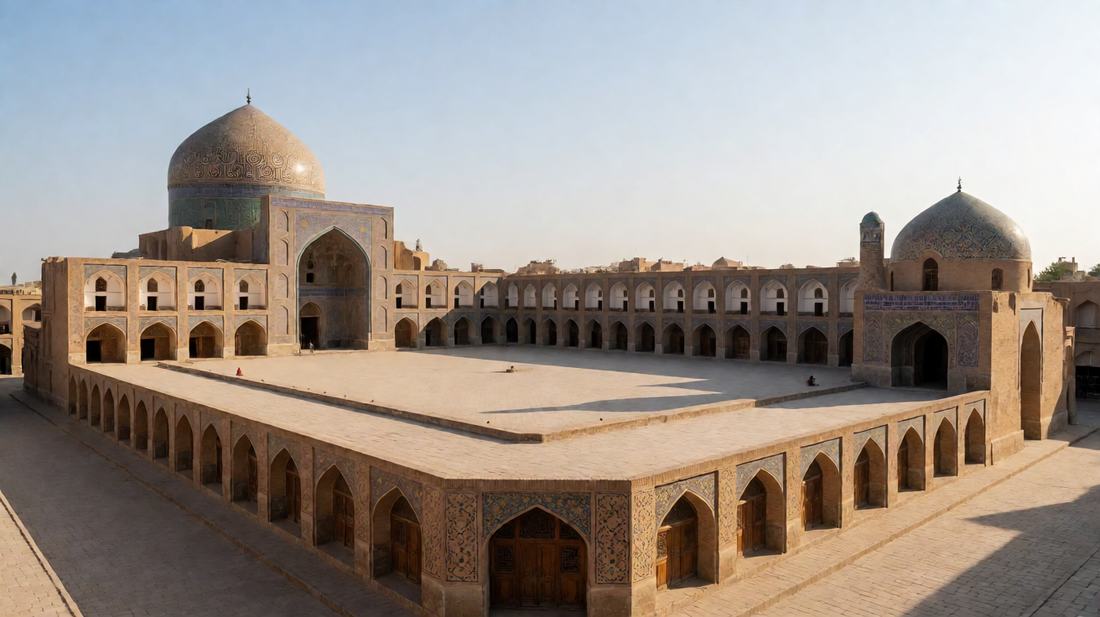
The Safavid Empire | Persia Reborn
Historical Profile · Iran
The Safavid Empire | Persia Reborn
A dynasty that made Shia Islam the faith of Persia, built Isfahan as a showpiece and held its western border against the Ottomans for two centuries.
AD 1501-1736
Founded
State faith
Chaldiran
Greatest shah
Ended
The big picture
Introduction
The Safavid empire brought Persia back together after long years of rule from outside. It made the land into what it has largely been since. It was founded in 1501 by a young chief named Ismail. He took the town of Tabriz and had himself made shah.
From then on the rulers of Persia were native kings again. The faith of the state was a form of Islam called Shia. That set Persia apart from its neighbours. The empire lasted 235 years.
Its greatest ruler built a seat at Isfahan. The town is still one of the finest on earth.
Setting
Historical Context
Persia had not been ruled from within for a very long time. The Mongol raids of the 1200s had broken the old order. The states that came next were run by chiefs of Turkic or Mongol stock. In the 1400s the land was split between rival bands of tribal troops. The settled lands of the centre were fought over again and again.
The family that changed this came from Ardabil, in the north west. It led a group of the faithful with a large following among the tribes. Over the 1400s the group turned from a faith into an army. Its followers came to see its head as a ruler as well as a teacher. Ismail led that movement at the age of fourteen.
He had the loyalty of the tribal fighting men. In 1501 he took Tabriz. Within 10 years he held the whole of the Iranian plateau. He then made the Shia form of Islam the state faith and made the people follow it.
Turning points
Key Events
The new state was almost at once at war with its western neighbour. In 1514 the Ottoman sultan Selim I met Ismail’s army at Chaldiran. He beat it with guns. Ismail lost his seat for a time. He never again led an army in person. The line between the two states stayed a source of war for two long ages. Ismail died in 1524. His son Tahmasp held the empire together for 52 years.
He moved the seat east to Qazvin. He beat off wave after wave of Ottoman attacks. After him came a spell of weak rule and civil war. Out of that chaos came the greatest of the Safavid shahs. Abbas I took the throne in 1588 and ruled until 1629. He made peace with the Ottomans in the west. He rebuilt the army on a new footing. In 1598 he moved the seat to Isfahan, in the heart of the plateau.
He took back the lands his kin had lost. In 1622 he drove the Portuguese out of the port of Hormuz. The empire reached its greatest size. The end came from within and from the east. After Abbas the quality of rule fell. In 1722 an Afghan force marched on Isfahan and took it after a long siege. The empire broke up. In 1736 a soldier named Nadir Shah put an end to the line and took the throne himself.
1
2
3
Who held power
People and Powers
The shah stood at the head of the state. In the early years he ruled with the backing of the tribal fighting men. These tribes were the spine of the army. They were also a threat. Their chiefs could swap sides.
Abbas I dealt with this by building a second force of troops. They were paid by the crown and owed loyalty to it alone. Many were brought in from the Caucasus as young men and trained. The empire also needed men to keep records and collect taxes. The Safavids took over the class of scribes and clerks already in place.
Under Abbas the court grew into a settled body with branches for the treasury and the army. The religious scholars were another body of power. The state brought in teachers from outside to build up a Shia clergy. Rule was a matter of holding a balance. The shah had to keep the tribes, the paid troops, the scribes and the scholars from joining against him.
Everyday world
Daily Life and Society
Isfahan was built to be seen. Its heart was a vast square. A royal mosque stood at one end and a smaller private mosque at the other. A great covered market ran along one side. A palace with a raised terrace ran along the other.
The square served as a place of trade, ceremony and sport at the same time. The town was also planned for water and shade. A long avenue ran beside a channel with pools and fountains. The royal gardens were laid out along it. Bridges of brick and stone crossed the river.
Most of the people did not live in the seat. They were farmers in villages. Their land was watered by long underground channels cut into the hills. Craftsmen worked in the towns. The bazaars were the meeting point of the whole system.
Craft and ideas
Trade, Technology and Ideas
Silk was the great export. The Safavids took the trade in hand. They sold through traders they could trust. At one point the sale of silk was a royal grip. The thread went west to the markets of Europe and east to India. The money it brought in paid for the court and the army.
Cloth of wool and cotton, carpets and metalwork went with it. The court also dealt with the other great states of the region. The Safavids were at war with the Ottoman Empire for most of their history. They looked for friends against it wherever they could find them. With the Mughal Empire in India the tie was different. The two courts swapped envoys and gifts.
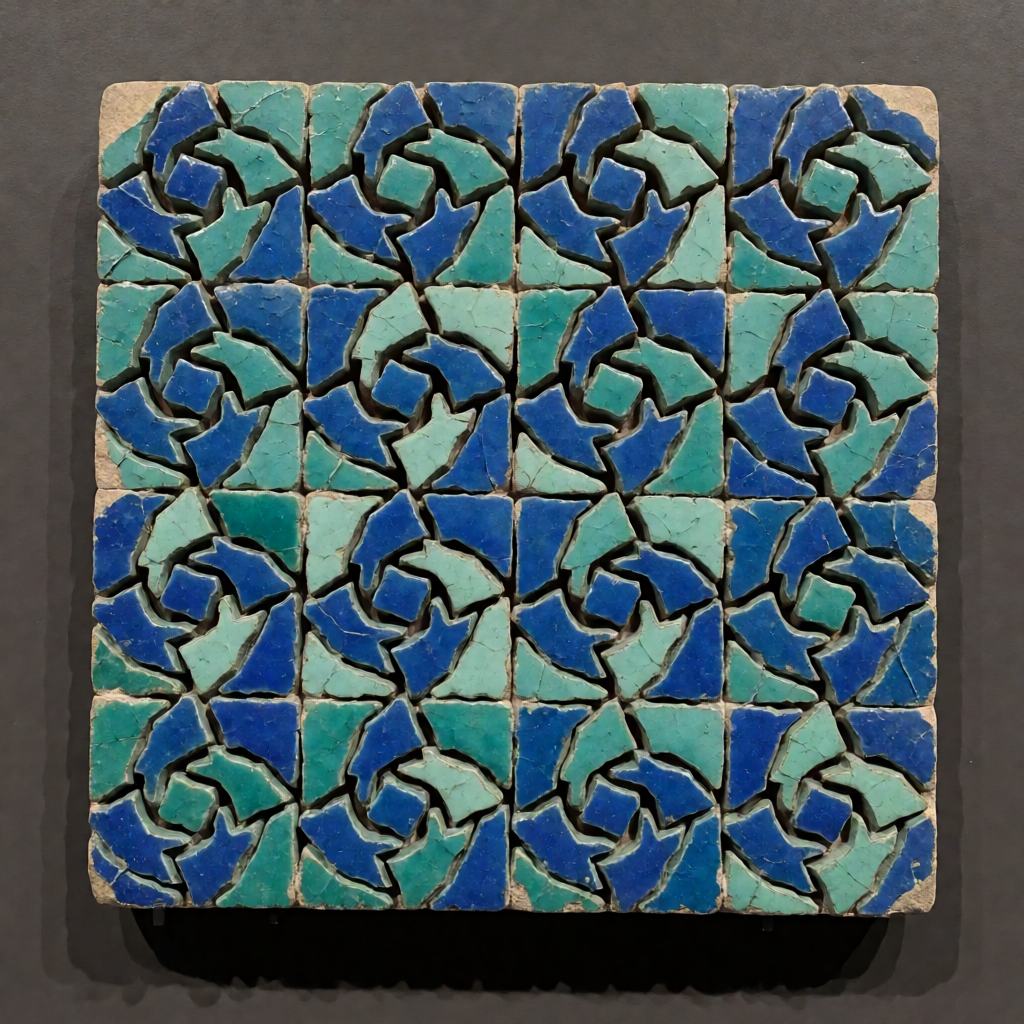
Persian artists and writers found work in India. Persian was the tongue of the chancery in both empires. Building and learning went together. The tilework of Isfahan is the high point of a craft the Safavids built up for a century. Painters in the royal workshop made book pictures of great skill. Philosophers taught in the schools of the seat.
What lasted
Legacy
The most lasting fact about the Safavids is the one they set in place in their first year. By making the Shia faith the state faith, they gave Persia a character of its own. That difference is still the base of the land’s politics today.
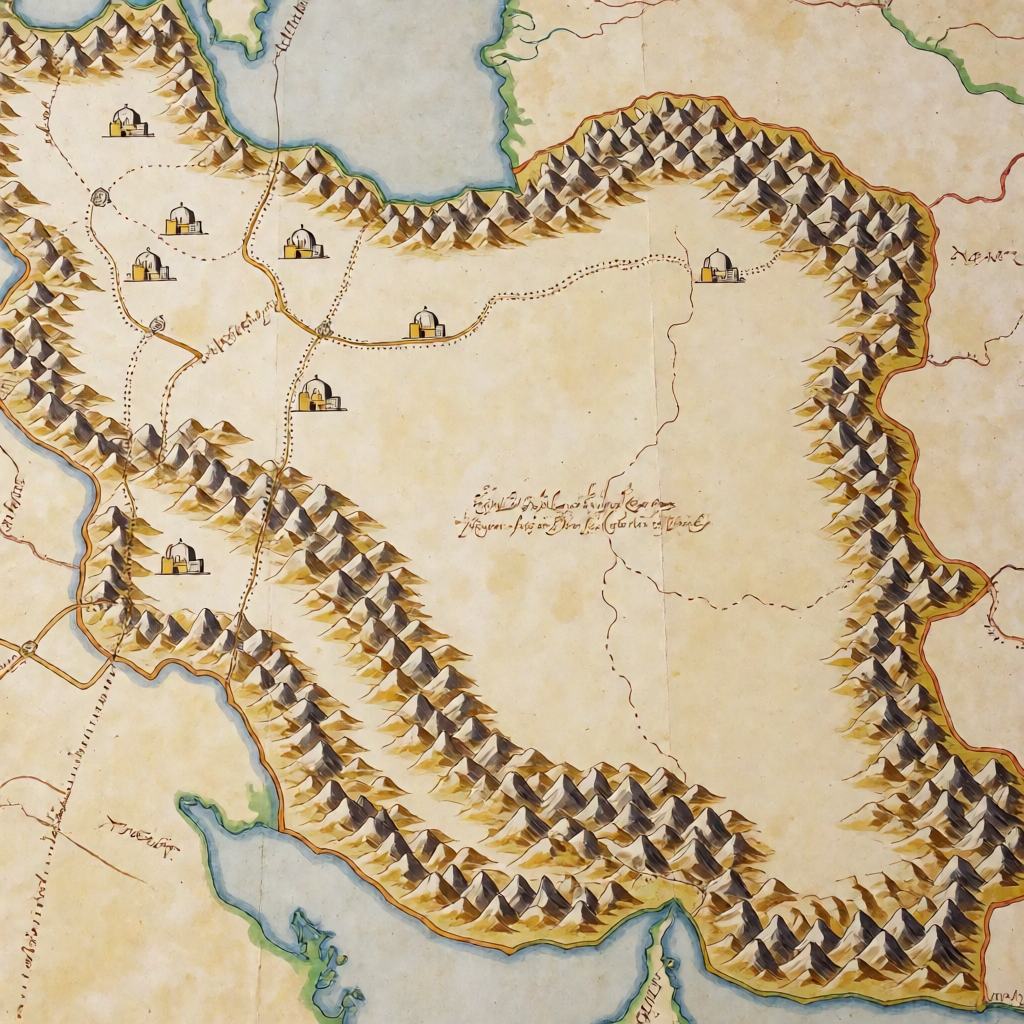
The borders they held in the west were settled with the Ottomans in 1639. They are close to the western border of modern Iran. Isfahan was listed as a world heritage site in 1979.
Its square is one of the largest public spaces of its kind on earth. The empire itself left no great book of the kind its neighbours made. Its mark is in the map, the faith and the buildings.
Quick hits
Five Things to Remember
- The Safavid empire was founded in 1501, when Ismail took Tabriz and made Shia Islam the state faith.
- In 1514 the Safavids were beaten at Chaldiran by the Ottomans, who had guns.
- Shah Abbas I ruled from 1588 to 1629 and moved the seat to Isfahan in 1598.
- Silk was the main export, and at times the trade was a royal grip.
- The empire fell in 1722, and the line ended in 1736.