 By st20113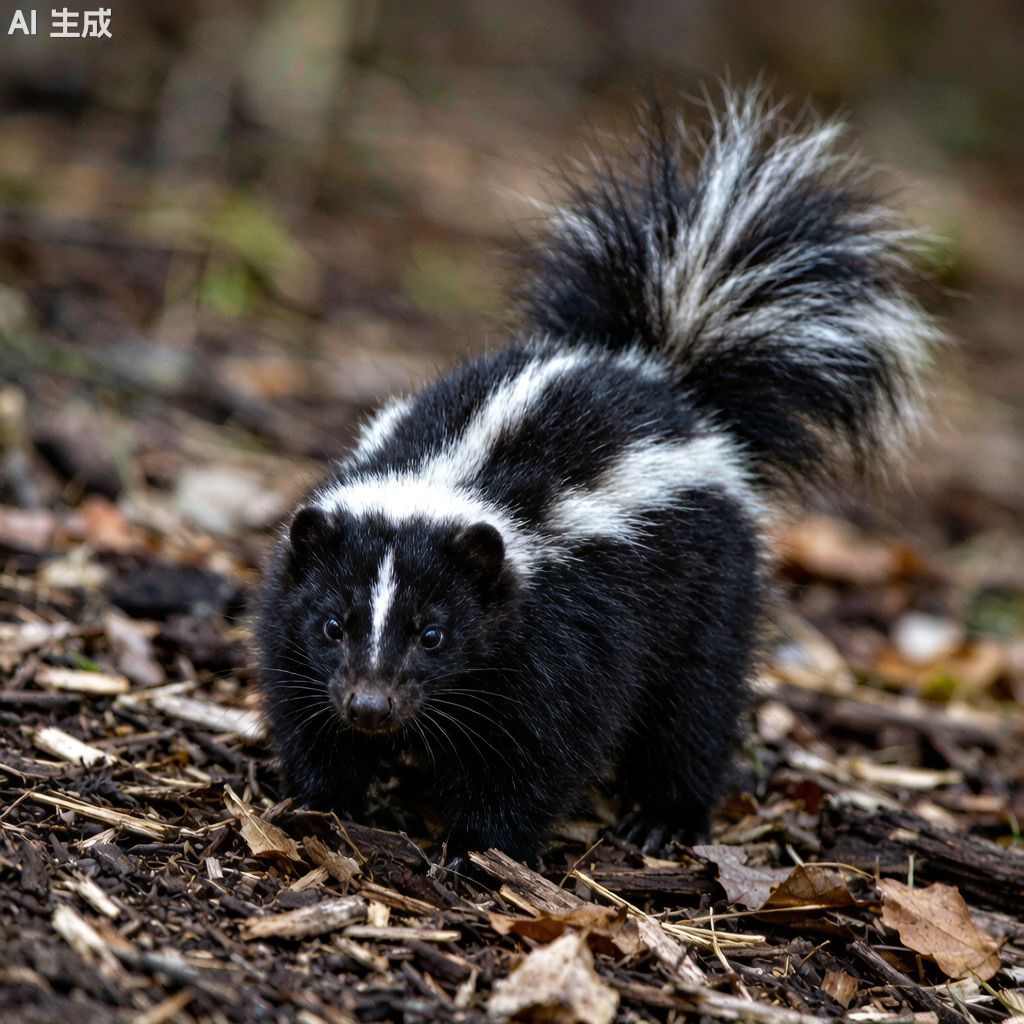
Introduction
The skunk, scientifically known as Mephitis mephitis, is a small to medium-sized mammal native to North America. It is best known for its ability to spray a pungent, oily liquid from glands near the base of its tail as a defense against predators. Despite this notorious reputation, skunks are generally shy, solitary animals that prefer to avoid confrontation. They are most active at night, foraging for insects, small vertebrates, and plant matter. The species plays a useful role in controlling pest populations. Related mammals such as the raccoon share its woodland and suburban range across much of the continent.
Taxonomy
Skunks belong to the family Mephitidae, which was separated from the weasel family Mustelidae in the 1990s based on genetic evidence. Mephitis mephitis is the most widespread of several skunk species. The genus name Mephitis derives from Latin for “noxious vapor.” Within its range the skunk shows considerable variation, with several recognized subspecies across North America. Close relatives include the spotted skunks and the badger, another digging carnivoran. Although once grouped with weasels and the wolverine, modern classification places skunks in their own distinct lineage. This separation reflects a deep evolutionary divergence spanning millions of years.
Physical Characteristics
Adult skunks typically weigh between 2.5 and 14 pounds depending on sex and region, with males larger than females. Their most recognizable feature is the contrasting black fur with a broad white stripe running down the back and tail, though pattern variations exist. Skunks have short, muscular legs built for digging and five toes on each foot equipped with strong claws. Their small heads and keen sense of smell compensate for relatively poor vision. The anal scent glands produce a sulfur-containing compound called thiol, which can be ejected accurately up to several meters. Despite their defenses, skunks fall prey to larger carnivores such as the red fox and great horned owls.
Habitat
Skunks are highly adaptable and occupy forests, grasslands, deserts, and suburban edges throughout North America. They den in abandoned burrows, hollow logs, brush piles, or beneath buildings and sheds. The opossum and the skunk often use similar denning sites, though skunks prefer drier locations. The animals range from southern Canada through most of the contiguous United States into northern Mexico. They tolerate human presence well, which sometimes brings them into conflict with homeowners. During cold northern winters skunks enter a state of torpor, though they do not undergo true hibernation and may emerge on warm nights to feed.
Diet
Skunks are omnivorous and opportunistic, adjusting their diet to seasonal availability. In spring and summer they consume large quantities of insects such as beetles, grasshoppers, and crickets, making them valuable for natural pest control. They also eat small rodents, frogs, birds’ eggs, and carrion. Plant foods including berries, roots, leaves, and fallen fruit round out their meals. Their digging habits help aerate soil while uncovering grubs. Skunks forage alone at night, using their claws to excavate larvae and their sense of smell to locate hidden food beneath the surface.
Reproduction
Breeding occurs in late winter to early spring, typically between February and March. After a gestation period of about 59 to 77 days, females give birth to a litter of four to seven blind, helpless kits. The young remain in the den for several weeks, opening their eyes at around three weeks and being weaned by two months. By late summer the kits disperse to establish their own ranges. Male skunks take no part in rearing the offspring. Females are protective and may spray intruders that approach the den too closely. A single female can produce one litter per year under normal conditions.
Conservation
The striped skunk is currently listed as a species of least concern by the IUCN, owing to its wide distribution and stable populations. It remains one of the most abundant carnivorans in North America. The main threats are road mortality, habitat fragmentation, and persecution by humans who fear the spray. Some populations are affected by canine distemper and rabies, which can spill over from domestic animals. Where skunks are common, they help regulate agricultural pests, providing an ecological service that benefits farmers. Continued coexistence depends on public education and the use of humane exclusion rather than lethal control.
Fun Facts
A skunk’s spray can be detected by the human nose from more than a mile away under ideal conditions. Baby skunks are born with a faint stripe pattern that darkens as they mature. Skunks are surprisingly good climbers despite their short legs and can scale fences and low trees. They perform a warning dance, stamping forefeet and raising the tail before spraying. The chemical thiol responsible for the odor is so potent that a single drop can be smelled across an entire room. Skunks and their relatives have inspired many folk names, including “polecat,” though true polecats belong to a different genus.