 By st20113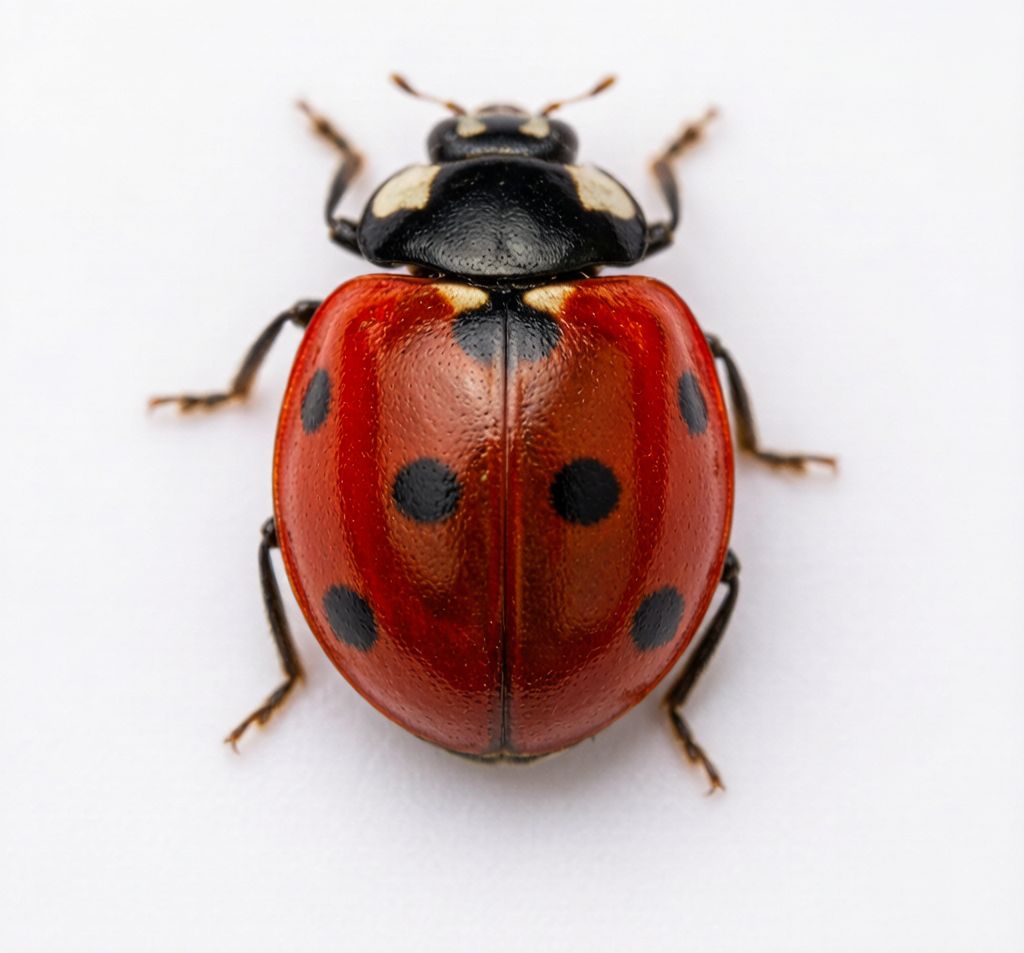
The seven-spot ladybird is one of the most familiar and beloved insects in Europe, identified by virtually everyone thanks to its vivid red wing cases marked with three black spots on each. It is a voracious predator of aphids and other small sap-sucking insects, making it one of the most economically valuable beneficial organisms in agriculture and horticulture. Found across Europe, North Africa, and much of Asia, it thrives in gardens, farmland, meadows, and woodland margins. The ladybird’s bright red colouration is a classic example of aposematism, advertising the insect’s toxicity to potential predators through a conspicuous warning signal. The seven-spot ladybird often shares garden habitats with the common toad, and the aesculapian snake is a natural predator in some of its range..
Taxonomy
The seven-spot ladybird (Coccinella septempunctata) belongs to the family Coccinellidae, order Coleoptera. The genus Coccinella contains approximately 20 species of ladybirds distributed primarily across the Holarctic region. Its closest relatives include the eleven-spot ladybird (Coccinella undecimpunctata) and the punctate ladybird (Coccinella magnifica). Three subspecies are recognised: C. s. septempunctata across most of the range, C. s. borealis in northern Scandinavia, and C. s. bruckii in the Himalayas and eastern Asia. Phylogenetic analyses using mitochondrial DNA have revealed that the seven-spot ladybird and several other Coccinella species form a monophyletic group. The species was formally described by Carl Linnaeus in 1758.
Physical Characteristics
Adults measure 7-10 mm in body length, with the characteristic hemispherical body shape shared by most ladybirds. The elytra are bright red to orange-red, each bearing three black spots for a total of seven, plus a small additional spot at the junction of the two elytra. The pronotum is black with a white or cream marking at each anterior corner, forming a characteristic W or M shape. The head is black with two small white spots. The legs and antennae are black. Both adults and larvae are unpalatable to most vertebrate predators due to alkaloid toxins secreted from their leg joints.
Habitat
The seven-spot ladybird occupies virtually any habitat that supports populations of its aphid prey, making it one of the most habitat-generalist ladybird species. It is abundant in gardens, agricultural fields, meadows, hedgerows, woodland edges, and heathland. In summer, adults disperse actively in search of aphid-rich feeding sites, and mass migrations of thousands of individuals are sometimes observed. In autumn, adults seek sheltered overwintering sites such as leaf litter, grass tussocks, bark crevices, hollow plant stems, and buildings, often aggregating in communal groups of dozens to hundreds of individuals.
Diet
Both adult and larval seven-spot ladybirds are voracious predators of aphids and other small soft-bodied insects. An individual adult can consume 50-60 aphids per day, and larvae may eat 200-300 aphids over their three-week development period. Over a lifetime, a single adult may consume more than 5,000 aphids. Additional prey includes psyllids, scale insects, mites, small caterpillars, and the eggs of various insect pests. When aphids are scarce, adults will also consume pollen, nectar, and honeydew. Larval development is entirely dependent on adequate aphid availability.
Reproduction
Mating occurs from spring to early summer. After mating, females lay 10-50 bright yellow oval eggs each day, attached to leaf surfaces near aphid colonies, over a period of several weeks. Total fecundity ranges from 200 to more than 1,000 eggs per female. Eggs hatch in three to seven days, and larvae pass through four instars over two to three weeks before attaching to a leaf or stem to pupate. Adults emerge from pupae after five to seven days. There are typically one to three generations per year depending on climate. In autumn, adults enter reproductive diapause before seeking overwintering sites.
Conservation
The seven-spot ladybird is listed as a species of Least Concern by the IUCN and is not considered globally threatened. However, it faces competition from the invasive harlequin ladybird (Harmonia axyridis), which was introduced to Europe as a biological control agent and has become the continent’s most abundant ladybird species in many areas. The harlequin ladybird outcompetes native species for aphid resources and also preys on their eggs and larvae. Pesticide use in agriculture also reduces ladybird populations in cropped areas. The species is considered a beneficial organism and is actively encouraged through flowering field margins that sustain both ladybirds and their aphid prey.
Fun Facts
The common name ladybird is thought to derive from the Virgin Mary, with the seven spots representing the seven joys of Mary. In some European countries, finding a ladybird on your hand and making a wish before it flies away is a well-known tradition. Ladybirds can fly at speeds of up to 24 km per hour. During the nineteenth century, ladybirds were actively imported to North America from Europe to control aphid pests on citrus crops. When disturbed, ladybirds secrete alkaloid toxins from their leg joints, a defence mechanism that makes them distasteful to most bird predators.
[…] beetle shares the family with the Seven-spot Ladybird. That beetle has red wing cases with 7 black spots. It hunts aphids on many plants. Our beetle has […]