 By st20113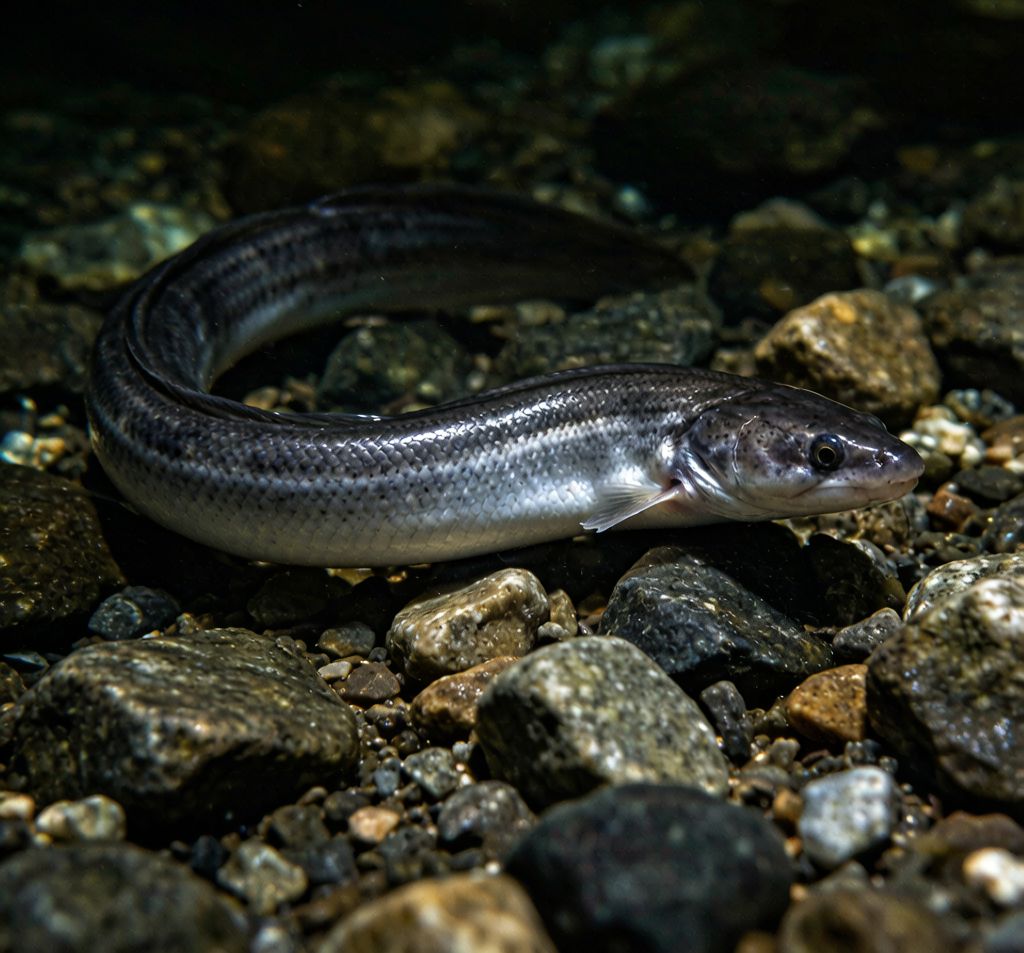
The European eel is one of the most remarkable fish in the world, undertaking an epic catadromous migration across the Atlantic Ocean from European rivers to the Sargasso Sea in the central North Atlantic to spawn. Its complex life cycle involves dramatic physical transformations across distinct life stages and puzzled scientists for centuries. Once abundant across Europe, the eel now faces severe population decline and is classified as Critically Endangered by the IUCN. For centuries the origin of European eels was completely mysterious, spawning elaborate folk theories including spontaneous generation from horsehairs in pond water. In lowland rivers the European eel often shares its habitat with the tench, and both species are vulnerable to predation by the red fox when moving through connected wetlands..
Taxonomy
The European eel (Anguilla anguilla) belongs to the family Anguillidae, order Anguilliformes. The genus Anguilla contains approximately 20 species of freshwater eels distributed across tropical and temperate regions worldwide. Its closest relatives include the American eel (Anguilla rostrata), with which it was long confused before the two were recognised as separate species. Recent genetic and otolith studies have confirmed complete reproductive isolation between Atlantic and American eels. The species was formally described by Carl Linnaeus in 1758. Taxonomically, the European eel is considered monotypic, though substantial variation in growth rates and migratory timing exists between glass eel cohorts from different river systems.
Physical Characteristics
The European eel has a snake-like, elongated body that can reach 60-150 cm in length and 3-6 kg in weight, with females considerably larger than males. Scales are small and embedded in thick, slimy skin. The dorsal, caudal, and anal fins are fused into a single continuous fin. Colouration changes dramatically with life stage: glass eels are transparent; elvers are darkish; yellow eels are olive-yellow to brownish; and silver eels are dark grey dorsally with silver-white ventral surfaces and enlarged eyes, an adaptation for deep-sea spawning migration. The lateral line is well-developed and highly sensitive to water movement.
Habitat
The European eel occupies an extraordinary diversity of freshwater, brackish, and coastal habitats across its enormous range. After their trans-Atlantic migration, juvenile eels enter European rivers and spend the bulk of their lives in lakes, ponds, rivers, canals, and estuaries, often burrowing into soft mud or clay substrate. They are nocturnal and secretive, hiding in crevices, under stones, and among submerged roots. Remarkably, eels can cross damp land to move between disconnected water bodies. Before spawning, silver eels undergo physiological changes preparing them for the open ocean and cease feeding entirely.
Diet
The European eel is primarily nocturnal, feeding on a wide variety of animal prey including fish, crustaceans, insects and their larvae, molluscs, and worms. Larger eels become increasingly piscivorous as they grow. Prey is detected primarily by scent and vibration through the lateral line system. A remarkable aspect of eel feeding is their ability to consume prey much larger than their own head width, thanks to their highly distensible jaws. During their oceanic migration to the Sargasso Sea, eels do not feed at all and rely entirely on fat reserves accumulated over their freshwater residency.
Reproduction
The reproductive biology of the European eel is among the most extraordinary of any fish. Adults never reproduce in freshwater; instead, sexually mature silver eels migrate thousands of kilometres across the Atlantic to the Sargasso Sea, spawning at depths of approximately 200-1,000 m. The eggs develop into ribbon-shaped larvae called leptocephali, which drift on ocean currents back towards Europe over one to three years. During this drift they transform into glass eels and then elvers, which enter coastal waters and migrate upstream. After spending 5-20 years in freshwater, eels undergo final sexual maturation and begin their return migration. The entire life cycle may span 20 or more years.
Conservation
The European eel is classified as Critically Endangered by the IUCN and is subject to an EU-wide recovery plan requiring Member States to reduce fishing mortality and improve habitat access. The species has declined by 90-95 percent since the 1970s, driven by overfishing, habitat fragmentation from hydroelectric dams, pollution, parasitism by the swim bladder nematode Anguillicoloides crassus, and climate change. Glass eel fisheries in France, Spain, and Portugal have been severely restricted. Conservation measures include fishing moratoria, restocking programmes, installation of fish passes on dams, and reduction of water pollution.
Fun Facts
Aristotle believed eels emerged from mud without mating, a view that persisted for over 2,000 years. The final piece of the eel life cycle puzzle was solved by Danish biologist Johannes Schmidt, who spent nearly 30 years at sea collecting eel larvae and gradually tracing them back to their spawning ground in the Sargasso Sea. In Greek mythology, the god Zeus transformed himself into an eel to escape capture. European eels have been cultivated in aquaculture for food since at least Roman times, and eel fishing remains an important cultural and economic activity in several European countries.