 By st20113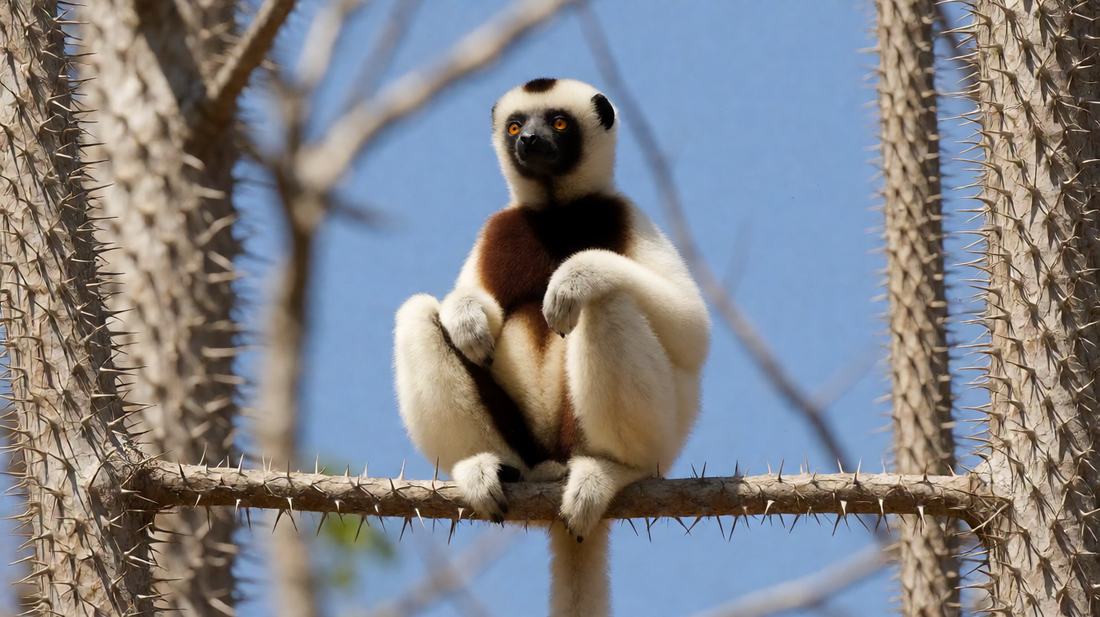
Propithecus coquereli | Coquerel’s Sifaka
Species Profile · Indriidae
Coquerel’s Sifaka
A leaping lemur of Madagascar’s dry forests, white as snow with a maroon chest, that never drinks a drop of water.
Endangered global assessment
Length
Tail
Weight
Gestation
Breeding age
Rating
The Coquerel’s Sifaka
A leaping lemur of the dry forest
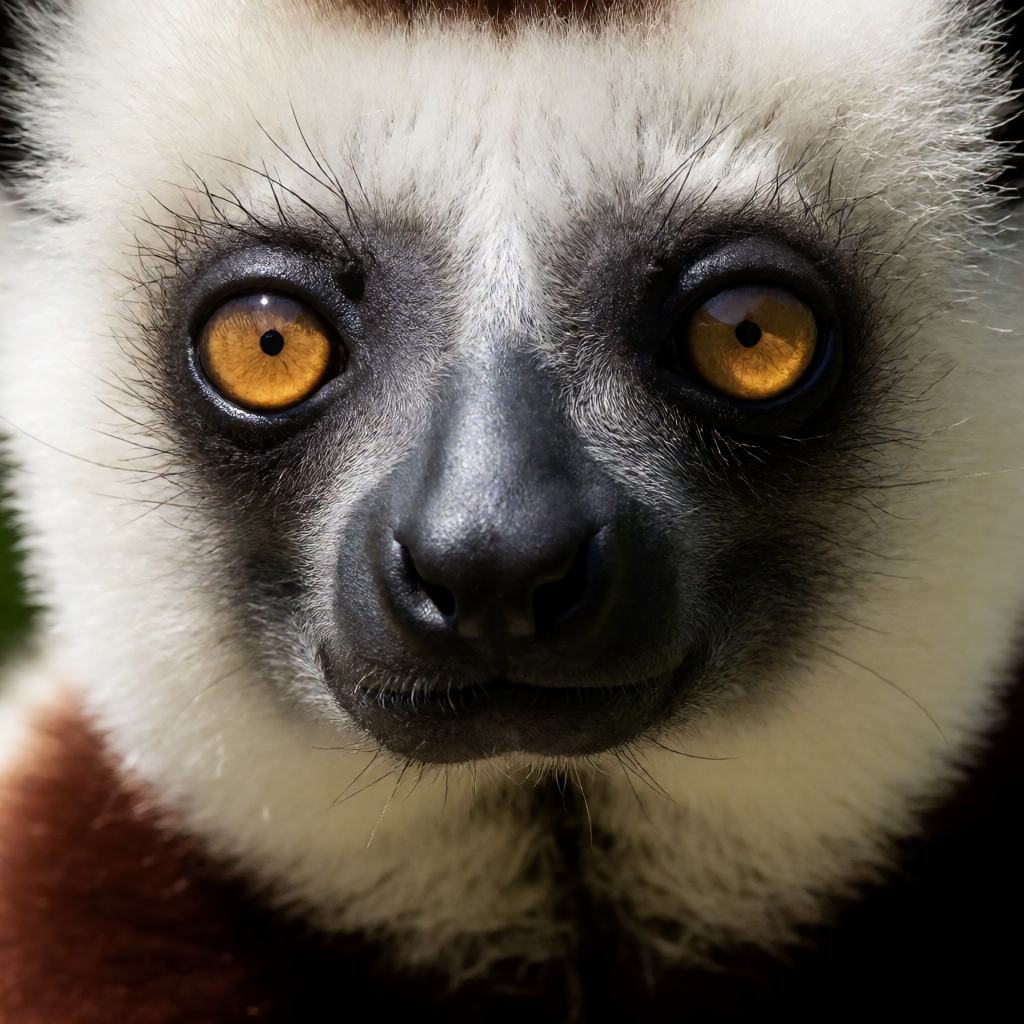
This sifaka lives only in the dry forests of northwest Madagascar. A coat of white fur covers most of its body. Maroon patches stain the chest and upper arms. Its face stays bare and dark.
These animals move through the trees by leaping upright. On the ground they hop sideways on two legs. That odd gait looks like dancing. Because the forests are being cut for charcoal and cattle, the species has lost much of its old range.
Local people once refused to harm these animals. Today, however, hunting and tree loss press the animal hard.
Family tree
Indriidae, the sifakas and their kin
The sifaka sits in a small lemur family. Four species are known today. Coquerel’s form was once lumped with another, since the two look alike. Gene work in 2001 split them apart.
Although all four share one body plan, each one leaps in its own way. Its closest kin live further north and hold a smaller patch of forest. A distant cousin, the Ring-tailed Lemur, walks on all fours and spends far more time on the ground. Both animals come from the same island group, yet one is a leaper and the other a runner.
Its name comes from the alarm call, which sounds like shi-fak. Villagers gave the animal that name long before science took note.
White and maroon
How to tell one
Adults measure 42 to 50 cm from head to rump. The tail adds another 50 to 60 cm. Weight runs from 3.7 to 4.3 kg. Females grow a bit heavier than males.
Long hind limbs drive the leap. A springy ankle takes the landing. Strong hands grip tree trunks. Fur stays thick and soft.
Because the animal clings upright to a trunk, its body has flattened into a shape built for climbing rather than walking. Teeth are made for shredding leaves, with ridges that cut tough fibres.
1
2
3
Dry forest
Where it lives
Dry forest is the main home. The species also uses thorn scrub and river woodland. Trees here lose their leaves for months.
Water is scarce through the dry spell. Sifakas never drink. They get water from leaves and bark instead.
Groups hold ranges of a few hectares. Sleeping trees are used night after night. Because the animals need tall trees for leaping and shade for rest, a cleared grove becomes useless to them long before every trunk is gone.
Leaves and figs
What it eats
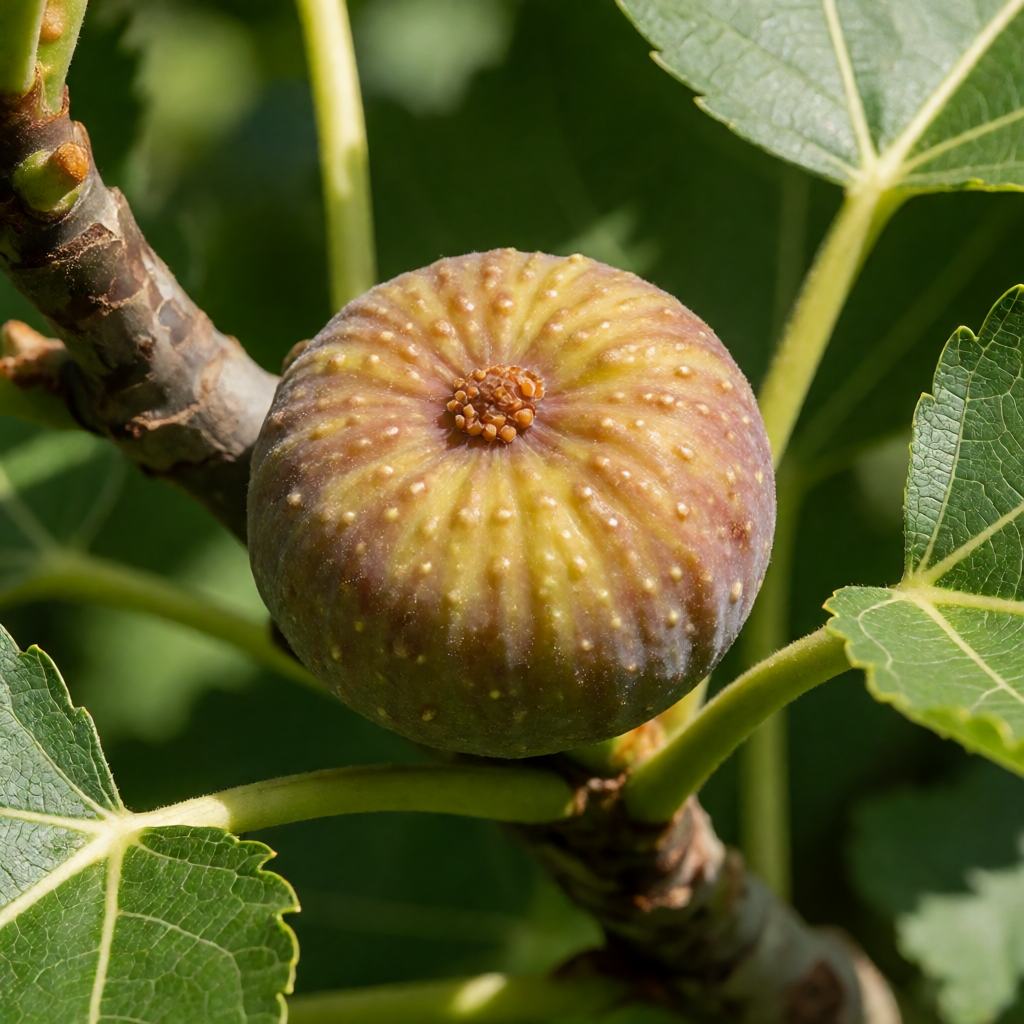
Leaves make up most of the diet. Flowers, fruit and bark fill out the rest. A favourite food is the tamarind.
The animal eats quietly for hours each morning. Digestion therefore takes a long time. A special gut chamber breaks down plant fibre.
In fact, young leaves are picked over old ones. Because plant food gives little fuel, a sifaka must spend much of its day resting and chewing rather than moving.
One infant a year
The breeding cycle
Females hold the top rank in every group. That arrangement is odd for a mammal, although it holds for all four species. Mating takes place in January and February. She carries the young for about 130 days.
A single infant arrives in June or July. Meanwhile, the newborn clings to its mother’s belly. Later it rides on her back. Weaning takes about 6 months.
Females reach breeding age at 2.5 years. A female may live 20 years in the wild.
Endangered
Conservation
The IUCN lists the species as Endangered. Numbers have fallen sharply over recent decades. Slash-and-burn farming removes trees each year.
Charcoal burning takes a further toll. Moreover, hunting adds pressure in some districts. Just a few parks hold secure groups.
However, captive breeding has had some success. Because this animal needs big trees and cannot cross open ground, a road or a field can seal off a whole colony from its neighbours.
Side by side
How It Compares
| Trait | Coquerel’s Sifaka | Ring-tailed Lemur |
|---|---|---|
| Travel | upright leaps between trunks | walks on all fours |
| Coat | white, with maroon on the chest | grey, with a banded tail |
| Group size | 3 to 10 | up to 20 |
| Top rank | female | female |
| Water | never drinks | drinks when it can |
| IUCN status | Endangered | Endangered |
Common misreadings
What People Get Wrong
- Sifakas drink from streams. They take all their water from leaves.
- The dance on open ground is play. It is how the animal crosses a gap.
- Males are said to lead the group. Females hold the top rank.
Going further
Sources and Further Reading
- Duke Lemur Center, Coquerel’s sifaka
- IUCN. 2018. Propithecus coquereli. The IUCN Red List of Threatened Species.
- Mittermeier, R. A. et al. 2010. Lemurs of Madagascar. Conservation International.
- Animal Diversity Web, University of Michigan. Propithecus coquereli.
Quick hits
Five things to remember
- Females lead every group.
- Newborns cling to the mother’s belly for weeks.
- Sifakas go their whole lives without drinking.
- One leap can carry the animal 10 m across a gap.
- Group members greet each other by scent.