 By st20113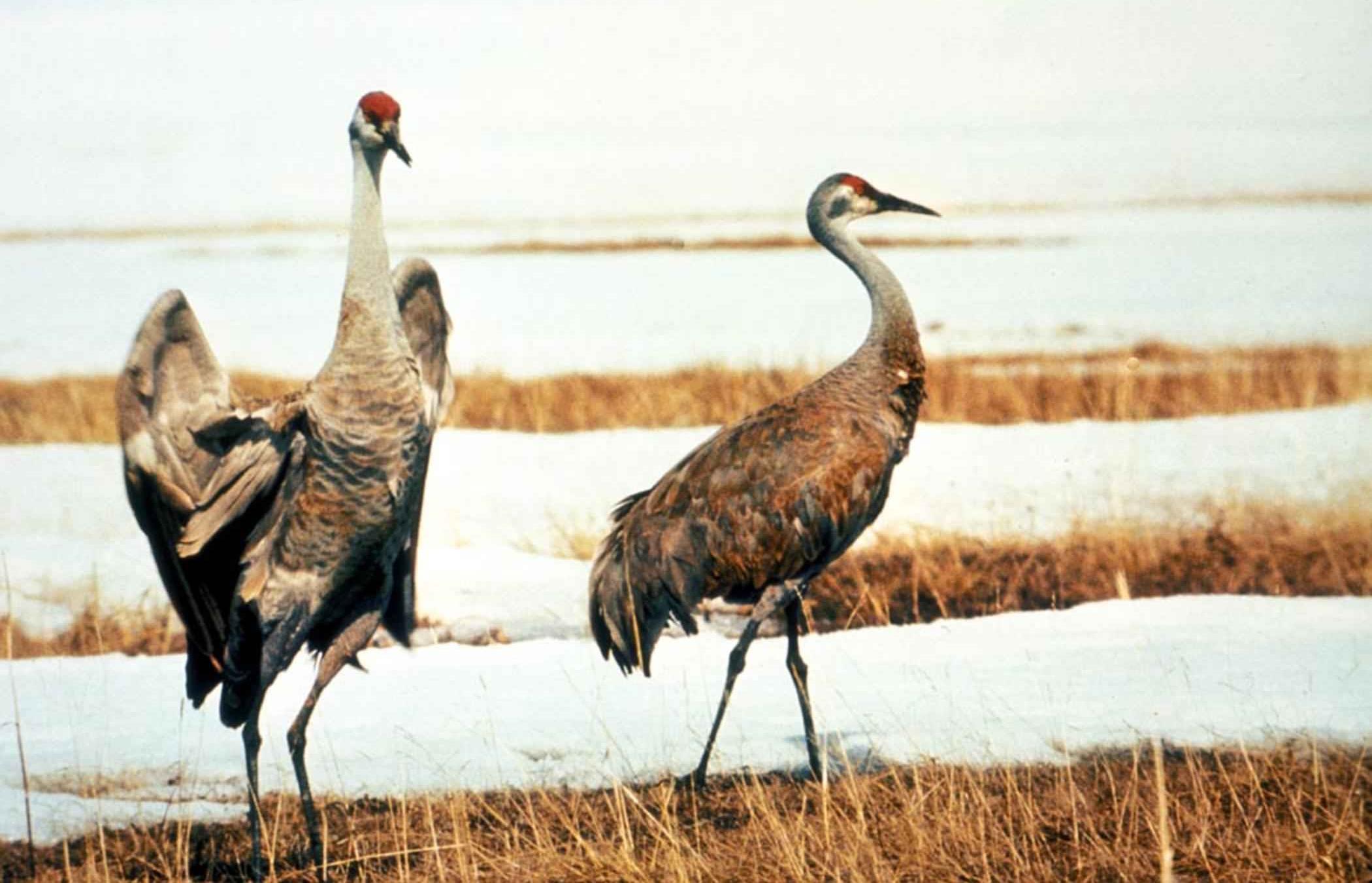
Introduction
The Sandhill Crane (Antigone canadensis) is a tall, graceful bird of open wetlands and grasslands, celebrated for its elaborate courtship dances and loud, trumpeting calls that carry for kilometers. Standing about 1 meter tall with a wingspan near 2 meters, it is one of the oldest living bird lineages, with ancestors that date back millions of years. Its gray body, long neck, and red crown make it easy to distinguish from other large wading birds.
Sandhill Cranes breed across northern North America and Siberia and gather in enormous flocks during migration, most famously at Nebraska’s Platte River. In wetland margins they sometimes roost near the Great Blue Heron, though cranes rest on the ground in open shallows while herons perch in trees.
Taxonomy and Classification
The Sandhill Crane belongs to the family Gruidae, the true cranes, and was formerly placed in the genus Grus before being moved to Antigone. Its scientific name, Antigone canadensis, references both a figure from Greek myth and its Canadian range. Several subspecies are recognized, including the rare and tiny Mississippi Sandhill Crane.
Cranes are among the most ancient of living birds, and genetic evidence places them close to rails and coots. Unlike herons, cranes fly with their necks fully extended, a useful field mark.
Physical Characteristics
Adult Sandhill Cranes stand 80 to 120 centimeters tall and weigh 3 to 6.5 kilograms. They are mostly slate gray, often stained rusty brown from preening with iron-rich mud. A bare red patch of skin tops the head, and the long, dark legs and straight bill suit their probing, omnivorous feeding.
In flight, their outstretched neck and broad, fingered wingtips distinguish them from herons. Juveniles lack the red crown and are browner overall. Their size and posture give them a dignified, almost prehistoric appearance.
Habitat and Distribution
Sandhill Cranes use a wide range of open habitats: wetlands, prairies, marshes, tundra, and agricultural fields. They breed in the northern U.S., Canada, Alaska, and Siberia, and winter in the southern U.S. and northern Mexico.
They are highly migratory, forming some of the largest bird gatherings on Earth. Along migration routes they share open country with the American Robin, which may forage in nearby pastures, though the robin stays on short grass while the crane works the wetter ground.
Diet and Behavior
Sandhill Cranes are omnivorous, eating seeds, tubers, grains, berries, insects, small mammals, amphibians, and reptiles. They forage by probing and pecking in soft ground, often in pairs or family groups, and they glean waste grain from farm fields that benefits both them and agriculture.
Their social behavior is famous: pairs perform synchronized dances with leaps, wing flaps, and bowing, strengthening bonds and defending territory. Their rolling, bugling call is produced by an elongated trachea and is among the most haunting sounds of the wetlands.
Reproduction and Life Cycle
Sandhill Cranes form long-term pair bonds and build a simple nest of plant material on the ground in marshes or wet meadows. The female lays one to three olive-colored eggs, incubated by both parents for about 29 to 32 days.
Young cranes, called colts, can walk and swim within a day of hatching and stay with their parents through the first migration. They reach maturity at two to seven years and may live more than 20 years in the wild, a long life that helps compensate for slow reproduction.
Conservation Status
The Sandhill Crane is listed as Least Concern, with populations generally healthy and, in some regions, increasing. Conservation of wetlands and safe migration stopovers has been key to its recovery.
The rarer subspecies remain vulnerable to habitat loss and drought at critical staging sites. Overall, the species is a conservation success story, recovering from historical declines through protected flyways.
Fun Facts
Sandhill Cranes perform dances not only in courtship but also to relieve tension and strengthen pair bonds, leaping as high as a meter in the air. Their calls can be heard over 3 kilometers away.
The species is among the oldest birds alive, with fossil relatives dating back nearly 10 million years. In wooded edges bordering their wetland homes, the Sandhill Crane may pass within sight of the Northern Cardinal, a small songbird that sings from the shrubs while the towering crane moves through the open marsh.
[…] subspecies and was formally described by Johann Friedrich Gmelin in 1789. Within its range, the Sandhill Crane and other large waterbirds share similar wetland habitats and breeding […]
[…] g. lilfordi of eastern Asia. Genetic work confirms its close relation to other cranes such as the Sandhill Crane, though their ranges barely overlap. Its red crown and black-and-white neck pattern make it […]