 By st20113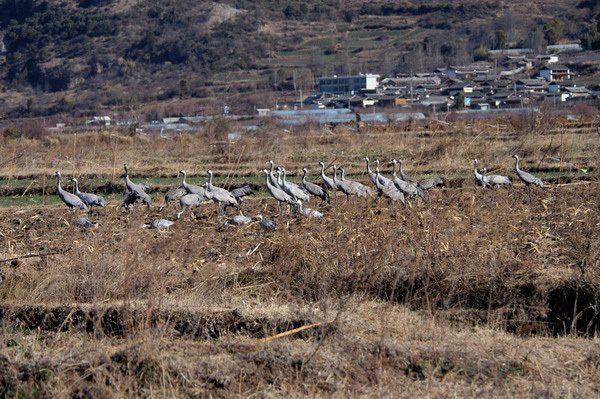
Introduction
The Common Crane (Grus grus), also called the Eurasian Crane, is a large bird of the crane family Gruidae. Standing 100 to 130 centimeters tall with a wingspan up to 2.4 meters, it is among the most widespread cranes of Europe and Asia. Famous for its courtship dances, trumpeting calls, and vast migratory flocks, it features in the folklore of many cultures. Each year hundreds of thousands travel between northern Eurasian breeding grounds and wintering sites in North Africa, the Middle East, and southern Europe, forming one of the great spectacles of the bird world and a symbol of the changing seasons across the continent.
Taxonomy
Described by Linnaeus in 1758 as Grus grus, it is the type species of genus Grus in family Gruidae, order Gruiformes. Two subspecies are recognized: G. g. grus of Europe and western Asia, and G. g. lilfordi of eastern Asia. Genetic work confirms its close relation to other cranes such as the Sandhill Crane, though their ranges barely overlap. Its red crown and black-and-white neck pattern make it unmistakable among cranes, and fossil relatives show the lineage is ancient within the Gruiformes.
Physical Characteristics
Adults measure 100 to 130 centimeters and weigh 4 to 6 kilograms, males larger. Plumage is slate gray with a black neck, a white eye-to-neck stripe, and a bare red crown. Long legs and a straight grayish-black bill suit wetland life. In flight the neck extends straight and legs trail, distinguishing it from the great blue heron and other waders. Juveniles lack the red crown and are browner, gaining adult color over two years. Its far-carrying call comes from an elongated trachea coiled in the sternum, letting pairs and flocks stay in contact across distance.
Habitat
Cranes favor wetlands, bogs, marshes, lake and river edges when breeding, and wet meadows, reed beds, and fields on migration and in winter. Northern birds use remote peatlands and taiga clearings. Migrants gather at traditional river-valley stopovers with food and safe roosts. In winter they concentrate on Spanish wetlands, North African plains, and sites in Israel and Sudan, feeding in fields by day and roosting on lakes by night alongside other wetland birds such as the greater flamingo. Protecting these sites is essential to the species’ survival across its range.
Diet
Cranes are omnivorous. They eat seeds, roots, tubers, grains, and shoots, plus insects, earthworms, small rodents, frogs, lizards, and occasional eggs. Animal protein matters most for chicks. In farms they take spilled grain, sometimes clashing with farmers. They probe soil, peck, and dig with their feet. Their flexibility across natural and farmed land has sustained populations as wild wetlands shrink, and lets flocks exploit abundant seasonal food on long migrations between breeding and wintering grounds each year.
Reproduction
Cranes form lifelong monogamous pairs that reinforce bonds with dancing: bowing, leaping, wing-flapping, and tossing vegetation. Breeding starts in spring. The nest is a vegetation mound on ground in shallow water or reeds, shielding it from predators. Females lay two olive-brown eggs, incubated by both sexes for 28 to 31 days. Precocial chicks leave the nest within a day but depend on parents for months. Usually one chick fledges at 65 to 70 days. Families migrate together that first autumn before the young disperse to find their own territories.
Conservation
Listed Least Concern by the IUCN, the Common Crane has a large, in places growing, population. Wetland protection, pesticide bans, and protected staging areas drove recovery in western Europe. Reintroductions in Britain and Belgium restored lost populations. Threats remain from drainage, farm intensification, power-line strikes, and disturbance at stopovers. Continued international cooperation along its flyways is vital to protect the migration corridors these birds need each year, since no single country can conserve such a widely traveling species alone.
Fun Facts
Cranes may live over thirty years wild and longer in captivity. The bugling call carries for kilometers via the long trachea. Romans and Greeks saw the crane as a symbol of vigilance. On migration they fly in V or string formations at high altitude. The red crown is bare skin, brightest in breeding season. Predators such as the golden eagle may take chicks and weak adults. Crane dances seem to strengthen bonds, and the species has inspired painters for centuries across Eurasia and beyond.
[…] goes back almost to the extinction of the dinosaurs. The species is the close relative of the Common Crane (Grus grus). That bird is the crane of the open marshes of Europe and of the north of Asia. The 2 birds sit […]