 By st20113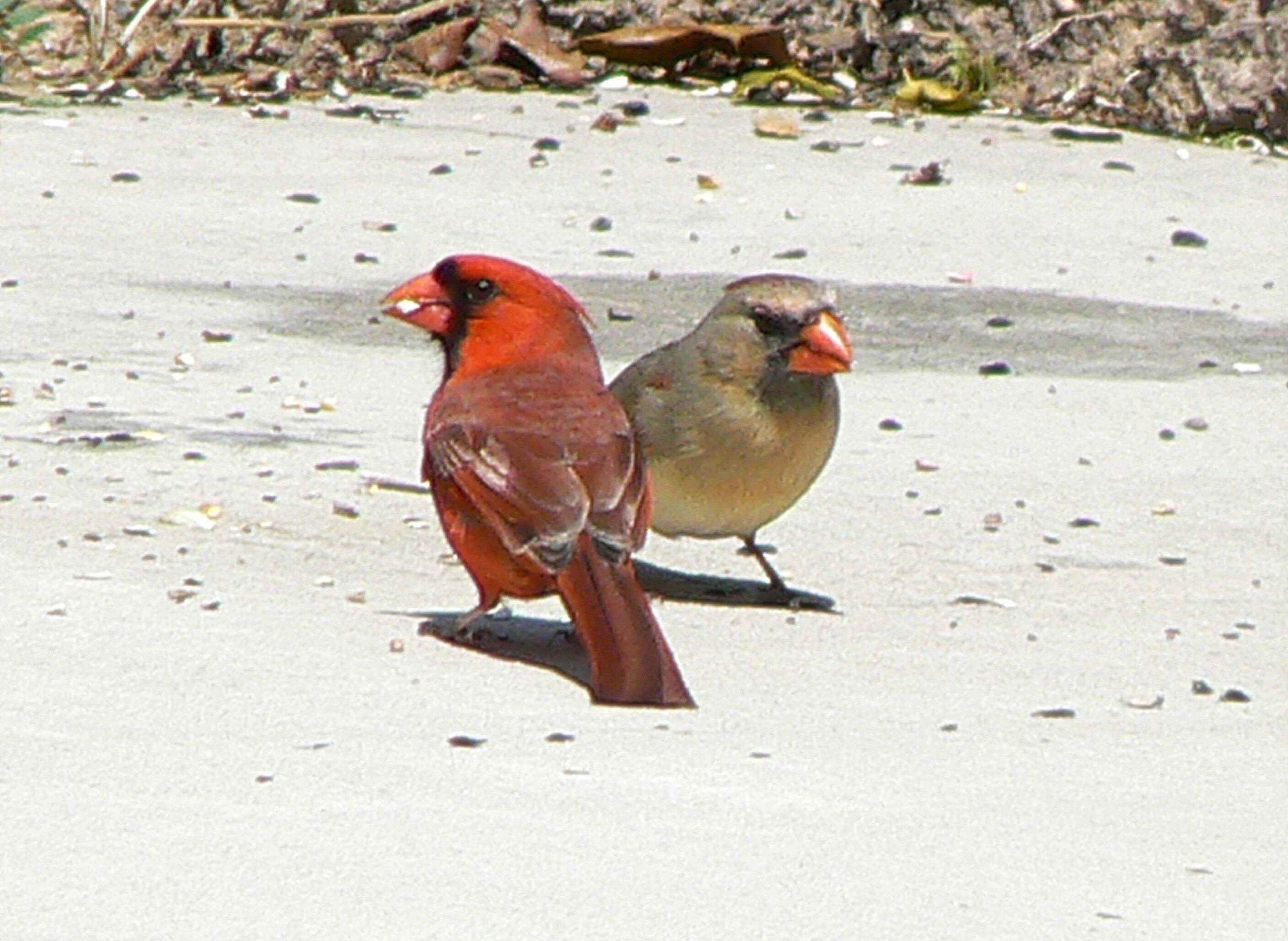
Introduction
The Northern Cardinal (Cardinalis cardinalis) is one of the most familiar and beloved songbirds of North America, instantly recognizable by the male’s brilliant red plumage and the species’ distinctive crest and masked face. Found across the eastern and southern United States, parts of the southwest, and much of Mexico, this non-migratory bird brings year-round color to gardens, woodlands, and suburban feeders. Its clear, whistled song is a common sound from dawn through dusk, and both males and females sing, a trait unusual among songbirds. The Northern Cardinal has also become a cultural icon, appearing on the flags, seals, and sports emblems of several U.S. states and teams.
Where backyard feeders attract birds, the Northern Cardinal is frequently seen alongside the Blue Jay, another bold and vocal visitor that shares its preference for sunflower seeds. The two species often compete good-naturedly at feeding stations, though the cardinal’s softer manner contrasts with the jay’s raucous calls.
Taxonomy and Classification
The Northern Cardinal belongs to the family Cardinalidae, a group of brightly colored, seed-eating passerines commonly known as cardinals and grosbeaks. Its genus, Cardinalis, also includes the Pyrrhuloxia and the desert cardinal of the southwestern United States and Mexico. The species was formerly placed in the genus Richmondena and later Cardinalis, with the scientific name Cardinalis cardinalis reflecting both its common name and its cardinal, or deep red, coloration.
Within its wide range, several subspecies have been described, differing subtly in size, bill shape, and plumage tone. Genetic studies confirm that the cardinal is part of a broader radiation of New World nine-primaried oscines, more closely related to tanagers and buntings than to the Old World finches it superficially resembles.
Physical Characteristics
Adult Northern Cardinals measure about 21 to 23 centimeters in length and weigh between 42 and 48 grams. Males display a vivid red body, a black face mask that extends from the eyes to the throat, and a prominent pointed crest that can be raised or lowered to signal mood. Females are a warm tan or buff color with reddish tinges on the wings, tail, and crest, and they share the same black mask, though it is softer and grayer.
Both sexes possess a heavy, conical, orange-red bill adapted for cracking seeds, strong legs suited to perching and ground foraging, and a long tail that aids in agile movement through dense shrubs. Juveniles resemble females but are duller, with a dark bill that lightens as they mature.
Habitat and Distribution
The Northern Cardinal occupies a broad variety of habitats, including deciduous woodlands, thickets, shrubby forest edges, riparian corridors, parks, and well-vegetated suburban neighborhoods. It thrives wherever there is a mix of open ground for foraging and dense cover for nesting and escape.
Originally a bird of the southeastern United States and Mexico, the cardinal has expanded its range northward over the past century, aided by the spread of bird feeders, backyard plantings, and milder winters. Today it ranges from southern Canada through the eastern and central United States to Mexico and Belize. During migration seasons, open wetlands draw the Sandhill Crane through the same broad flyways the cardinal’s northern populations inhabit, though the two birds occupy very different niches.
Diet and Behavior
Northern Cardinals are primarily granivorous, feeding on seeds, grains, and fruits, with insects forming an important part of the summer diet, especially when feeding nestlings. They forage mostly on or near the ground, hopping through leaf litter and taking seeds from feeders, and they readily visit platform and hopper feeders stocked with sunflower and safflower seed.
The species is territorial year-round. Males defend feeding and nesting areas with song and displays, and they are known to attack their own reflection in windows and mirrors, mistaking it for a rival. Cardinals communicate with a rich repertoire of calls, including sharp chip notes used as alarms and a variety of clear whistles.
Reproduction and Life Cycle
Breeding begins in early spring and may continue through late summer, with pairs often raising two or three broods per year. The female builds a cup-shaped nest of twigs, bark, and grasses in a shrub, vine, or low tree, typically one to three meters above ground. She lays two to five eggs that are pale grayish white with brown speckles.
Incubation lasts about 11 to 13 days and is performed almost entirely by the female, who is fed by the male. Nestlings fledge at roughly 9 to 11 days and remain dependent on their parents for several weeks. Young cardinals reach full adult plumage by their first winter, though females may show some immaturity in coloring during their first year.
Conservation Status
The Northern Cardinal is listed as Least Concern by the IUCN, with a stable to increasing global population estimated in the tens of millions. Its adaptability to human-altered landscapes has allowed it to prosper where many other songbirds have declined.
Threats include domestic cats, collisions with windows, and habitat loss in some rapidly developing areas, but the species shows strong resilience. Widespread public appreciation, backed by feeder culture and native planting, continues to support healthy numbers across its range.
Fun Facts
The Northern Cardinal is one of the few bird species in which females sing regularly, often while sitting on the nest to signal the male to bring food. A single cardinal may learn more than two dozen distinct song variations.
The species was once popular in the pet trade and as a cage bird, which helped spread awareness of its beauty long before it became a protected wild bird. Among the tall wading birds it sometimes shares wetland margins with, the Great Blue Heron is a far larger neighbor, standing more than a meter tall and hunting fish in the same streams and ponds that border cardinal habitat.