 By st20113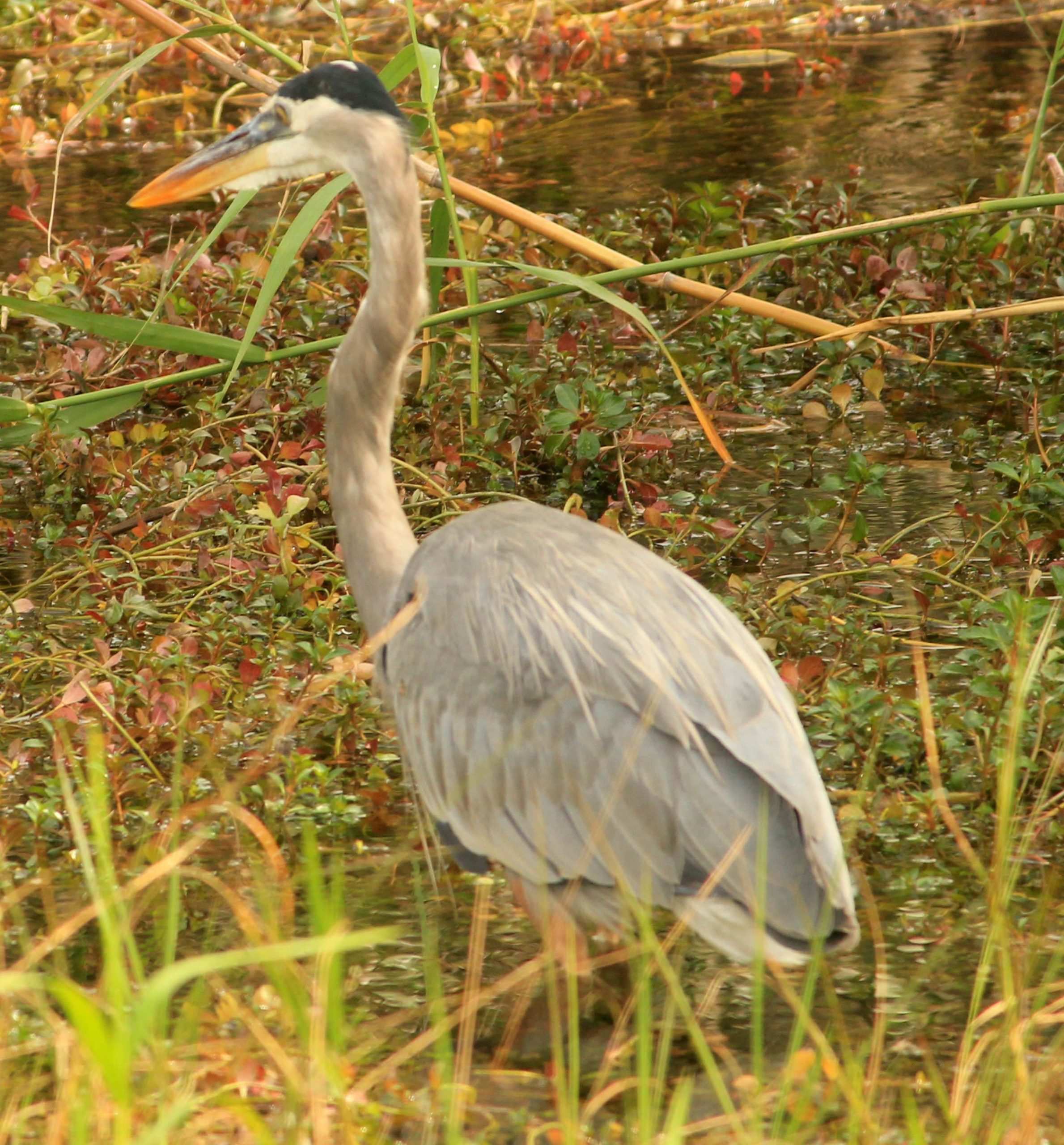
Introduction
The Great Blue Heron (Ardea herodias) is the largest heron in North America and one of the most iconic wading birds of wetlands, coastlines, and inland lakes. Standing up to 1.3 meters tall with a wingspan approaching two meters, it is a master of patient hunting, standing motionless in shallow water before striking with a lightning-fast thrust of its long neck and dagger-like bill. Its blue-gray plumage, black crest, and slow, graceful flight make it unmistakable.
Found from southern Canada through the United States and into Central America, the Great Blue Heron is equally at home in freshwater marshes, estuaries, and tidal flats. It often shares wetland margins with the American Robin, which forages on adjacent lawns while the heron stalks the water’s edge.
Taxonomy and Classification
The Great Blue Heron belongs to the family Ardeidae, which includes herons, egrets, and bitterns, and to the genus Ardea, a group of large herons worldwide. Its scientific name, Ardea herodias, combines the Latin for heron with a term suggesting a hero or large figure, apt for such a stately bird.
Several subspecies exist, including the well-known white form of the Florida population, once considered a separate species called the Great White Heron. Genetic work places it close to the Eurasian Grey Heron, its Old World counterpart.
Physical Characteristics
Great Blue Herons measure 97 to 137 centimeters in height and weigh 2 to 2.5 kilograms. They have a long neck, a long pointed bill, and long legs built for wading. Their plumage is largely blue-gray with a white face, black plumes above the eyes, and a shaggy crest.
In flight, the neck folds into an S-shape and the legs trail behind, a key identification feature. Their eyes are yellow, and their bill is yellowish or horn-colored in adults. Powerful neck muscles allow the sudden spearing motion that characterizes their hunting.
Habitat and Distribution
These herons occupy nearly any shallow aquatic habitat, including lakes, rivers, ponds, marshes, mangroves, and marine shorelines. They range across most of North America, from the Pacific to the Atlantic coasts, and south into the Caribbean and South America.
They nest in colonies called rookeries, often in tall trees near water, sometimes with other wading birds. During migration, these colonies may be near staging areas used by the Sandhill Crane, another tall bird that rests in open wetlands, though cranes gather in flocks on the ground while herons roost in trees.
Diet and Behavior
Great Blue Herons are primarily fish eaters but take a remarkable variety of prey: frogs, salamanders, snakes, small mammals, crustaceans, insects, and even other birds. They hunt by standing still or slowly stalking, then striking with precision.
They may also use a technique called canopy feeding, spreading a wing to shade the water and lure fish into the shadow. Solitary foragers for much of the year, they become more tolerant of neighbors when food is abundant, though they still defend a small hunting territory.
Reproduction and Life Cycle
Pairs form in spring and build a large stick nest, often reused and added to year after year. The female lays three to five pale blue eggs, incubated by both parents for about 25 to 30 days. Chicks are altricial, born blind and helpless, and depend on parents for several weeks.
Young herons fledge at around 60 days but may linger near the nest, guarded by adults, before dispersing. Colonies can hold dozens or hundreds of nests, creating a noisy, bustling community through the breeding season.
Conservation Status
The Great Blue Heron is classified as Least Concern, with a large and stable population estimated in the hundreds of thousands. Habitat protection of wetlands and nesting trees is important for local colonies.
Major threats include wetland drainage, pollution, disturbance of nesting sites, and entanglement in fishing line. Because they sit near the top of aquatic food chains, declines can signal broader ecosystem problems.
Fun Facts
A Great Blue Heron can snap its neck forward to strike prey in less than the blink of an eye, accelerating its head like a spear. It can also swim when necessary, using slow, deliberate strokes.
The species sometimes ventures far out to sea and has even been recorded following fishing boats. In coastal waters, the Great Blue Heron may wade near where the Great White Shark patrols deeper channels, the two predators sharing the same estuaries though the shark hunts beneath the surface while the heron works the shallows.
[…] Hippocampus Western Diamondback Rattlesnake | Crotalus atrox Ball Python | Python regius Great Blue Heron | Ardea herodias Green Anaconda | Eunectes murinus Great White Shark | Carcharodon carcharias American […]
[…] among the larger wading birds; in North America, a similar ecological role is played by the great blue heron, though the two species are not closely […]