 By st20113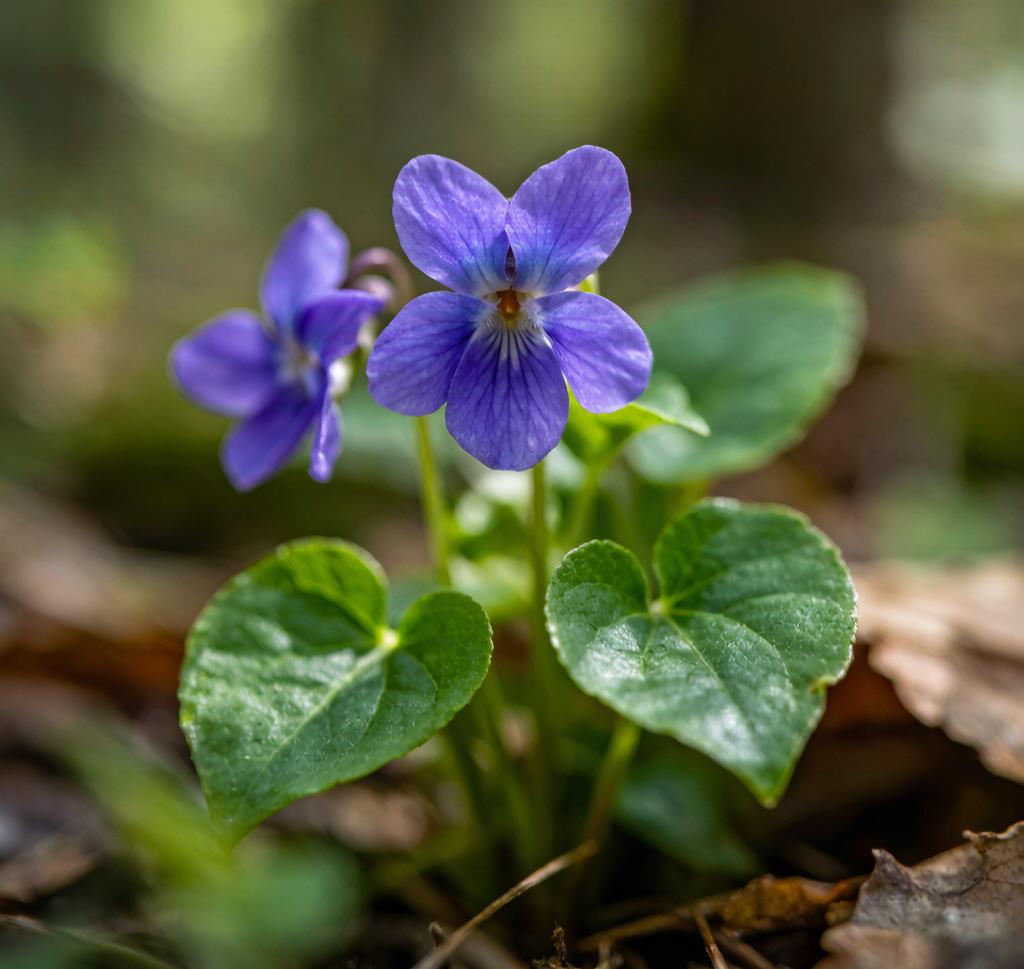
The common blue violet (Viola sororia) — also called the common violet, meadow violet, or simply wild violet — is one of the most familiar and widespread flowering plants in eastern North America, a humble but ecologically crucial species that carpets lawns, meadows, forest edges, and stream banks each spring with its delicate purple to blue-violet flowers. Despite being dismissed by many gardeners as an invasive lawn weed, the common blue violet is a plant of considerable ecological importance: it is the primary larval host plant for the fritillary butterflies — without violet leaves on which to lay their eggs and violet tissues for their caterpillars to feed, these striking orange-and-black butterflies cannot complete their life cycle — and it is a valuable early-season nectar source for native bees, flies, and other pollinators emerging in the cool spring months when few other flowers are in bloom. Native to the eastern half of North America, the common blue violet has also become naturalised in parts of western Europe, where it is frequently grown as an ornamental in gardens and has escaped into roadsides, parks, and woodland edges. The plant is also edible: the leaves are rich in vitamins A and C and can be used in salads, soups, and teas, and the flowers are traditionally used to make violet syrup and candied violets for cake decoration.
## Physical Characteristics
The common blue violet is a low-growing, stemless perennial herb that spreads by both seeds and rhizomes (underground horizontal stems), forming dense clumps or colonies that can carpet large areas of ground. The leaves emerge from the base of the plant on long, hairy petioles (stalks) and are heart-shaped to broadly lance-shaped, with a pointed tip and a rounded to slightly cordate (heart-shaped) base, with margins that are finely toothed or scalloped. The leaves are typically dark green, hairless to sparsely hairy on the upper surface, and may be hairy or smooth on the underside. The flowers are the plant’s most distinctive feature: they consist of five rounded petals, the lower three of which are typically marked with darker veins radiating from the throat, and range in colour from deep purple and violet-blue to lavender, pink, and occasionally pure white in some populations. The flowers are borne singly on leafless stalks (scapes) arising from the leaf axils, and are approximately 2 centimetres in diameter. After the spring flowering season, many violets produce a second type of flower — called cleistogamous flowers — that never open and self-fertilise in the bud, producing seeds without the need for pollinators.
## Habitat and Distribution
Viola sororia is native to the eastern and central United States and southern Canada, from Quebec and Ontario south to Georgia and Alabama, and from the Atlantic coast west to Minnesota, Nebraska, and Oklahoma. The species is particularly abundant in the Appalachian Mountains and the Ohio River Valley, and is found in a wide variety of habitats including deciduous woodland edges and openings, mesic to dry meadows, prairies, stream banks, roadsides, and in urban and suburban lawns and gardens. It tolerates a range of soil conditions and light regimes, from full sun to partial shade, and is often one of the first plants to colonise disturbed soils in woodland areas following tree fall events or other disturbances. The species thrives in moist, well-drained soils rich in organic matter, and is often found in the company of other spring wildflowers including spring beauty, toothwort, and bloodroot in the rich, fertile soils of eastern deciduous forests.
## Ecological Relationships
The common blue violet is the keystone larval host plant for several species of fritillary butterfly in the genus Speyeria, including the variegated fritillary, the great spangled fritillary, the Atlantis fritillary, and many others. Female fritillary butterflies seek out violet patches in the landscape and lay their eggs on or near the violet plants; when the eggs hatch, the tiny caterpillars feed on the violet leaves and may completely defoliate individual plants without killing them. Without violets, fritillary butterflies cannot reproduce, and populations decline and eventually vanish from areas where violets are absent. The spring flowers of the common blue violet are an important early-season nectar source for native solitary bees, bumblebees, and bee flies, all of which serve as pollinators for the plant. The flowers are also visited by the occasional butterfly and day-flying moth. Seeds are dispersed explosively from the mature seed pods — a mechanism called ballochory or explosive dehiscence — and may be carried up to several metres from the parent plant.
## Cultural and Culinary Uses
Despite its reputation as a lawn weed, the common blue violet has a long history of use in traditional herbal medicine and as a culinary ingredient. The fresh young leaves are edible and are rich in vitamins A and C, salicylates (compounds related to aspirin), and rutin, a bioflavonoid with anti-inflammatory and antioxidant properties. Violet leaf tea has been used traditionally as a mild expectorant and anti-inflammatory remedy for coughs, bronchitis, and sore throats. The flowers have been used to make violet syrup, a delicate floral flavoured syrup used in confectionery and cocktail making, and candied violets for decorating cakes and pastries, a tradition particularly associated with French and Italian pastry-making. Violet flowers are also the source of the blue-violet pigment used historically as a food colouring and dye, and the plant has been used in perfumery.