 By Iris
Plague | The Black Death
Historical Profile · Europe and the Mediterranean
Plague | The Black Death
A sickness that came in three great waves, carried about a third of Europe away, and left behind the first public health systems the world had seen.
AD 541-1994
First wave
Second wave
Europe’s loss
Quarantine
Cause traced
The big picture
Introduction
Plague has changed the course of history more than once. It arrives in waves. Each wave redraws the map of trade, work and belief. The first great wave broke over the Roman world in 541. Europe met the second in 1347, and it carried off about 1 in 3 people.
A third began in 1855, when steamships could move an illness across an ocean in days. People of that age called it the great mortality, because it seemed to spare no household. The name we use now, the Black Death, came later. Why does this one stand out? No other sickness moved so fast along the roads of trade.
None, however, cut so deep into ordinary life. Wages rose sharply. Faith was tested. Law was rewritten.
Setting
Historical Context
By the 1300s the known world was knit together as never before. Caravans and galleys linked China, Persia, Egypt and Europe in one system of trade. Samarkand sat at the middle of that system, and goods changed hands there long before they reached the sea. Every harbour on the route was crowded, but nobody thought twice about that.
Florence held about 100,000 people, while Paris and Venice were not far behind. Houses stood shoulder to shoulder along narrow lanes. Water came from shared wells, and waste ran in open channels. Nobody was to blame for that, because the link between filth and sickness was not yet known.
Medicine followed the old books. Medical texts had nothing to say about a sickness that could cross a whole city in one season, and doctors argued instead about the air.
Turning points
Key Events
The first wave is the oldest one we can name. It reached Constantinople in 541, and the city was still suffering in 542. A writer of the time counted as many as 10,000 deaths a day. Yet the city ran out of room for the dead. A second wave is the one that earned the name. It began in the camps around a trading post on the Black Sea in 1346, while a siege was under way. The Silk Road had carried goods along that coast for centuries. It carried the sickness the same way.
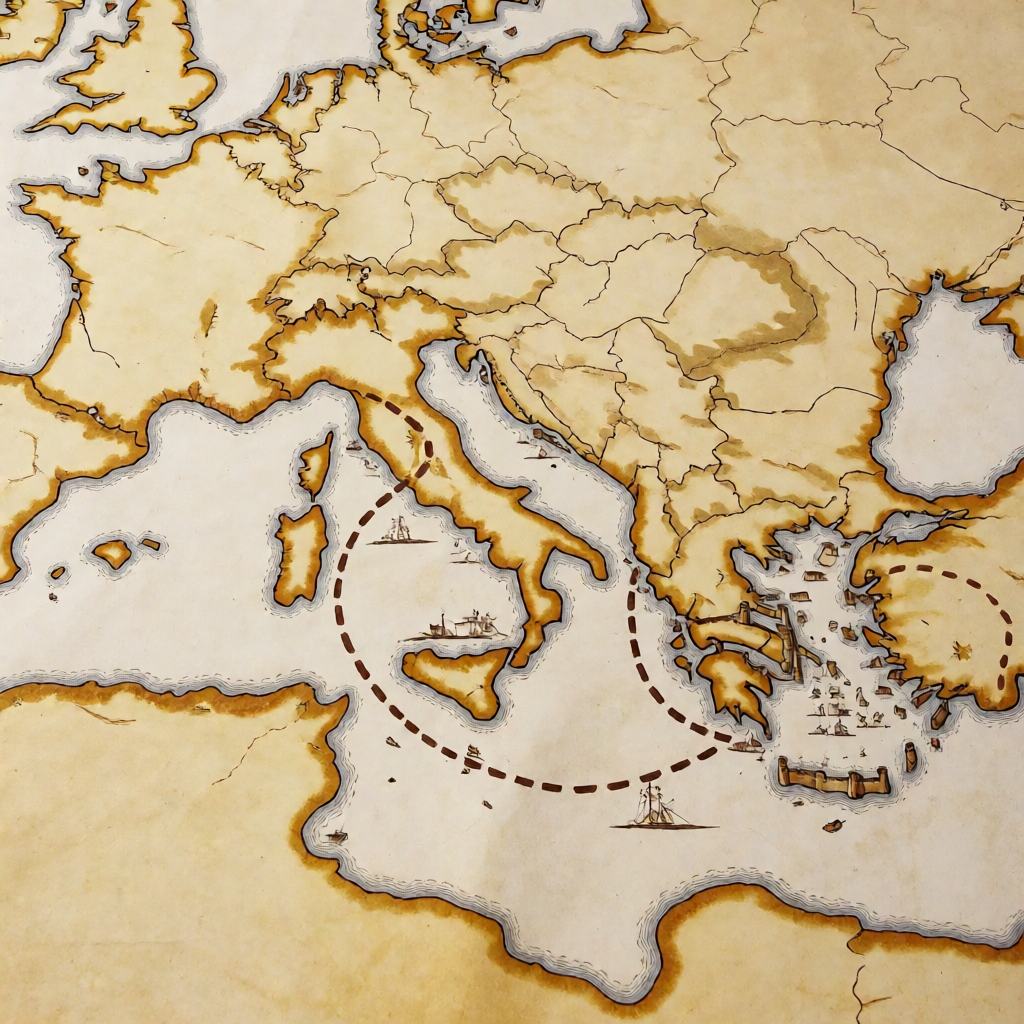
In October 1347 ships from that coast put in at Messina in Sicily, and the sickness came ashore with them. Genoa, Venice and Marseille followed within months, and so did the ports of North Africa as well. By 1348 it had crossed France and reached England. Florence lost close to half of its people, though Avignon lost almost as many. Northward it went in 1349, as far as Scandinavia. Scotland met the same visitor in 1350, and Russia in 1351. When the counting was done, about 1 in 3 people in Europe had died. Population fell sharply.
About 80 million people became about 60 million by 1400. A third wave began in 1855 in the hills of Yunnan, in China. Ocean steamships and railways carried it to Hong Kong in 1894. Bombay followed in 1896, and San Francisco in 1900. Plague is still with us today. A short outbreak in Surat in India in 1994 reminded the world of that.
1
2
3
Who held power
People and Powers
No king could stop it, and most kings tried. Edward III of England and Philip VI of France were at war when the sickness reached them, and neither would leave the field. City councils did more. Venice, Genoa and Florence closed their gates, paid for doctors and buried the poor at public cost. The Church carried the heaviest load, because priests stayed with the dying.
Many of them died in the same room as the people they had come to help. People turned to processions, and to bands of flagellants who walked from town to town whipping themselves. Officials came to see those bands as a danger, and they were banned. Doctors had almost nothing to offer, but they kept careful notes on what they saw. They read the old texts, watched the swellings, and argued about bad air.
Law was one result, and a harsh one. England passed the Statute of Labourers in 1351 to hold wages down, since workers had become scarce. Workers would not accept it, and the Peasants’ Revolt followed in 1381.
Everyday world
Daily Life and Society
Everyday life changed in ways that outlasted the sickness. In a stricken town the doors of sick houses were marked, and the dead were carried out at night. Some towns shut their gates to strangers, and some refused to ring church bells for fear of spreading alarm. Then came the counting. London began to publish weekly bills of mortality in 1592.
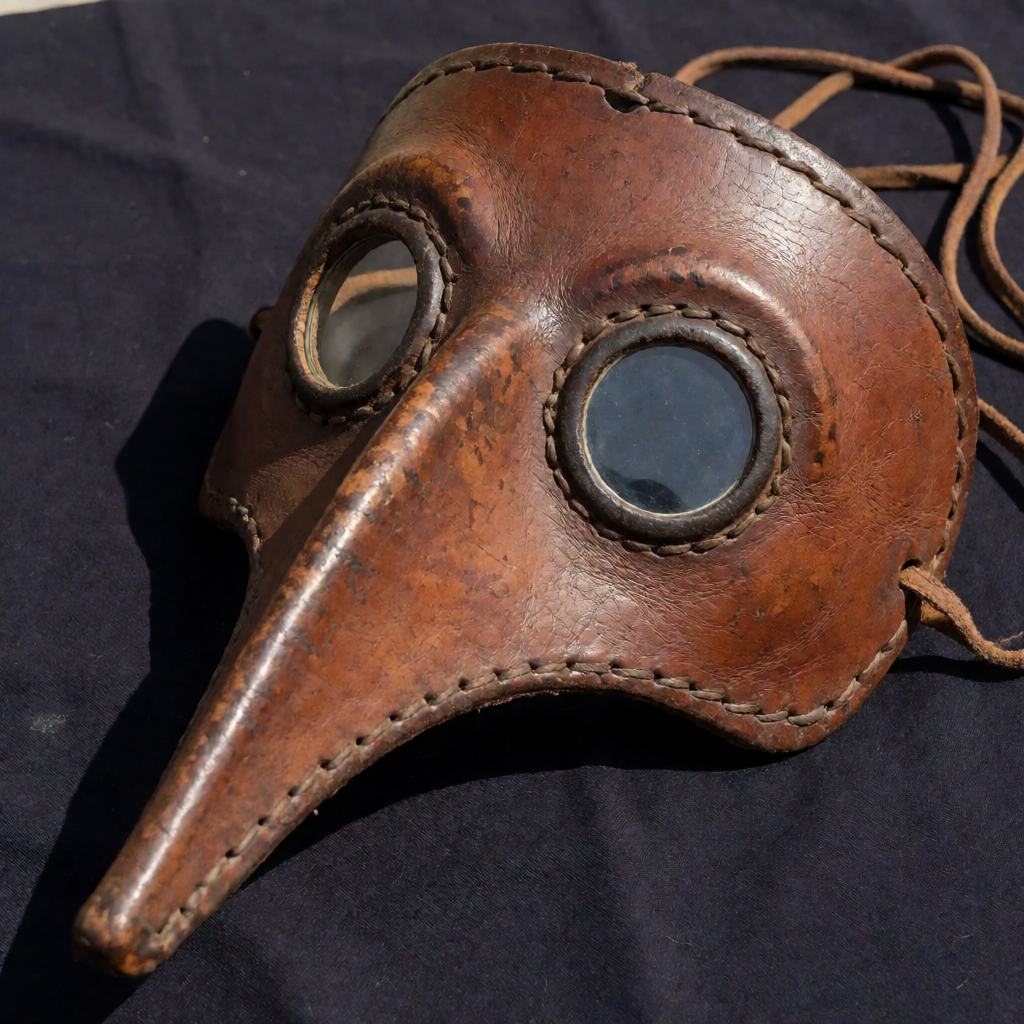
Numbers made the danger visible to anyone who could read, but nobody could explain it. Doctors who visited the sick wore a long leather coat, gloves and a stiff mask with a long pointed front. A French doctor first described the costume in 1619. England’s worst single year was 1665. About 100,000 people died in London that year, close to a quarter of the city.
Blame fell on the Great Fire of 1666, though the sickness was already fading. In 1720 a ship brought it into Marseille, and that city’s outbreak was the last great one in western Europe. After that, daily life in the west went on without it.
Craft and ideas
Trade, Technology and Ideas
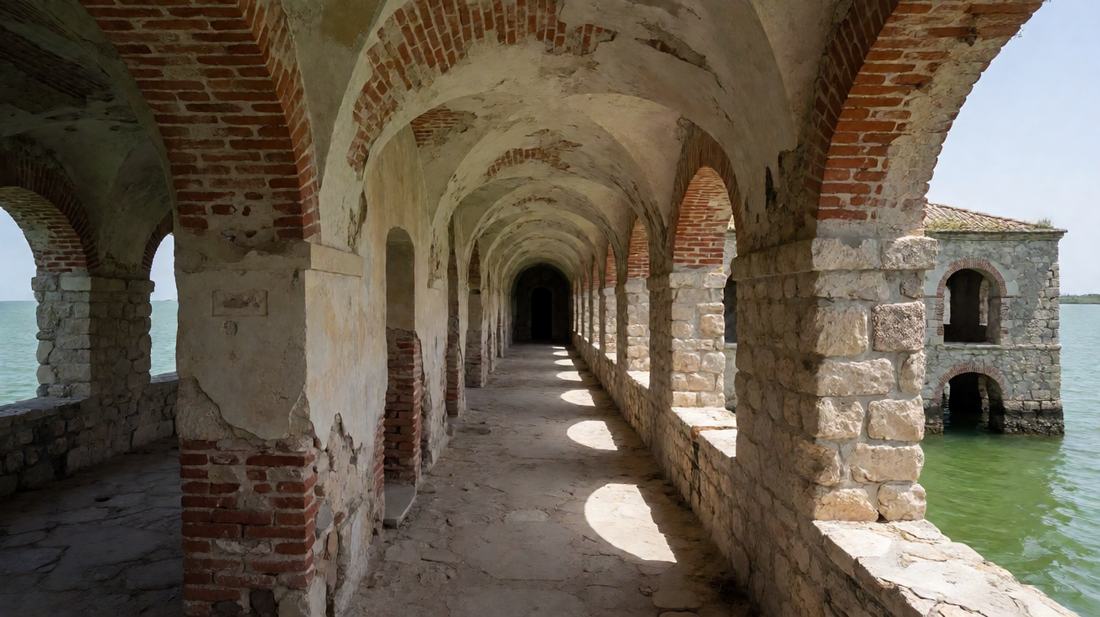
Trade was the road the sickness used, and trade was also part of the answer to it. Sea roads did the same work as the land routes. Ports on the Swahili Coast were part of the same web. Galleys in the Mediterranean and barges on the rivers moved goods and people in the same hull. Cities learned to watch the water, but they had no cure to offer. Ragusa ordered ships to wait 30 days before landing in 1377.
Venice built a hospital on an island in 1423, and lengthened the wait to 40 days in 1448. That period gave us the word quarantine. Marseille set up a health office, and so did Venice. Both cities kept registers of the dead. Printing arrived in the middle of the 1400s. It brought cheap notices, bills of mortality and advice sheets for common households as well.
Medicine moved more slowly. Medical texts of the Islamic world were still taught in European schools. They explained the sickness as bad air. A doctor in Verona argued that it passed from person to person in tiny seeds. He was largely ignored for three centuries, yet his idea was right.
What lasted
Legacy
Plague left a different Europe behind it. Fields went untended for a season. Then wages rose, because there were fewer hands to work them. Land became cheap and rents fell. For the first time in centuries a worker could bargain for his labour, and not only in the towns.
Serfdom weakened in the west. In the east it hardened, where landlords used the law to tie people to the land. Governments learned to count, and in turn they learned to act. Health boards, quarantines and registers of deaths became common tools of a city, and they are still with us. The church lost some of its hold, because prayers had not stopped the dying.
Art turned darker. In the Ottoman Empire the sickness never really left, and the capital recorded outbreaks for four centuries. Memory kept the rest, however, and the dance of death put a skeleton beside every rank of society.
Side by side
How It Compares
| Point | The second wave | The third wave |
|---|---|---|
| When it began | 1346, in the ports of the Black Sea | 1855, in the hills of Yunnan |
| How it travelled | Caravans and sailing ships | Steamships and railways |
| Where it reached | Europe, North Africa and the Near East | Every continent with a working port |
| The death toll | About 1 in 3 people in Europe | Millions in India alone |
| What cities did | Shut their gates and counted the dead | Quarantine, disinfection and vaccine |
| How it ended | It faded over years; no cure existed | Modern treatment and control |
Common misreadings
What People Get Wrong
- A cure brought the Black Death to an end. No cure existed, and the outbreaks simply faded as the sick died or recovered.
- Fire ended the plague in London in 1666. In fact the sickness was already fading, and the fire itself killed very few people.
- Wages fell after the plague, because so many workers had died. They rose sharply instead, since labour had become scarce.
Going further
Sources and Further Reading
- Wikipedia, Black Death
- Benedictow, O. J. 2004. The Black Death 1346-1353: The Complete History. Boydell Press.
- World Health Organization. Plague fact sheet. WHO, Geneva.
- Centers for Disease Control and Prevention. Plague: History. CDC, Atlanta.
Quick hits
Five Things to Remember
- Plague came in three great waves, and the first reached Constantinople in 541.
- The second wave began in 1346 and killed about 1 in 3 people in Europe.
- Venice held ships for 40 days from 1448, and that wait gave us the word quarantine.
- Wages rose and serfdom weakened once the second wave had passed.
- Ocean steamships carried the third wave to Hong Kong in 1894.