 By st20113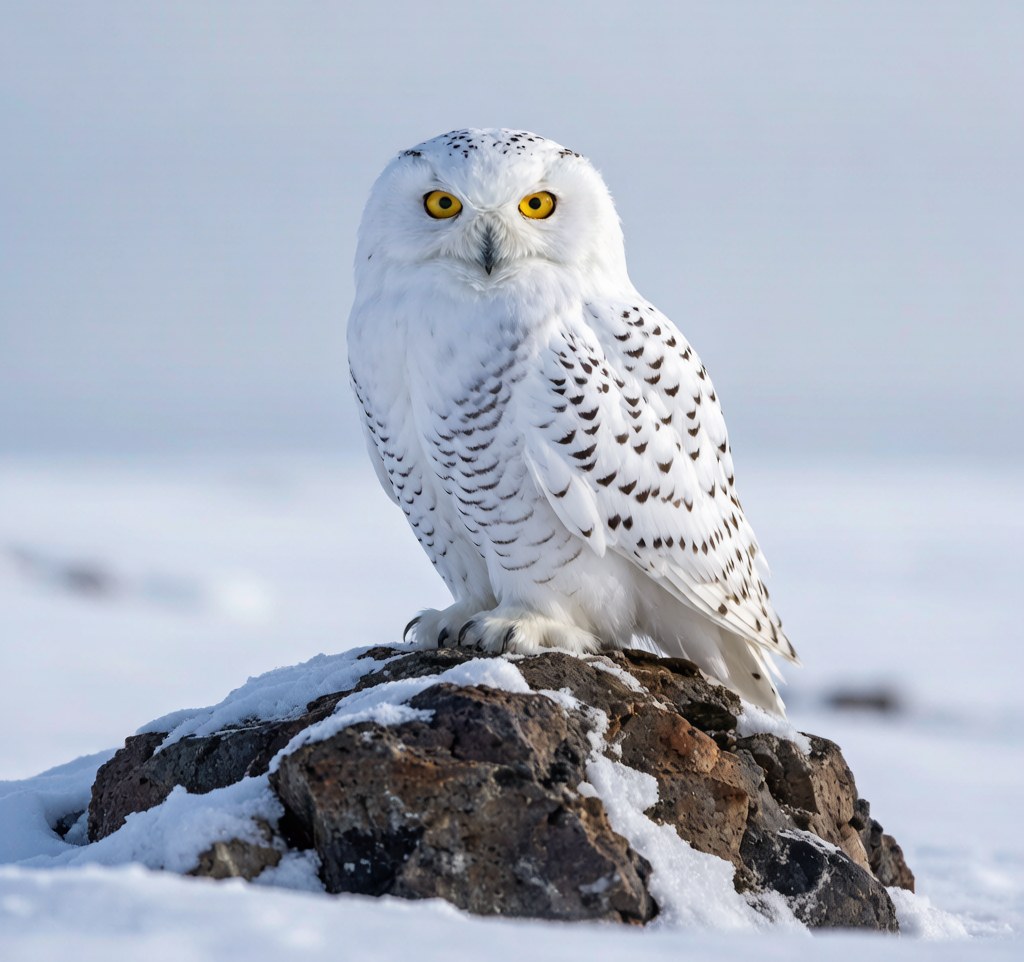
Introduction
The Snowy Owl (Bubo scandiacus) is a magnificent diurnal bird of prey inhabiting the Arctic tundra, famous for its pure white plumage and impressive hunting capabilities across the circumpolar north. Unlike most owl species that are strictly nocturnal, the Snowy Owl actively hunts during the extended daylight hours of the Arctic summer, using exceptional vision to locate prey across vast expanses of open tundra. Its striking appearance — white plumage with dark markings that increase with age — provides camouflage against snow-covered landscapes. As the heaviest owl species in North America, it combines formidable size with remarkable adaptability, colonizing some of the most challenging environments in the Northern Hemisphere.
Taxonomy
The Snowy Owl belongs to the family Strigidae and the genus Bubo, which includes horned owls and eagle-owls found across the Northern Hemisphere. Although earlier taxonomists placed it in the monotypic genus Nyctea, modern molecular analysis has confirmed its position within Bubo. The species name scandiacus derives from Scandinavia. Within its genus, the Snowy Owl represents a distinctive lineage that evolved white plumage as an adaptation to snow-covered Arctic environments, contrasting with the brown and streaked patterns typical of most other owl species.
Physical Characteristics
Adult female Snowy Owls measure 60 to 70 centimeters in body length and weigh between 1.6 and 2.9 kilograms, with males typically smaller and whiter. Plumage is predominantly white with black barring on dorsal surfaces and wings, more extensive in females and juveniles; very old males may appear nearly pure white. The rounded head lacks ear tufts, and the well-developed facial disc funnels sound toward the ears for precise prey location. Large, strikingly yellow eyes provide exceptional visual acuity, while powerful talons deliver a vice-like grip capable of killing prey as large as Arctic hares. Feathered legs and toes provide insulation against extreme cold and function as natural snowshoes across soft snow.
Habitat
Snowy Owls inhabit the Arctic tundra across North America, Europe, and Asia, with breeding ranges from northern Alaska and Canada through Greenland to northern Scandinavia and Russia. They prefer open, flat tundra with minimal tree cover where they can survey large areas for prey, nesting on elevated ground positions such as ridges and mounds. During winter irruption years, when prey populations crash in Arctic breeding grounds, individual birds may appear far south of their normal range, reaching the northern United States and central Europe. Wintering owls occupy diverse habitats including coastlines, airports, and agricultural fields wherever prey availability supports survival.
Diet
The Snowy Owl diet is dominated by Arctic lemmings, which may represent the most critical prey item during the breeding season when pairs require abundant food to raise young. A single pair may consume over 1,500 lemmings during a breeding season, and clutch sizes range from 3 to 11 eggs depending on prey abundance. Arctic hares, ptarmigan, and seabirds including auks and gulls supplement the diet, particularly in coastal areas. Snowy Owls hunt by perching and scanning, supplemented by active quartering flight low over the tundra, before swooping with talons extended for a swift kill.
Reproduction
Snowy Owls establish breeding territories on the Arctic tundra, where females lay eggs directly on the ground — typically on elevated gravel ridges — rather than constructing a traditional nest. The female alone incubates for approximately 32 days while the male guards the territory and provides food. Hatchlings are covered in white down and require continuous parental care, with both parents hunting to satisfy the demanding appetites of growing young. The Blue Jay (Cyanocitta cristata), like the Snowy Owl, produces multiple offspring per breeding event and invests heavily in parental care.
Conservation
The Snowy Owl is listed as Vulnerable on the IUCN Red List, with population declines driven by multiple threats across its vast Arctic range. Climate change represents the most significant long-term threat, disrupting lemming population cycles and altering breeding habitat availability. Collision with vehicles, wind turbines, and power lines adds additional mortality sources, particularly for juvenile owls in unfamiliar southern habitats during irruption years. Human disturbance at nest sites can cause breeding pairs to abandon eggs or chicks.
Fun Facts
Snowy Owls possess an extraordinary sense of hearing enabling them to locate prey beneath up to 30 centimeters of compacted snow. The species holds the title of the northernmost breeding bird in North America, with records from as far north as 83°N on Ellesmere Island. Unlike most owl species with asymmetrical ears for stereoscopic sound localization, the Snowy Owl has symmetrical ear openings — a unique trait within the Strigidae family. These birds cache surplus prey in the snow during periods of abundance for later consumption.