 By st20113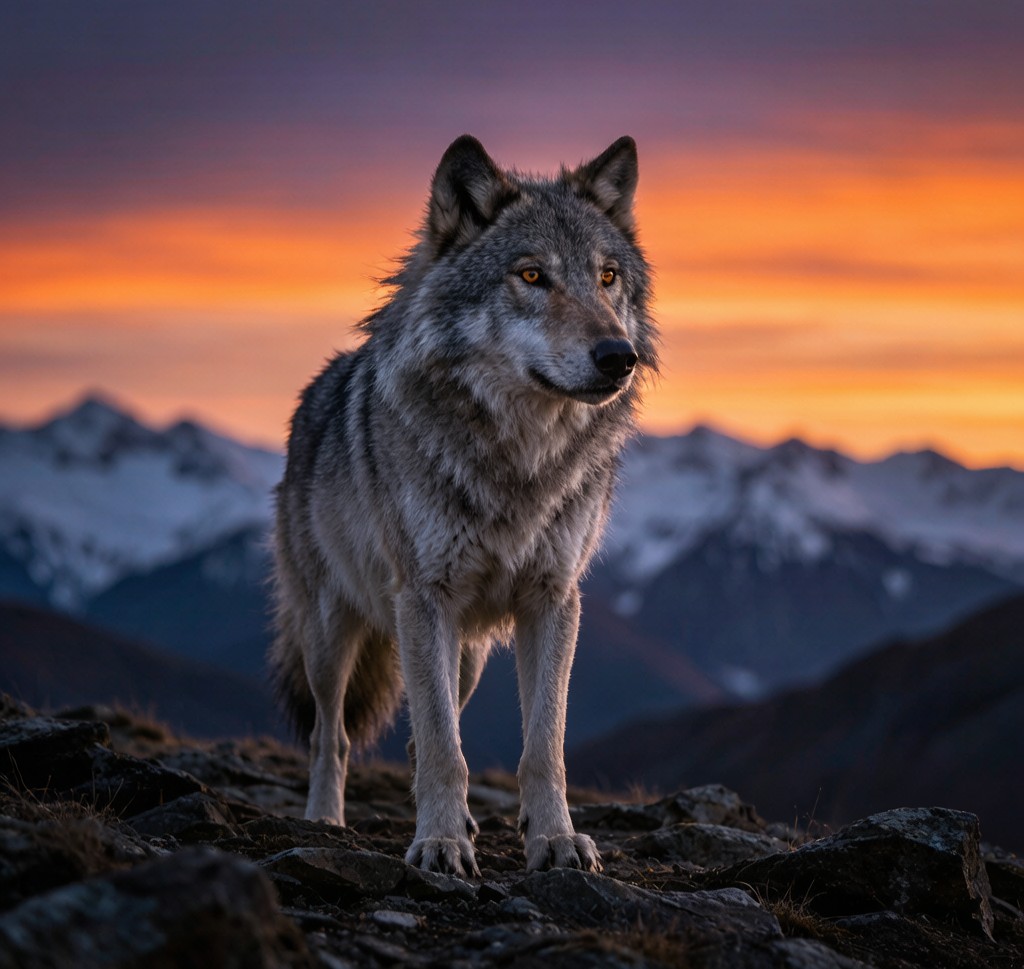
The gray wolf (Canis lupus) — also called the timber wolf — is the largest member of the wild dog family (Canidae) and one of the most studied, controversial, and ecologically significant predators on Earth. Once the most widely distributed land mammal on the planet, the gray wolf ranged across virtually all of North America, Europe, and Asia, but was systematically exterminated from most of its range during the 18th, 19th, and 20th centuries by livestock protection and bounty hunting programmes that reduced the global population to a small fraction of its historical size. The return of the wolf to parts of its former range — through natural recolonisation and deliberate reintroduction — has triggered some of the most passionate debates in wildlife conservation history, exposing deep tensions between ecological values, rural livelihoods, and the human relationship with wild nature. As an apex predator, the gray wolf plays a critical role as an ecosystem engineer: its presence and hunting behaviour reshape prey populations, alter the movement patterns and habitat use of ungulates, reduce overgrazing in sensitive riparian areas, and through these trophic cascades, enable the recovery of entire temperate forest and grassland ecosystems.
## Physical Characteristics
The gray wolf is a large, powerfully built canid, with adult males standing 68 to 90 centimetres at the shoulder and weighing 30 to 80 kilograms, and females typically 60 to 80 centimetres at the shoulder and 23 to 55 kilograms. The largest wolves are found in the forests and tundra of Alaska and Canada, where adult males regularly exceed 50 kilograms and exceptional individuals can reach 80 kilograms or more. The species name — Canis lupus, meaning “dog wolf” — reflects its close evolutionary relationship to the domestic dog (Canis lupus familiaris), from which it diverged approximately 20,000 to 40,000 years ago. Wolves have a long, bushy tail that is approximately one-quarter of the body length and is held straight out behind the body when running. The fur is typically a grizzled grey-brown, but can range from nearly white in Arctic populations to jet black in some forest-dwelling populations, with coat colour varying between individuals within the same pack. The skull is large and broad with powerful jaw muscles capable of delivering a bite force sufficient to crush the bones of large prey animals, and the canine teeth can reach lengths of over 6 centimetres in a large male.
## Habitat and Distribution
The gray wolf once occupied virtually every terrestrial habitat type in the Northern Hemisphere, from the Arctic tundra to the deserts of the American Southwest and the tropical forests of India and Southeast Asia. Today, the species is primarily restricted to the wilderness and remote wilderness- agricultural fringe areas of North America (Canada, Alaska, the northern United States, and Mexico), Russia, China, Mongolia, Kazakhstan, and scattered populations in eastern Europe (Poland, Slovakia, Romania, and the Balkans). The gray wolf requires large territories to function effectively as a pack-based hunting predator: pack territories in the high-productivity prey-rich ecosystems of North America average 500 to 1,500 square kilometres, while in the less productive Arctic tundra, territories can exceed 5,000 square kilometres. The species is highly adaptable and can survive in a range of habitats provided there is sufficient prey and human persecution is at a manageable level.
## Pack Structure and Behavior
The wolf pack is the basic social unit of gray wolf society and is typically composed of a dominant breeding pair (the alpha male and alpha female), their offspring from the current year ( pups), and sometimes yearlings and older subadults from previous litters who have not yet dispersed to form their own packs. The alpha pair are typically the only individuals in the pack to breed, and the entire pack cooperates in raising the pups, with all members participating in provisioning the mother during the nursing period and bringing food to the pups once they have emerged from the den. Wolf packs are family groups with a hierarchical social structure based on a dominance-submission relationship mediated by body language, facial expressions, and ritualized postures rather than by physical aggression. Wolves communicate through an elaborate system of vocalisations (howls, growls, barks, and whines), body language, facial expressions, and chemical signals (scent marking). The howl — a prolonged, mournful sound audible to humans at up to 10 to 15 kilometres in the right atmospheric conditions — functions as a long-distance communication signal that allows separated pack members to relocate each other, advertises territorial ownership to rival packs, and may strengthen social bonds within the pack.
## Conservation
The gray wolf was driven to near extinction in the lower 48 United States and much of western Europe by an intensive, government-sponsored predator eradication campaign during the 19th and 20th centuries. The species received protection under the Endangered Species Act in the United States in 1973, and populations have recovered substantially in some areas — particularly the northern Rocky Mountains and the Great Lakes region — though recovery has been controversial and politically contentious, with repeated efforts to remove the species from the endangered species list challenged in the courts. Today, the global gray wolf population is estimated at approximately 200,000 to 250,000 individuals, the majority in Canada and Russia, and the species is classified as Least Concern on the IUCN Red List. Ongoing threats include human-wolf conflict, habitat loss, and genetic isolation of small, fragmented populations.
Golden Retriever belongs to the family Canidae and is a domesticated subspecies of the gray wolf. Its scientific name is Canis lupus familiaris, reflecting its status as a domesticated canine. The