 By st20113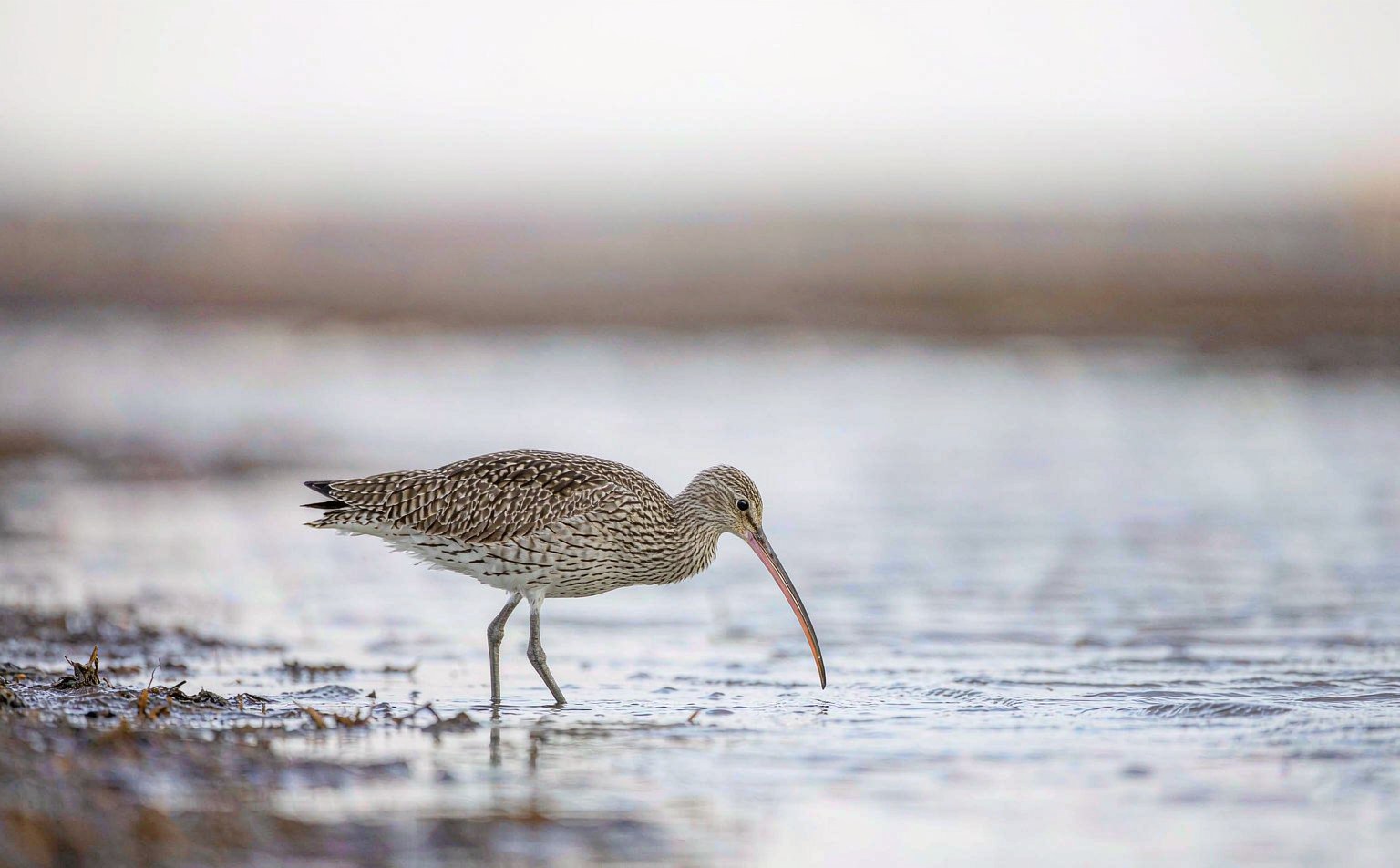
Numenius arquata | Eurasian Curlew
Introduction
The Eurasian Curlew (Numenius arquata) is the largest wading bird in Europe and one of the most evocative sounds of wetland and farmland alike, its long, bubbling, descending call rolling across marshes and meadows at dusk. With its extravagantly long, down-curved bill and mottled brown plumage, the curlew is unmistakable, a bird built for probing soft mud and soil for the invertebrates that sustain it through the year. For many people it is the quintessential shorebird of the northern hemisphere.
Despite its familiarity, the Eurasian Curlew has undergone steep declines across much of its breeding range, and in several countries it has become a symbol of the broader crisis facing grassland and wetland wildlife. Changes in farming, drainage of wetlands, and disturbance have all taken a toll, and the species is now a conservation priority from the British Isles to central Europe.
The curlew bridges two worlds, nesting on damp grassland and moor inland and spending the winter on estuaries, mudflats, and coastal fields where it feeds in large, sociable flocks. Its reliance on both farmland and shore makes it a useful barometer of the health of both habitats, much as wetland species such as the marsh frog reflect the condition of the freshwater margins it also uses.
Taxonomy
The Eurasian Curlew was first described by Carl Linnaeus in 1758 and is the type species of the genus Numenius, the curlews, whose name derives from the Latin for “new moon,” a reference to the curved shape of the bill. The genus also includes the whimbrel, the bristle-thighed curlew, and several others distributed across the globe.
Adults are large, heavily built waders with a wing length that makes them the biggest curlew in their range, distinct from the smaller whimbrel by size, plumage, and the absence of a strong head stripe. No living subspecies are now widely recognized across the Eurasian population, although birds from the east of the range can be marginally larger and paler.
Molecular studies place the curlews within the sandpiper family Scolopacidae, closely related to godwits, turnstones, and the numerous small waders that share the world’s shores and tundra. The long, sensitive bill of the curlew is a defining adaptation of the group, evolved for detecting and extracting buried prey that other birds cannot reach, and the Eurasian Curlew represents the most impressive expression of this trait among European waders.
Physical Description
The Eurasian Curlew is a large, upright wader measuring 50 to 60 centimeters in length with a wingspan of about 90 to 100 centimeters and a weight of roughly 0.6 to 1.1 kilograms. Its most obvious feature is the long, slender bill, which sweeps downward in a graceful curve and can exceed 15 centimeters in females, longer than in males. The bill is flexible at the tip and equipped with tactile receptors that allow the bird to feel prey buried in mud or soil.
The plumage is a subtle mosaic of browns, buffs, and greys, barred and streaked above and paler below, providing excellent camouflage against dry grass and wet mud alike. In flight the bird shows a plain, unbarred wing and a white wedge up the back, and its gait is a deliberate walk or probe rather than the frantic stitching of smaller shorebirds.
The legs are long and bluish-grey, suited to wading in shallow water and striding across wet grassland. The eyes are dark and alert, and the overall impression is of a bird of substantial presence, larger and more robust than the similar whimbrel, with which it is often confused by casual observers at a distance.
Habitat
Breeding Eurasian Curlews favor open, wet grasslands, moorland, and marginal farmland, especially where the vegetation is short enough to allow them to see approaching predators yet tussocky enough to conceal a nest. Upland fringes, floodplain meadows, and wet heaths are classic sites, and the birds return to the same areas year after year where conditions remain suitable.
Outside the breeding season the species shifts to soft coasts: estuaries, mudflats, saltmarsh, and the margins of lakes and rivers, where vast numbers may gather to feed on the falling tide. Some birds also use plowed fields, stubble, and coastal grassland in winter, reflecting a flexible use of lowland habitats so long as food is accessible.
The essential requirement is exposed, soft substrate that can be probed for invertebrates, whether in a saltmarsh or a damp field. The loss of such habitat to drainage, intensive rotation, and coastal development has been central to the species’ decline, and its survival depends on the retention and sympathetic management of both nesting grassland and wintering shore.
Diet
The Eurasian Curlew feeds chiefly on invertebrates, using its long bill to probe deep into mud, sand, and soil for worms, mollusks, crustaceans, and insects and their larvae. On estuaries it takes ragworms, shrimps, and small clams, while inland it digs for earthworms and leatherjackets, the larvae of crane flies, that live below the surface of grassland.
The sensitive tip of the bill allows the bird to locate prey it cannot see, an ability that is especially valuable in soft, opaque mud where buried animals leave no visible sign. This gives the curlew access to food resources unavailable to shorter-billed waders and lets it feed through the tide cycle rather than only at the surface.
In winter flocks the birds spread across mudflats and fields, often feeding at night when the substrate is softest and prey most active near the surface. Although almost entirely animal in diet, they may occasionally take plant material such as seeds, but invertebrates remain the core of their nutrition through every season and at every stage of life.
Reproduction
Curlews are ground nesters, laying four pear-shaped, olive-brown eggs in a shallow scrape among grass or heather, usually with little or no lining. The female incubates for about 27 to 29 days while the male stands guard and both parents mount a vigorous defense of the nest, diving and calling at intruders including predators and unwary walkers.
The chicks hatch precocial and leave the nest within hours, able to feed themselves, though they depend on their parents for warmth and protection for several weeks. They fledge at roughly five to six weeks but remain with the adults into late summer before the family migrates or disperses to wintering grounds.
Because the young are raised entirely on the ground, they are highly vulnerable to agricultural machinery, livestock trampling, and predation by foxes, crows, and gulls. Early hay cuts and reseeding of fields are particularly damaging, as they can destroy nests and chicks before they fledge, which is why delayed mowing and seasonal grazing are central to curlew-friendly land management.
Conservation
The Eurasian Curlew has declined sharply across much of its European breeding range, and the species is classified as Near Threatened globally, with some national populations, such as those of the United Kingdom and Ireland, considered critically at risk. The principal drivers are the loss and degradation of nesting habitat through agricultural intensification, earlier and more frequent mowing, drainage of wetlands, and afforestation of open ground.
On migration and in winter the birds face pressure from the loss of intertidal habitat to land claim and development, disturbance at roost sites, and pollution of estuaries. Climate shifts that alter the timing of breeding and food availability add a further layer of uncertainty, potentially desynchronizing chicks from peak invertebrate abundance.
Conservation responses include agri-environment schemes that pay farmers to delay mowing, create wet features, and graze sensitively; the protection and restoration of estuaries; and wardening of key breeding and roosting sites during the most sensitive periods. Where such measures are applied at sufficient scale, curlew numbers can stabilize, but the species remains a clear warning that the wildlife of both farmland and shore depends on active, coordinated stewardship.
Fun Facts
- The curlew’s call, a liquid, rising-and-falling “curr-lee,” is among the most recognizable bird sounds in Europe and has given the bird its name in many languages.
- Its bill is not just long but flexible at the tip, letting the bird feel worms and clams buried deep in mud that it cannot see.
- A female’s bill can be several centimeters longer than a male’s, an example of marked size difference between the sexes within a single pair.
- Curlews perform exuberant aerial displays over their nesting grounds, tumbling and calling as part of courtship and territorial defense.
- Some individuals travel hundreds of kilometers between upland breeding areas and coastal wintering estuaries, linking the fates of very different landscapes.
[…] drawing conservation attention across Europe. It shares open ground with relatives such as the Eurasian Curlew, another ground-nesting wader of meadows and […]
[…] of the living members. It is also the most widespread of them. The bird is a close relative of the Eurasian Curlew (Numenius arquata). That curlew is clearly larger. Its bill is much longer. Its call is very different. People compare […]