 By st20113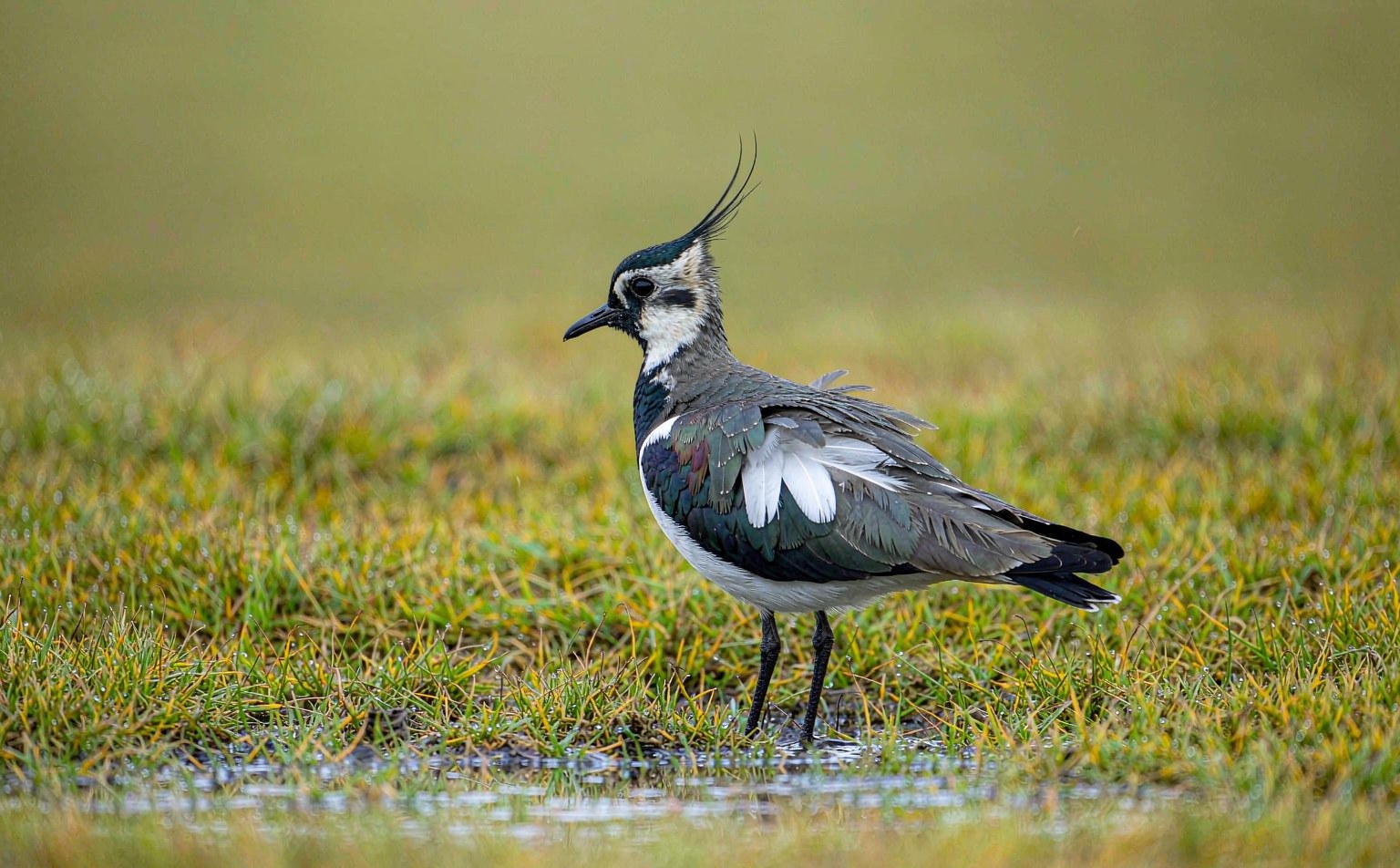
Vanellus vanellus | Northern Lapwing
Introduction
The Northern Lapwing (Vanellus vanellus), known simply as the lapwing in Britain and as the peewit for its call, is one of the most cherished birds of European farmland and wetland. Its broad, rounded wings, shuffling flight, and iridescent green-black plumage make it unmistakable, as does the long, fine crest that trails behind its head. A bird of open country, it has become a symbol of the challenges facing farmland wildlife.
Lapwings nest on the ground in loose colonies, and their tumbling display flights over spring fields are a classic sign of the season. Although still numerous overall, the species has declined sharply in parts of its range, drawing conservation attention across Europe. It shares open ground with relatives such as the Eurasian Curlew, another ground-nesting wader of meadows and marshes.
Taxonomy
The Northern Lapwing is the only member of the genus Vanellus found in much of Europe, and it sits within the family Charadriidae, the plovers and lapwings. It was first described by the Swedish naturalist Carl Linnaeus in 1758 under the binomial Tringa vanellus, and was later placed in its current genus. The name Vanellus is a diminutive of the Latin vanus, meaning “winnowing” or “flapping”, a nod to the bird’s distinctive wing sounds.
Its nearest relatives are the other lapwings of Africa and Asia, with which it shares the broad wings and ground-nesting habits typical of the group. Unlike the smaller, more coastal ringed plovers, the lapwing is a bird of inland fields and wet grassland, adapted to a life on the ground rather than on the shore.
Physical Characteristics
An adult Northern Lapwing measures 28 to 33 centimetres in length, with a wingspan of 67 to 87 centimetres and a weight of around 150 to 300 grams. The upperparts are a glossy green-black with bronze and purple sheens, while the face, neck, and underparts are white, producing a bold, pied appearance. The long, slender crest of the adult can be more than 2 centimetres long and gives the bird a distinctive silhouette.
In flight the lapwing reveals broad, rounded wings strikingly patterned in black and white, with a slow, floppy wingbeat unlike the swift flight of most waders. The bill is short and black, the eye is dark, and the legs are dull red. Males are slightly larger and longer-crested than females, and juveniles show a shorter crest and browner, less glossy plumage until they mature.
During display, the male produces a far-carrying “peewit” call and performs a bounding, tumbling flight, sometimes clapping its wings to make a resonant sound used to mark territory and attract a mate.
Habitat
Lapwings breed in open landscapes: spring-sown arable fields, wet meadows, floodplains, marshes, and coastal grazing marshes. They require short or patchy vegetation and bare ground for foraging, combined with enough cover to hide a ground nest. The availability of moist soil rich in earthworms and leatherjackets is a key factor in choosing where to settle.
Outside the breeding season the species moves to a wider range of open habitats, including estuaries, mudflats, arable stubble, and coastal flats, often gathering in large flocks. Harsh weather and frozen ground push birds toward the coast and milder lowlands. The lapwing avoids dense woodland, upland heath, and built-up areas, all of which deny it the open sightlines it needs to detect predators.
Diet
The Northern Lapwing is a ground-foraging carnivore, feeding mainly on invertebrates taken from the surface or just below it. Earthworms are the single most important food, especially in spring when adults need protein for egg production, but it also eats leatherjackets, beetles, flies, caterpillars, and other insects.
It forages by walking slowly and pecking, occasionally probing soft soil with its bill, and it often feeds at night when worms come to the surface. In winter, flocks shift to estuarine mud and arable fields where spilled grain and invertebrates supplement the diet. This reliance on soil invertebrates links its fortunes to those of other open-country birds such as the Common Starling, which also flocks over farmland in winter.
Reproduction
Lapwings nest in loose colonies or solitary pairs, scraping a shallow hollow in the ground and lining it with a little grass or debris. The female lays three to four pointed, olive-brown eggs blotched with black, and both parents incubate for about 26 to 28 days. The nest is exposed and vulnerable, so adults perform broken-wing distraction displays to lure predators away.
Chicks hatch precocial and leave the nest within hours, feeding themselves on small invertebrates while the parents guard and brood them. They fledge at roughly five to six weeks. Because nests are on the ground, agricultural operations, flooding, and predation can cause heavy losses, and the species’ breeding success is closely tied to sympathetic grassland and spring cropping management.
Conservation
The Northern Lapwing is listed as Near Threatened by the International Union for Conservation of Nature, reflecting steep declines in parts of western and northern Europe. Intensification of agriculture, the loss of spring tillage, earlier hay cuts, and drainage of wet grassland have all reduced suitable nesting habitat and food.
Conservation measures include agri-environment schemes that delay mowing, create wet features, and support spring cultivation, alongside protection of key wintering estuaries. The lapwing remains common in parts of eastern Europe, and targeted action has stabilised some western populations. It shares its conservation challenges with the European Goldfinch and other farmland birds, though the lapwing’s ground-nesting habit makes it especially sensitive to change.
Fun Facts
- The lapwing’s English name may come from “lap” meaning a leap or flutter, describing its wobbling, buoyant flight.
- Its old nickname “peewit” mimics the sharp, two-note call given in flight by alarmed or displaying birds.
- A lapwing will fake a broken wing, dragging itself across the ground to draw predators away from its nest.
- The crest feather can be raised or lowered, and is most prominent during courtship display.
- Large winter flocks can number in the thousands, swirling over estuaries in tightly choreographed masses.