 By st20113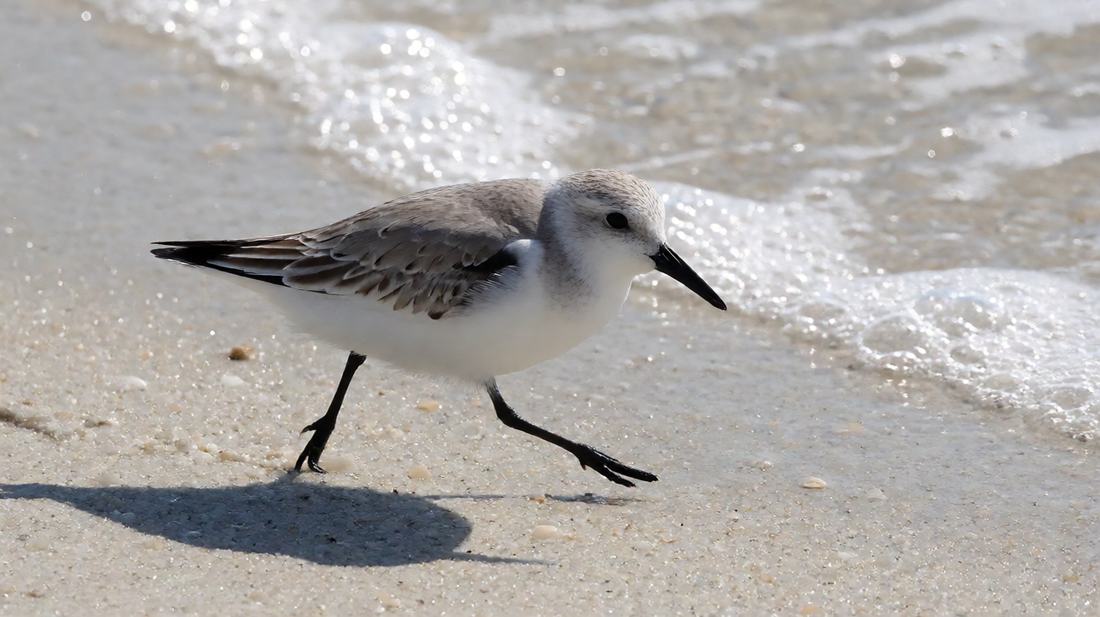
Calidris alba | Sanderling
Species Profile · Scolopacidae
Sanderling
A small Arctic-breeding wader that races along the tide line of sandy beaches on six continents every winter.
Least Concern (2024) 2024 assessment
Length
Weight
Eggs
Hatch
Fledge
Mature birds
The Sanderling
The mouse of the tideline
This small wading bird lives on sandy shores. It runs along the tide line, chasing each retreating wave. Its pale grey and white plumage blends with wet sand.
It is a familiar sight on beaches worldwide. It breeds far north inside the Arctic Circle. Then it flies a huge distance to its winter home.
Flocks move as one when a wave rolls in. They turn and sprint back down the beach together.
Family tree
Scolopacidae, the sandpipers
Calidris alba is its Latin name. Peter Simon Pallas described the bird in 1764. It sits in the family Scolopacidae.
That group holds the sandpipers and their kin. Some older books place it in the genus Crocethia. Work on genes supports the first view instead.
Its nearest kin are the other small sandpipers. The Eurasian Curlew is a much larger member of the same group. Both birds probe wet ground for hidden prey.
18 cm of pale grey
How to tell one
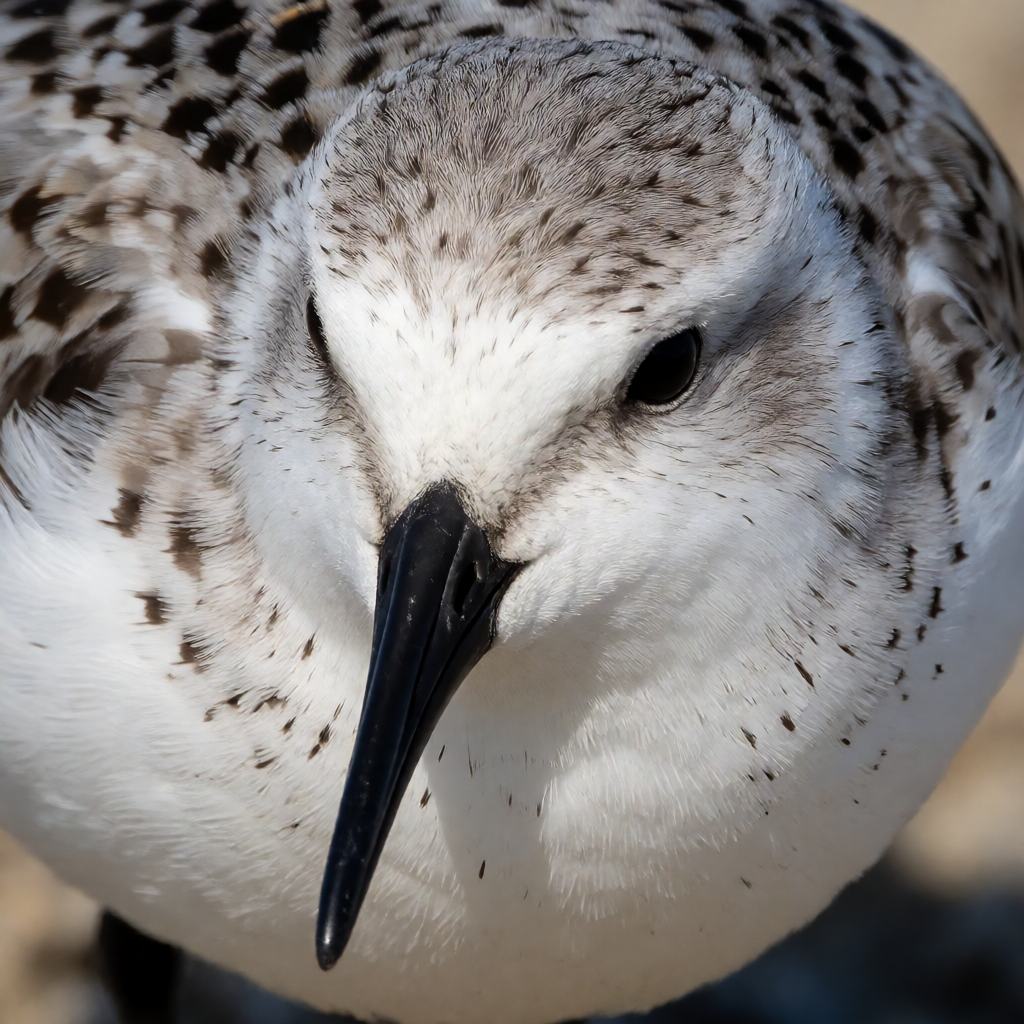
An adult is about 18 to 21 cm long. Body weight averages around 57.7 g. The bill is short, straight and black. The legs are black and lack a rear toe.
That missing toe helps the bird run fast. Breeding adults show a rich reddish head and breast. Winter birds turn pale grey above. The underparts stay white all year.
A bold white wing bar shows in flight. The 3 front toes leave a 3-toed print in sand.
1
2
3
High Arctic tundra to sandy beaches
Where it lives
This bird breeds on high Arctic tundra. Canada holds the largest share of the breeding birds. Nests sit on dry ground among lichen and stones.
In winter it moves to sandy beaches and sandbars. It avoids river mouths more than most waders do. It also uses mudflats, rocky shores and lake edges.
The bird winters on 6 continents. It is a full migrant with an enormous range.
Sand hoppers and sea worms
What it eats
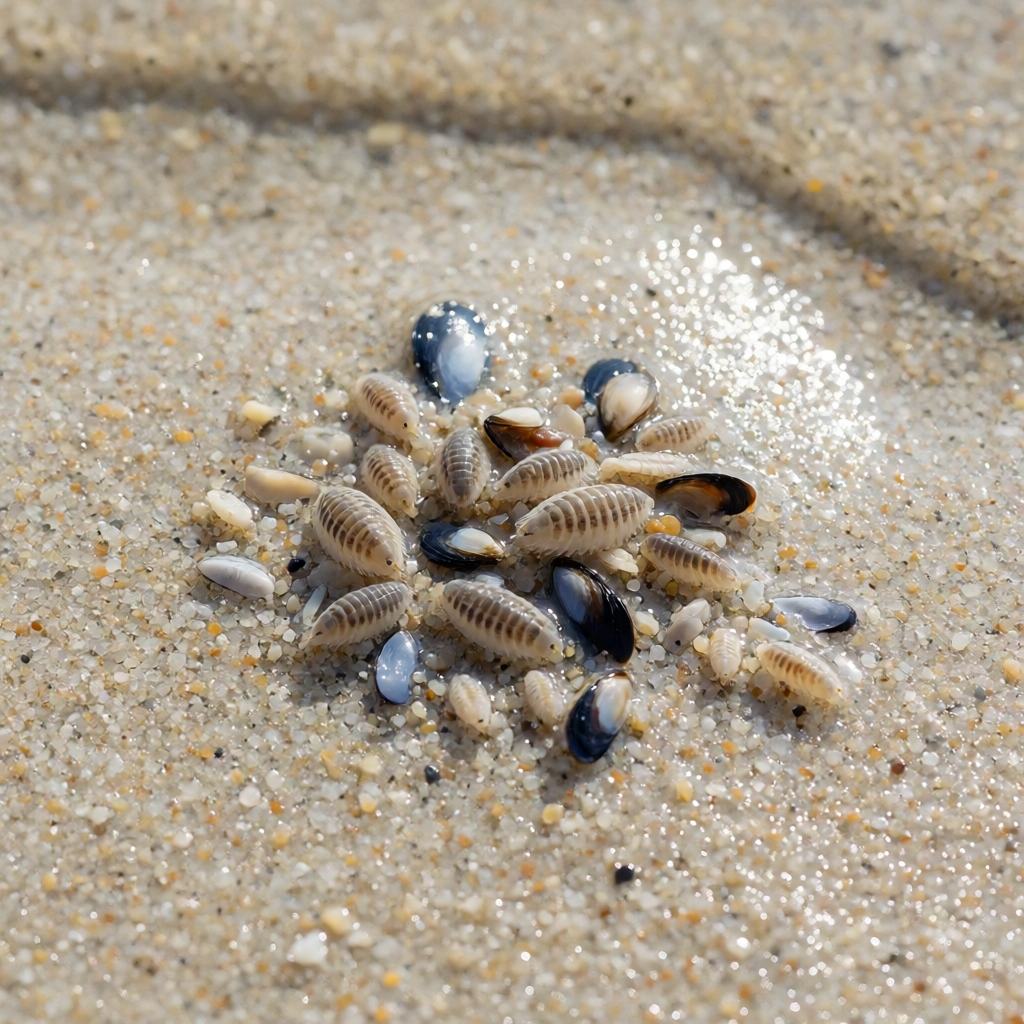
Sanderlings eat small crabs, sand hoppers and sea worms. They also take small molluscs and insects. The bird runs along the water line between waves.
It probes wet sand with quick jabs of the bill. Prey is eaten whole once it has been dug out. Birds often feed in loose flocks.
Each bird guards a small patch of moving water. At high tide the flock rests above the water line.
A scrape on the tundra
The breeding cycle
Breeding starts soon after the birds reach the tundra. The male scrapes several shallow dips in the ground. The female lines one of them with grass and lichen.
She lays a clutch of 3 or 4 eggs. The eggs need about 24 to 27 days of warmth. The female often leaves before the eggs hatch.
The male then raises the chicks alone. Chicks feed themselves within hours of hatching. They can fly at around 17 days old.
Least Concern, slowly falling
Conservation
The IUCN lists this bird as Least Concern. Its latest check dates from 2024. Experts put the number of mature birds at 900,000 to 1,200,000.
The global trend is slowly falling. Beach building removes resting and feeding sites. People walking by cost the birds feeding time.
Oil spills and waste also cause losses. Some flyway groups are counted each winter.
Quick hits
Five things to remember
- The name alba is Latin for white.
- One ringed bird flew from Greenland to West Africa.
- It can outrun the fastest receding wave.
- A bird may probe the sand 30 times a minute.
- Its 3 toes leave a footprint like a tiny arrow.