 By st20113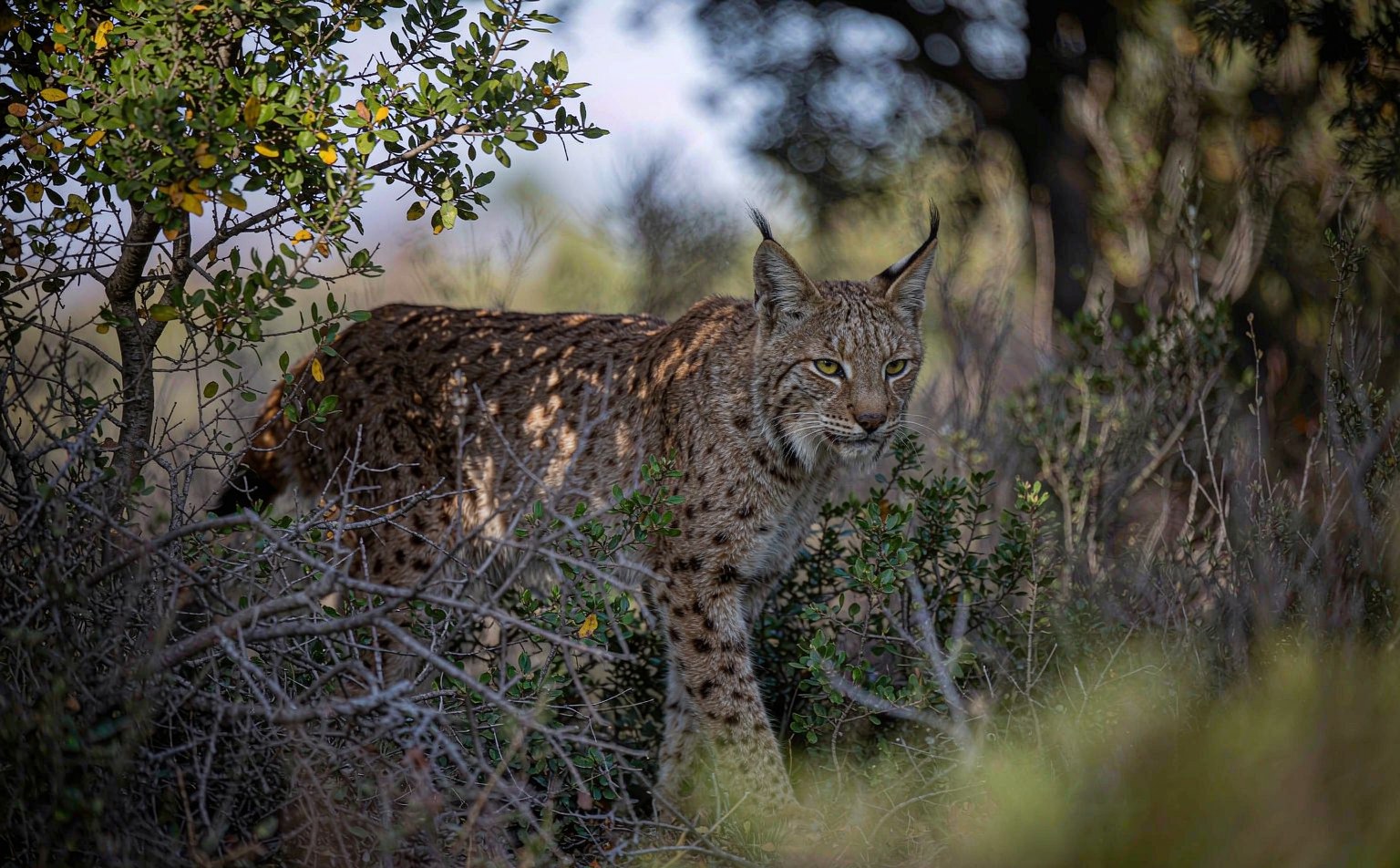
Lynx pardinus | Iberian Lynx
Introduction
The Iberian Lynx (Lynx pardinus) is one of the most endangered wild cats in the world and an icon of the Iberian Peninsula, a spotted, tuft-eared feline that once prowled the Mediterranean scrub and oak woodlands of Spain and Portugal in significant numbers. Smaller and more finely marked than its northern relatives, it is a highly specialized predator whose fate became bound to that of the European rabbit, the single prey on which it depends above all others. Few mammals illustrate the vulnerability of a specialist so starkly as this cat, which by the early twenty-first century had been reduced to a few dozen individuals in two tiny Spanish populations.
In a remarkable turn, the Iberian Lynx has become a flagship of modern conservation, the subject of one of the most intensive recovery programs ever mounted for a carnivore. Captive breeding, habitat restoration, and rabbit-conservation efforts have pulled the species back from the brink, and managed populations now occupy an expanding network of protected areas across the Iberian Peninsula.
The cat’s story is tightly linked to that of other European felids, particularly the more widespread European wildcat, a forest-dwelling relative with which it shares the peninsula but not the same ecological specialization. Understanding the Iberian Lynx means understanding a delicate food web centered on a single small prey.
Taxonomy
The Iberian Lynx was long considered a subspecies of the Eurasian lynx but is now widely recognized as a distinct species, Lynx pardinus, endemic to the Iberian Peninsula. It was first described in the nineteenth century, and its separation from the Eurasian Lynx (Lynx lynx) is supported by differences in size, coat pattern, skull shape, and genetic makeup.
The genus Lynx belongs to the family Felidae and includes four species: the Canada lynx, the bobcat, the Eurasian lynx, and the Iberian lynx. Among these, the Iberian Lynx is the smallest and the most strongly patterned, with a coat of tawny fur marked by numerous dark spots and a noticeably short tail with a black tip.
Genetic studies confirm that the Iberian and Eurasian lynxes diverged relatively recently in evolutionary terms and that the Iberian form is the most distinctive of the genus. Its closest relative among the world’s cats is the bobcat of North America, with which it shares the short tail and spotted coat that characterize the New World and Iberian branches of the lynx lineage, though the two have been separated by ocean and continent for millions of years.
Physical Description
The Iberian Lynx is a medium-sized cat, smaller than the Eurasian lynx, with males weighing roughly 10 to 13 kilograms and females 8 to 10 kilograms. Its most striking features are the long, black ear tufts, the ruff of fur framing the face, and the dense spotting of its coat, which ranges from tawny to grey-brown depending on the season and individual. These markings provide superb camouflage in the dappled light of Mediterranean woodland.
The legs are long and powerful, the paws large and padded, an adaptation for moving silently and for walking over snow or soft ground in pursuit of prey. The tail is very short and bears a black tip, a key difference from the longer-tailed Eurasian lynx and a useful identification feature in the field.
The head is rounded, with prominent eyes and whiskers, and the facial ruff gives the animal a bearded appearance. The coat is short in summer and thicker in winter, though less luxuriant than that of northern lynxes. Kittens are born with a darker, more heavily marked coat that lightens as they mature, and the spotted pattern persists throughout life, ensuring that each animal remains well concealed among shrubs and grasses.
Habitat
The Iberian Lynx depends on a specific mosaic of Mediterranean habitat: open woodland, dense scrub known as maquis and matorral, patches of grassland, and clearings, all threaded with cover that allows the cat to hunt by stealth. Mature holm oak and cork oak forests interspersed with shrubland are particularly important, as are areas where abundant rabbits create the prey base the lynx requires.
Water is not a limiting factor, but the structure of the vegetation is everything. The cat needs enough low cover to approach rabbits unseen and enough open patches to spot and ambush them, combined with minimal human disturbance. Traditionally managed dehesa landscapes, with their scattered trees and rich understory, can support lynx where rabbit numbers are high.
The species avoids intensive agriculture, dense urban areas, and treeless farmland, and its distribution has always tracked the presence of rabbits and suitable refuge. Conservation areas are therefore designed around rabbit recovery and the connection of habitat patches, because isolated lynx populations cannot persist without the ability to disperse and find new territories and mates.
Diet
The European rabbit makes up the overwhelming majority of the Iberian Lynx’s diet, in some populations accounting for more than 80 or even 90 percent of prey items. A single lynx may kill a rabbit roughly every day, and the cat’s entire ecology, from territory size to breeding success, is tied to rabbit abundance. When rabbits crash, as they do during outbreaks of myxomatosis or rabbit hemorrhagic disease, lynx numbers fall in close step.
Where rabbits are scarce, the lynx will take alternative prey such as rodents, hares, young deer and chamois, and occasionally birds and reptiles, but these substitutes rarely sustain a population for long. The cat hunts primarily by stealth and short bursts of speed, stalking to within a few meters of a rabbit before launching a final rush, and it often caches surplus kills in cover to return to later.
Because of this extreme dietary specialization, the Iberian Lynx is exceptionally vulnerable to changes in rabbit health and habitat. Conservation programs therefore invest as heavily in rabbits, through disease control and habitat management, as in the cats themselves, recognizing that protecting the prey is the most direct way to protect the predator.
Reproduction
Breeding is closely linked to food supply, and females in good condition with abundant rabbits rear more and healthier kittens. After a gestation of around two months, the female gives birth in a sheltered den, often among rocks, in a hollow tree, or beneath dense thickets, to a litter of typically two to three kittens, though litters can range from one to four.
The male takes no part in raising the young, and the female alone feeds and defends them. Kittens open their eyes at about ten to twelve days and begin to eat solid food, mostly provided by the mother, at a few weeks old. They remain with her through their first winter, learning to hunt rabbits, and disperse at roughly eight to twenty months of age to establish their own territories.
Sexual maturity is reached at around one year for females and slightly later for males, but many young lynx die before breeding, either from starvation when rabbits are scarce, from road accidents, or from illegal trapping and poaching. The combination of small litters, slow maturation, and heavy dependence on a single prey makes the species naturally slow to recover, which is why intensive management has been essential to its survival.
Conservation
Few mammals have come as close to extinction and returned as visibly as the Iberian Lynx. By 2002 the wild population had fallen to fewer than one hundred individuals, confined to the Doñana and Sierra Morena regions of Spain, and the species was considered the most threatened cat on Earth. Habitat loss, a collapse in rabbit numbers due to disease, road mortality, and illegal trapping had driven it to the edge.
A coordinated recovery program changed the trajectory. Captive breeding centers began producing kittens for release, rabbit populations were supported through vaccination and habitat work, protected areas were expanded and linked by corridors, and public awareness campaigns reduced persecution. Reintroductions into historic range in Spain and Portugal established new populations, and the total wild number grew into the thousands.
The IUCN has revised the species’ status upward from Critically Endangered to Vulnerable, a rare conservation success, but the lynx remains far from secure. It is still dependent on continued management, on the health of rabbits, and on the prevention of road deaths and illegal killing. Compared with its relatives such as the European wildcat, which faces different pressures, the Iberian Lynx illustrates how a specialist predator can be saved only by protecting the entire web of life on which it depends.
Fun Facts
- The Iberian Lynx is the only cat species whose survival was once pinned almost entirely on a single prey, the European rabbit, making it one of the most specialized felids alive.
- Unlike many cats, it communicates with a range of sounds including mews, growls, and a startlingly loud call used between a mother and her kittens.
- Each individual’s spot pattern is unique, much like a fingerprint, allowing researchers to identify specific lynx from camera-trap photographs.
- The species can leap several meters in a single bound when chasing rabbits through scrub, combining power with surprising agility for its stocky build.
- Conservation breeding centers have raised hundreds of kittens for release, turning a near-extinction into one of the best-known carnivore recoveries in the world.