 By st20113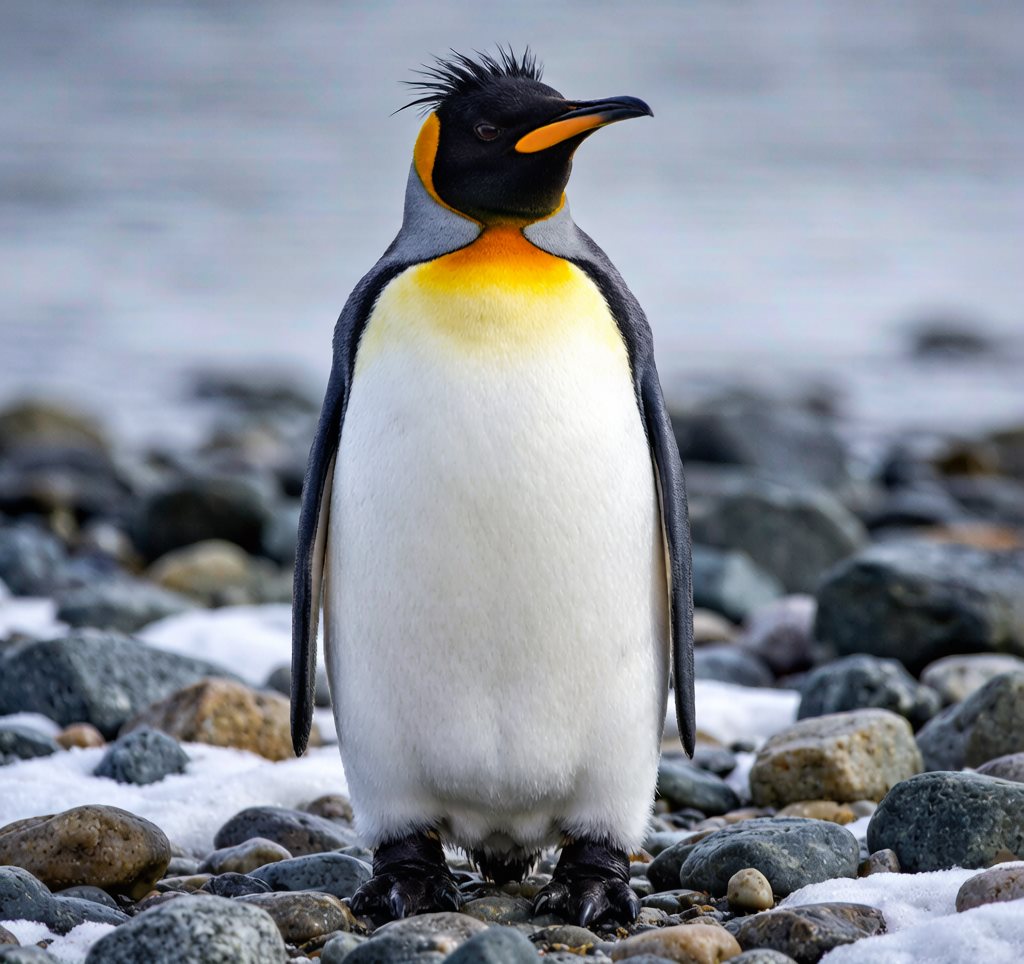
Introduction
The king penguin, Aptenodytes patagonicus, is the second-largest penguin in the world and a striking resident of the subantarctic islands. With its vivid orange ear patches and sleek, streamlined body, it is among the most recognisable of all seabirds. These penguins spend much of their lives at sea, returning to land only to breed and to moult in enormous, noisy colonies that can number in the hundreds of thousands.
Unlike many penguins, king penguins do not build a pebble nest, and they never encounter ice in their breeding grounds, which stay snow-free even in the depths of winter. Their lives at the edge of Antarctica are shaped by the cold sea rather than by frozen land. A single chick may wait weeks for a parent to return from a long fishing trip across the open ocean with a crop full of food.
Taxonomy
King penguins belong to the family Spheniscidae, the penguins, and are close relatives of the larger emperor penguin, Aptenodytes forsteri, of the Antarctic coast. They share the broader class Aves with powerful raptors such as the bald eagle and the neotropical harpy eagle. Other birds of prey and nocturnal hunters include the Arctic snowy owl and the widespread barn owl, each occupying a very different niche from these fish-eating seabirds.
Physical Characteristics
Adult king penguins stand about 70 to 100 centimetres tall and weigh between 11 and 16 kilograms, with a slim build suited to swimming. Their plumage is a glossy blue-grey on the back with a black head and bright orange-yellow markings sweeping up from the neck to the breast. Dense, waterproof feathers and a thick layer of fat insulate them against the cold Southern Ocean waters through long foraging trips.
Beneath the feathers lies a layer of insulating fat and a network of blood vessels in the flippers that helps conserve heat in near-freezing water. Like all penguins, it cannot fly, but its wings have evolved into powerful paddles that make it one of the most agile swimmers of the southern seas.
Habitat
King penguins breed on isolated subantarctic islands including South Georgia, the Falklands, and the Crozet and Kerguelen archipelagos. They favour ice-free coastal slopes near productive cold-water currents where food is abundant. At sea they roam hundreds of kilometres in search of prey, riding ocean fronts and eddies where upwelling brings lanternfish and squid within reach of a diving bird.
Diet
Their diet consists mainly of lanternfish and squid, caught during deep dives that can exceed 100 metres and last several minutes. King penguins are accomplished pursuit divers, using their flippers to propel themselves after slippery prey with surprising agility. They swallow small stones that may help grind food in the stomach or adjust buoyancy during their long dives far from shore.
Reproduction
King penguins have an unusual breeding cycle that can last more than a year, so adults often raise two chicks in three years rather than one each year. The single egg is balanced on the parents’ feet and warmed under a fold of skin called a brood pouch. Chicks form gatherings known as crèches while adults take turns foraging at sea, and fledging can take up to fourteen months of careful feeding.
Conservation
King penguins are currently listed as Least Concern, with several million individuals across their range and some colonies growing in number. However, they are sensitive to shifts in ocean temperature and prey availability driven by climate change, which can force longer and riskier foraging trips. Sustained monitoring of their colonies helps scientists track the health of the Southern Ocean ecosystem as a whole, since penguins respond quickly to change.
Fun Facts
King penguins can dive for more than five minutes at a time in pursuit of food, reaching depths that few birds attempt. Their bright orange markings are thought to help individuals recognise one another amid vast, crowded colonies where every call sounds alike. Unlike many birds, they have only a single brood patch and incubate their egg on their feet rather than in a nest on the ground, shuffling it between parents during changeovers.
A king penguin’s streamlined shape lets it swim at speeds that outpace many of its prey, and it can leap clear of the water in low arcs to breathe while travelling. Colonies are so dense and vocal that the combined noise of hundreds of thousands of birds can be heard from far out at sea.
[…] from 3 to 11 eggs depending on prey abundance. Arctic hares, ptarmigan, and seabirds including auks and gulls supplement the diet, particularly in coastal areas. Snowy Owls hunt by perching and scanning, […]
of reaching speeds of 36 kilometers per hour underwater. Unlike more colonial species like the king penguin or emperor penguin, gentoo penguins are relatively calm, with organized nesting
[…] on his second Pacific voyage. The genus contains only two living species—the other is the smaller King Penguin, which breeds on sub-Antarctic islands rather than Antarctic fast ice. Emperor Penguins are […]