 By st20113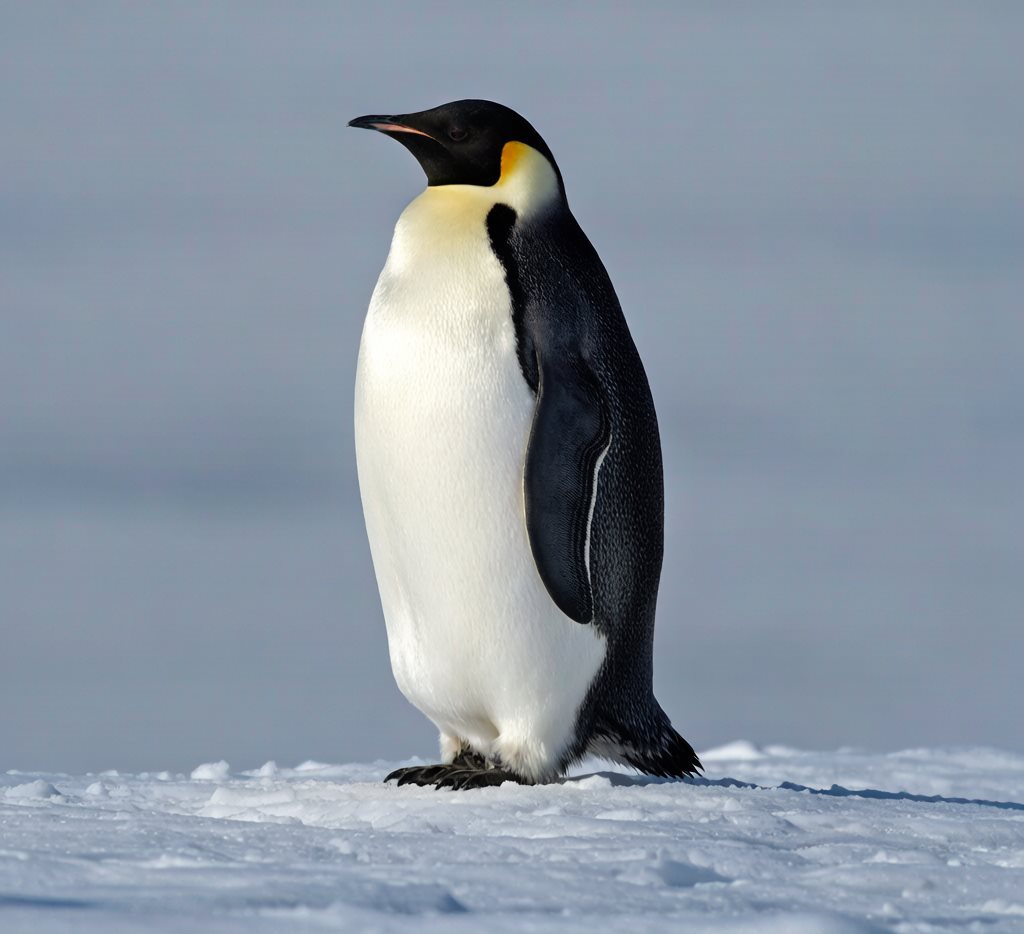
Introduction
The Emperor Penguin, Aptenodytes forsteri, is the tallest and heaviest penguin species, breeding exclusively on the stable sea ice of Antarctica under some of the most extreme conditions on Earth. Standing over a meter tall and weighing up to 45 kilograms, with sleek black and white plumage, this iconic bird is synonymous with the frozen Antarctic wilderness. What sets it apart from all other penguins is its habit of breeding during the brutal Antarctic winter, when temperatures plunge below minus 40 degrees Celsius and hurricane-force winds howl across the ice for months. Popularized by the film March of the Penguins, this species exemplifies extraordinary parental devotion in the animal kingdom.
Taxonomy
The Emperor Penguin belongs to the family Spheniscidae, order Sphenisciformes. Its genus name Aptenodytes translates from Greek as “featherless diver,” a nod to its dense, smooth plumage. The species name forsteri honors Johann Reinhold Forster, the naturalist who accompanied James Cook on his second Pacific voyage. The genus contains only two living species—the other is the smaller King Penguin, which breeds on sub-Antarctic islands rather than Antarctic fast ice. Emperor Penguins are monotypic, with no recognized subspecies, and represent one of the most specialized penguin lineages.
Physical Characteristics
Adult Emperor Penguins reach 110 to 130 centimeters in height and weigh 20 to 45 kilograms, with males slightly larger. Their dense, scale-like feathers provide exceptional insulation in air and in frigid Antarctic waters where they hunt. Countershading—dark backs and pale bellies—serves as camouflage in the water, blending with the deep ocean when seen from above and matching the bright surface when viewed from below. Emperor Penguins can dive to over 500 meters and hold their breath for more than 20 minutes, the deepest dives of any bird. Like the Bottlenose Dolphin, they are accomplished hunters of the deep, pursuing prey in near-total darkness beneath Antarctic ice.
Habitat
Emperor Penguins are found around the entire Antarctic coastline, with colonies established on the stable fast ice anchored to the continent. Unlike the Gentoo Penguin, which prefers rocky, ice-free coasts of the Antarctic Peninsula, Emperor Penguins favor the deep interior of the continent where sea ice is thickest and most stable. The largest colony, at Empress Rookery in the Bay of Whales, contains over 25,000 breeding pairs. They spend the majority of their lives at sea, foraging in the cold Southern Ocean, and come ashore only to breed and molt.
Diet
The Emperor Penguin’s diet is dominated by the Antarctic silverfish (Pleuragramma antarcticum), a small, lipid-rich fish that forms the cornerstone of the Southern Ocean food web. Crustaceans, primarily krill, and occasionally squid supplement the diet. Adults make foraging trips lasting days, traveling up to 100 kilometers from the colony and diving hundreds of times per trip. During the breeding season, parents consume three to four kilograms of food daily, storing it in their stomachs to regurgitate for their chicks on their return.
Reproduction
The Emperor Penguin is the only penguin species that breeds during the Antarctic winter. After elaborate courtship displays, the female lays a single egg in May or June and transfers it to the male’s feet, where it is warmed in a brood patch. The male incubates for over two months, surviving on stored fat while the female feeds at sea. Males huddle together in tight groups called “turtle-walls” to conserve heat, rotating positions so each bird spends time at the warm center. When the female returns, the pair reunites through individually distinctive calls. Chicks fledge at about 150 days, then molt into waterproof plumage before the following winter.
Conservation
The Emperor Penguin is classified as Near Threatened on the IUCN Red List. Its reliance on sea ice makes it exceptionally vulnerable to climate change—models project that over 70 percent of colonies could decline by 2050 if warming trends continue. Early ice breakup destroys eggs and chicks, and long-term habitat loss threatens population viability. Protected under the Antarctic Treaty and listed on CITES Appendix II, international bodies including CCAMLR monitor populations closely. Like the Polar Bear, the Emperor Penguin is an emblematic species whose survival is directly tied to Earth’s polar environments.
Fun Facts
Emperor Penguin males can lose up to 45 percent of their body weight during the incubation fast, surviving more than two months without food. Chicks are covered in thick grey down that makes them look like “balls of charcoal” compared to their sleek parents. A single Emperor Penguin call is individually distinctive, allowing parents to locate their chicks in a colony of tens of thousands. The species can swim at over 10 kilometers per hour and has been recorded diving to 564 meters—deeper than many marine mammals. Like the Leopard Seal, Emperor Penguins face new ecological pressures as warming oceans disrupt the established Antarctic food web.
[…] It sits in the family Spheniscidae, the penguin family. That family also holds the much larger Emperor Penguin. The two birds share the same basic plan. Both have flippers instead of wings and dense feathers […]