 By st20113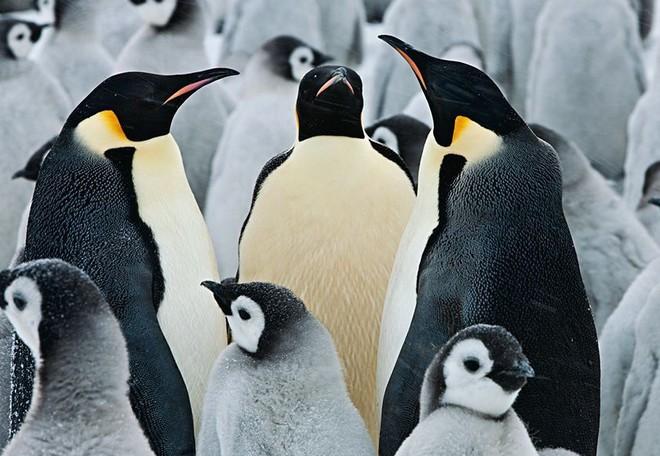
The Emperor Penguin (Aptenodytes forsteri) is the tallest and heaviest of all living penguin species, and arguably one of the most remarkable animals on Earth. Endemic to Antarctica — the coldest, windiest, and most inhospitable continent on the planet — the Emperor Penguin has evolved extraordinary physiological and behavioral adaptations that enable it to breed and survive in conditions that would kill virtually any other warm-blooded animal. Standing approximately 115–130 cm (45–51 inches) tall and weighing 20–45 kg (44–99 lbs), these majestic birds are perhaps best known for the male’s astonishing commitment to egg incubation: for up to 65 days during the Antarctic winter darkness, male Emperor Penguins huddle together in vast communal groups, fasting while balancing their single egg on their feet against temperatures reaching −50°C (−58°F) and wind chills approaching −90°C.
Physical Adaptations to Extreme Cold
The Emperor Penguin’s suite of cold-weather adaptations represents one of the most remarkable evolutionary solutions to environmental stress in the animal kingdom. Its feathers are extraordinarily dense — approximately 100 feathers per square inch of skin — providing exceptional insulation against temperatures that can plunge below −60°C. The outer feathers are waterproof and windproof, while the inner downy layer traps a layer of warm air against the body. Below the skin, a layer of subcutaneous fat (blubber) up to 3 cm thick provides additional thermal insulation and energy reserves during the breeding fast.
Physiological adaptations complement the structural ones. Emperor Penguins have a counter-current heat exchange system in their flippers and legs: warm arterial blood flowing to the extremities passes heat to cold venous blood returning from the feet and flippers, minimizing heat loss while maintaining tissue viability in the extremities. Their circulatory system can also reduce blood flow to non-essential organs during extreme cold, maintaining core body temperature at a constant 39°C (102°F). The species’ relatively small bill and feet, reduced surface area relative to volume, and the ability to reduce metabolic rate during extreme cold events all contribute to its extraordinary cold tolerance.
Breeding Cycle and Life History
The Emperor Penguin’s breeding cycle is uniquely demanding. Unlike most penguin species that breed in spring and summer, Emperor Penguins breed during the Antarctic winter, with females laying their single egg in May or June before trekking up to 120 km (75 miles) inland from the sea to traditional breeding colonies. Immediately after laying, the female transfers the egg to the male’s brood pouch (a specialized fold of abdominal skin) and begins the long return journey to the sea to feed. For the next 65 days of the Antarctic winter, male Emperor Penguins — without any food — huddle together in vast, dynamically shifting groups that can contain thousands of individuals, rotating positions so that each bird spends time on the group’s warmer, wind-sheltered interior.
When females return shortly before hatching, males have lost up to 45% of their body weight. After hatching, both parents share chick-rearing duties, making repeated foraging trips of up to 500 km and diving to depths exceeding 500 meters in search of fish — particularly the Antarctic silverfish (Pleuragramma antarcticum) — which constitutes the majority of their diet. The Emperor Penguin’s reliance on a single prey species and its narrow habitat requirements make it particularly vulnerable to environmental change, with climate warming and associated sea ice loss representing the most serious long-term threat to the species.
Climate Change and Conservation
The Emperor Penguin is classified as Threatened by the IUCN, with populations projected to decline significantly over the next several decades due to climate change. The species depends entirely on stable sea ice — the platform on which it breeds, molts, and rests between foraging trips — and climate models project substantial loss of optimal Emperor Penguin habitat by 2100. Several major breeding colonies, including those in the Bellingshausen Sea and parts of the West Antarctic Peninsula, have already experienced significant population declines linked to sea ice collapse. The Emperor Penguin has become one of the iconic symbols of the climate crisis — a species whose very survival depends on global action to reduce greenhouse gas emissions and preserve the integrity of Earth’s polar ecosystems.
the Polar Bear (which has proportionally smaller ears and limbs than other bear species) and the Emperor Penguin (which has small, compact body dimensions relative to its
penguins belong to the family Spheniscidae, the penguins, and are close relatives of the larger emperor penguin, Aptenodytes forsteri, of the Antarctic coast. They share the broader class Aves with powerful