 By st20113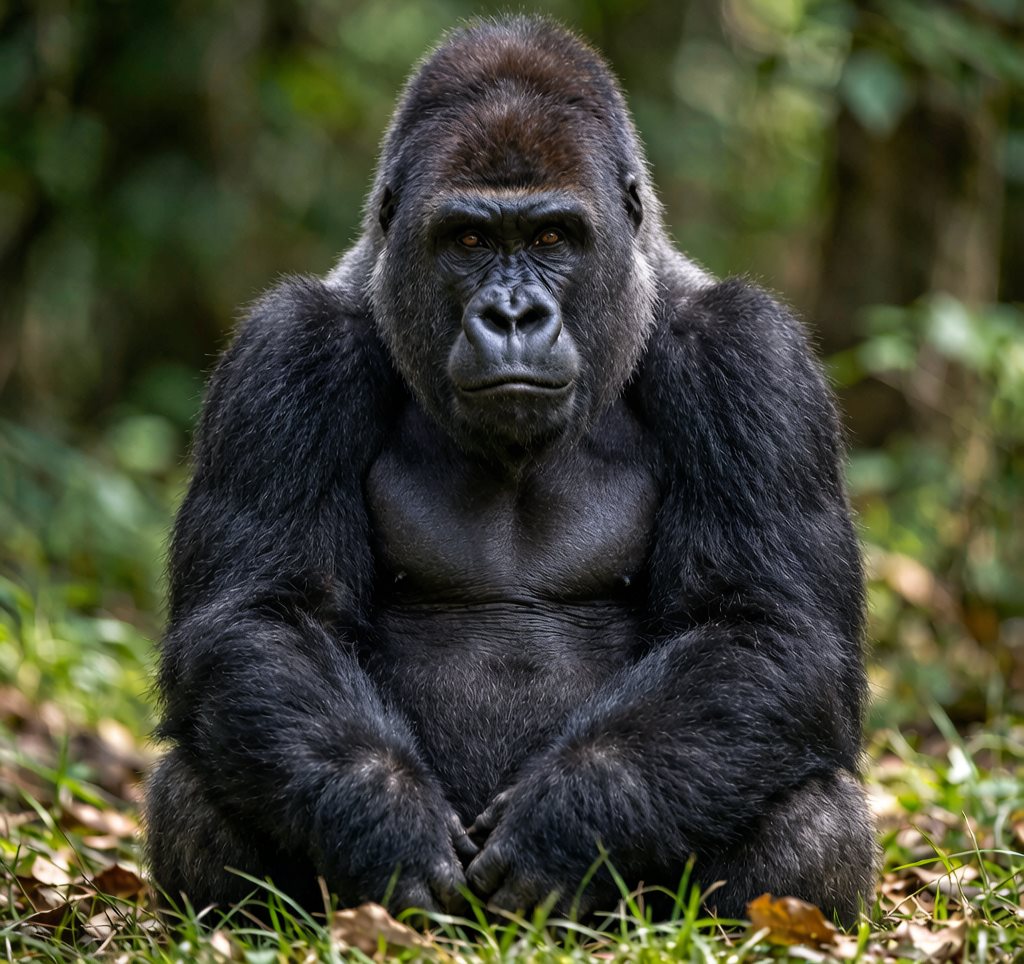
Introduction
The western gorilla, Gorilla gorilla, is the most widespread of the two gorilla species and one of our closest living relatives. Found in the forests of central and west Africa, it is a gentle, predominantly plant-eating ape that lives in cohesive family groups led by a dominant male. Despite its formidable size, the western gorilla is generally calm and spends much of its day foraging, resting, and maintaining social bonds.
Two subspecies are recognised, the western lowland gorilla and the rarer Cross River gorilla confined to a small border region between Nigeria and Cameroon. Both forms live in complex societies where relationships are maintained through grooming, play, and reassuring contact. Because they reproduce slowly and need large tracts of forest, western gorillas are especially vulnerable whenever their habitat is disturbed by people.
Taxonomy
Western gorillas belong to the family Hominidae, the great apes, alongside chimpanzees, orangutans, and humans. Their nearest living cousins are the common chimpanzee, Pan troglodytes, and the tree-dwelling orangutan of Southeast Asia. A close relative within the same genus is the mountain gorilla, Gorilla beringei, which lives at higher, cooler elevations to the east. Sharing the African landscape with them are giants such as the African elephant and the formidable Cape buffalo.
Physical Characteristics
Western gorillas have broad chests, muscular arms, and coarse black to brown-grey hair, with adult males developing a silver-grey saddle across the back that earns them the name silverback. Males can weigh more than 180 kilograms, far heavier than females, and possess enlarged canine teeth used mainly in displays. Their long arms are adapted for knuckle-walking, the distinctive four-limbed gait these apes use on the forest floor.
Their faces are bare and expressive, framed by small ears, and males develop a bony crest on the skull that anchors powerful jaw muscles. Although built for strength, western gorillas are also capable climbers, especially when young, and will ascend trees to feed on ripe fruit that cannot be reached from the ground.
Habitat
They inhabit lowland tropical rainforests, swamp forests, and montane forests across several central African nations, from Cameroon and Gabon to the Republic of Congo. Western gorillas range across a wider and more fragmented area than their eastern relatives, often in regions affected by logging, mining, and hunting. Each night they build a fresh sleeping nest from branches and foliage, either on the ground or in the lower branches of a tree.
Diet
The western gorilla is chiefly herbivorous, feeding on fruits, leaves, shoots, bark, and pith in varying proportions through the year. During certain seasons, fruit forms the bulk of the diet, and troops travel to follow ripening crops through the canopy, which in turn helps disperse the seeds of many forest trees. They occasionally eat insects such as termites or ants, but animal protein makes up only a tiny fraction of what they consume overall.
An adult silverback may eat more than 18 kilograms of plant matter in a single day, so a troop requires a large and productive home range to meet its needs. Different groups show distinct food preferences passed down through social learning, making local ecological knowledge an important part of gorilla culture.
Reproduction
Females give birth for the first time around the age of ten, after a gestation of nearly nine months that closely parallels that of humans. Usually a single infant is born, clinging to its mother’s chest for the first months of life and later riding on her back. Young gorillas remain dependent on their mothers for several years, learning social etiquette and feeding skills within the protective structure of the troop.
Conservation
The western gorilla is classified as Critically Endangered, with populations declining sharply due to poaching, disease such as Ebola virus, and the relentless destruction of its forest habitat. Conservation programmes focus on protected areas, anti-poaching patrols, and long-term monitoring of remaining groups. International cooperation and ecotourism revenue have helped some sites, but the species remains under severe pressure across much of its range.
Fun Facts
Western gorillas share about 98 percent of their DNA with humans, making them among our closest living relatives after the chimpanzees and bonobos. Silverbacks lead troops that may include several females and offspring, settling disputes with impressive chest-beating displays that resonate through the forest. These apes are surprisingly adept climbers despite their bulk and communicate using a rich array of vocalisations, gestures, and subtle facial expressions.
Each gorilla builds a new nest to sleep in almost every night, and scientists use abandoned nests to estimate how many apes live in a given area. Unlike many mammals, gorillas have individual fingerprints, another reminder of how closely related we are.
[…] percent of their DNA with humans, making them one of our closest living relatives alongside the Western Gorilla and the Common Chimpanzee. Their populations have shown encouraging recovery in recent […]