 By st20113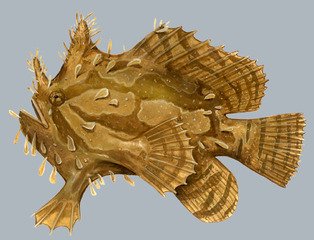
Introduction
Anglerfish, members of the order Lophiiformes, are among the most extraordinary vertebrates inhabiting the world’s oceans. Famous for their bioluminescent lure dangling from the head, these fish are found from shallow coastal waters to the pitch-black abyssal plains. Their bizarre morphology and unique hunting strategy have fascinated scientists and naturalists for generations.
Taxonomy
The order Lophiiformes comprises five suborders and approximately 18 families, including the deep-sea Ceratiidae, the shallow-water Antennariidae (frogfish), and the batfish of the family Ogcocephalidae. The roughly 321 recognized species are distributed across all oceans. Among the best-known deep-sea species is Cryptopsaras couesii, the triplewart seadevil. Extreme sexual dimorphism characterizes deep-sea forms, with adult males a tiny fraction of the size of females.
Physical Characteristics
Anglerfish possess a modified dorsal spine called the illicium, which extends forward and bears a bioluminescent organ called the esca at its tip. This lure, inhabited by symbiotic bioluminescent bacteria, produces a blue-green glow that attracts prey in the ocean’s permanent darkness. The body is globular and often covered in spines, filaments, or leaf-like appendages that break up its outline against the seafloor. Deep-sea species are typically dark brown to black, while shallow-water frogfish display striking colors and textures that mimic coral and sponges.
Habitat
Anglerfish inhabit marine environments ranging from tidal pools and tropical reefs to abyssal depths exceeding 2,000 meters. Shallow-water frogfish favour coral and rocky reefs where they lie in wait for passing prey. Deep-sea species are found in all ocean basins, drifting or hovering just above the seabed. Some anglerfish also drift through the mid-water column in the mesopelagic zone. The giant squid and the whale shark are among the large marine predators that share these deep-water environments, each occupying different trophic niches in the ocean ecosystem.
Diet
Anglerfish are opportunistic carnivores that rely on ambush rather than pursuit. The esca lures curious fish, squid, and crustaceans within range of the enormous mouth, which opens with remarkable speed to create a powerful suction force. With highly flexible jaws capable of swallowing prey nearly twice their own body size, they can sustain themselves on infrequent meals. The great white shark employs a radically different predatory strategy, using explosive speed and brute force rather than deceptive luring. A single large meal can sustain a deep-sea anglerfish for weeks or even months.
Reproduction
Deep-sea anglerfish exhibit one of the most remarkable reproductive strategies in the animal kingdom. Males are free-living, tiny, and equipped with highly sensitive olfactory organs to locate females in the darkness. Upon finding a female, a male bites into her skin and permanently fuses with her body, his circulatory system joining hers to supply sperm on demand. A single female may carry multiple parasitic males simultaneously. Females produce enormous gelatinous egg rafts containing millions of eggs, which drift in the plankton until hatching into larval anglerfish.
Conservation
Most deep-sea anglerfish have not been assessed by the IUCN because studying organisms in their remote habitat presents serious logistical challenges. Shallow-water frogfish face some pressure from the aquarium trade, and localized population declines have been observed in heavily visited reef areas. Deep-sea trawling and seabed mining activities represent potential threats to deep-sea anglerfish populations, though targeted data remain scarce. Their cryptic behaviour and low reproductive rates make them particularly vulnerable to exploitation.
Fun Facts
The light produced by an anglerfish’s esca comes not from the fish itself but from bioluminescent bacteria living in a symbiotic relationship within the organ. The timing of the anglerfish’s strike is extraordinarily precise, with jaw projection occurring in a matter of milliseconds. Some deep-sea species can distend their stomachs to accommodate prey weighing as much as twice their own body mass. The name “anglerfish” reflects this fish’s use of its luminescent lure, reminiscent of a human angler dangling bait on a line. The closely related seahorse shares the anglerfish’s dependence on camouflage rather than speed for survival.
The common octopus also inhabits similar deep marine environments, relying on camouflage rather than luring prey.