 By st20113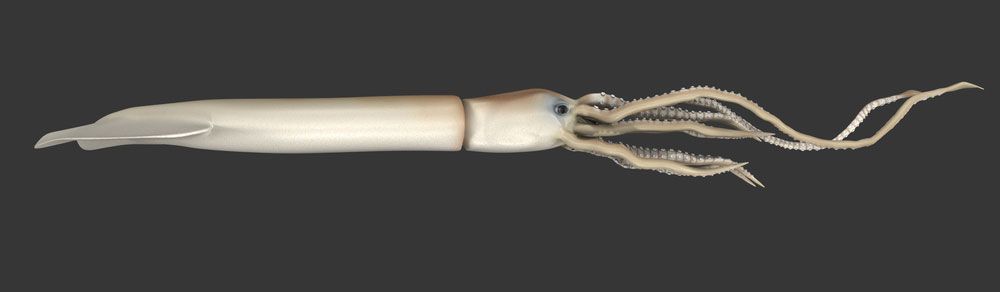
The Giant Squid (Architeuthis dux) is one of the largest invertebrate species on Earth, a deep-sea cephalopod belonging to the family Architeuthidae. For centuries the subject of sea monster legends, it remains one of the most mysterious and rarely encountered animals in the ocean.
Physical Characteristics: Giant Squids have extraordinarily large eyes, up to 27 cm (11 in) in diameter—the largest eyes of any known animal—providing exceptional low-light vision in the deep ocean. The mantle can grow up to 12 meters, with total length including tentacles reaching approximately 13 meters. They possess eight arms and two extraordinarily long feeding tentacles lined with serrated suckers.
Distribution and Habitat: Found in ocean waters worldwide, Giant Squids inhabit deep waters typically between 300–1,000 meters depth. Each ocean basin appears to contain genetically distinct populations.
Diet and Predation: Active predators, they feed primarily on deep-sea fish and smaller squid species. Their primary predators are sperm whales (Physeter macrocephalus), with an estimated 4.5 million tonnes of Giant Squid consumed by sperm whales annually worldwide.
Bioluminescence: Like many deep-sea organisms, Giant Squids possess photophores used for counter-illumination camouflage—matching the dim light from above to hide their silhouette from predators below.
Conservation Status: Listed as Least Concern by the IUCN due to its wide distribution and apparent abundance, though population estimates are extremely difficult to obtain for such a deep-sea species.
squid giant squid shares comparable ocean habitats with this
[…] the seabed. Some anglerfish also drift through the mid-water column in the mesopelagic zone. The giant squid and the whale shark are among the large marine predators that share these deep-water environments, […]