 By st20113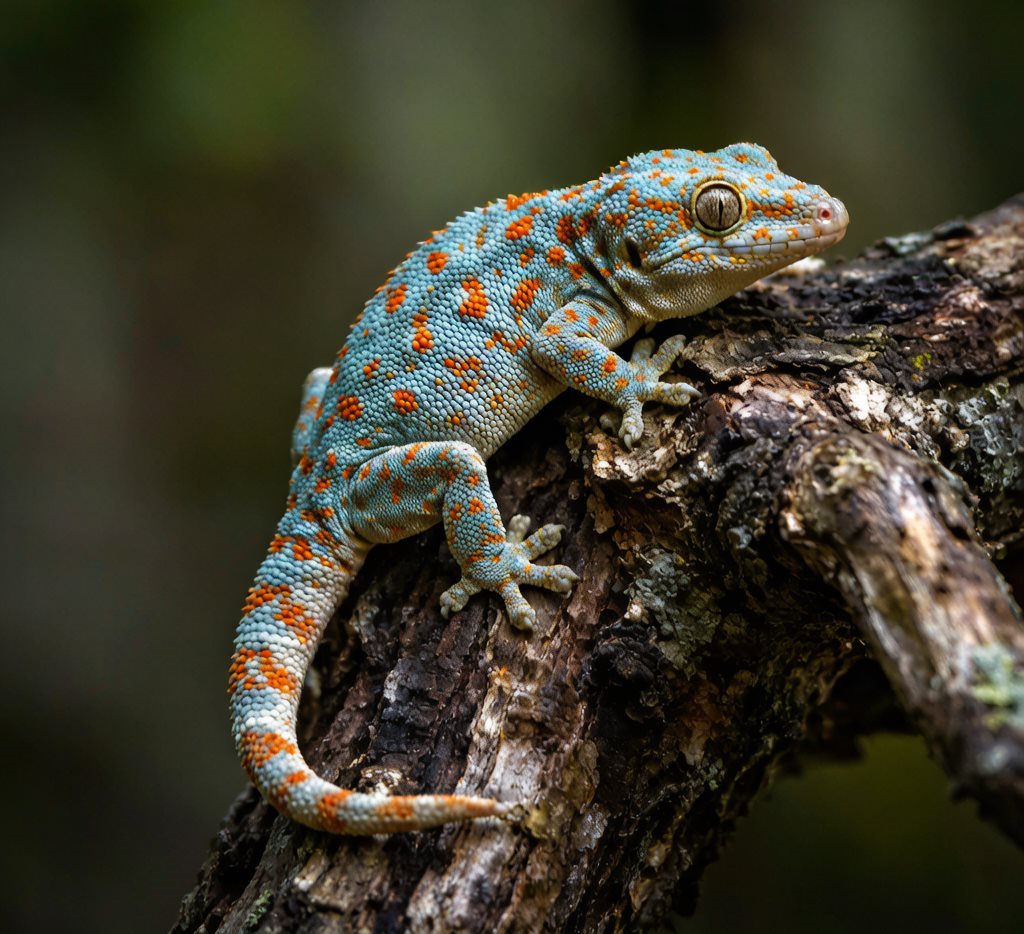
Introduction
The Tokay Gecko (Gekko gecko) is a large, brightly colored lizard of Southeast Asian forests and villages. Named for its loud “to-kay” call, this nocturnal reptile is among the world’s best-known geckos. Reaching 30 to 40 centimeters, it hunts insects and small vertebrates and is revered and feared across Asia, where it features in traditional medicine and folklore, while its tenacious grip makes it a familiar sight clinging to tropical walls and ceilings in homes throughout its native range.
Taxonomy
Described by Linnaeus in 1758 as Gekko gecko, it is the type species of genus Gekko in family Gekkonidae, order Squamata. The genus holds many Asian and Pacific geckos, but the Tokay is among the largest. No subspecies are widely accepted, though color varies by region. Molecular work places it in the Asian gekkonid clade, apart from African and American geckos, and close to arboreal relatives with adhesive toe pads. This reptile radiation also includes far larger forms such as the Nile crocodile of African waterways.
Physical Characteristics
Adults reach 25 to 35 centimeters, sometimes over 40. Coloration is bluish-gray to reddish-brown with bright orange or red spots and bands that camouflage against bark. Toe pads bear microscopic setae letting them cling to vertical surfaces and ceilings. A big triangular head, strong jaws, and sharp teeth give a powerful bite; a semi-prehensile tail aids balance. The skin is granular, and large lidless eyes have a transparent scale for night vision. Threatened, it inflates, opens its bright mouth, and hisses to discourage attackers and rival geckos alike.
Habitat
Tokays occupy tropical rainforest, deciduous forest, plantations, and rural and urban homes across Southeast Asia. They settle on lit walls where insects gather, favor warm humid nights, and hide by day in crevices, bark, or building corners. Mostly arboreal, they exploit villages and cities, sometimes sharing trees with other arboreal reptiles such as the green iguana. Their tolerance of human landscapes let them spread beyond range; feral populations now live in Florida, Hawaii, and other tropical regions via the pet trade.
Diet
Tokays are opportunistic carnivores eating large insects: crickets, beetles, moths, cockroaches, grasshoppers. They also take arthropods, small lizards, nestlings, rodents, and smaller geckos. With keen night vision and a quick strike they ambush or hunt, biting hard and shaking prey. Their taste for pests makes them welcome in Asian homes as natural control. In captivity they need varied dusted live insects. As effective hunters they check invertebrate numbers, though they may fall prey to large snakes such as the king cobra in parts of their range.
Reproduction
Females lay one or two hard adhesive eggs in tree hollows, rock crevices, or building corners. Eggs are glued and guarded by the female until hatching after two to three months. Hatchlings resemble small adults but are grayer and lack vivid spots. Maturity comes at one to two years. Males are territorial, fighting rivals and advertising perches with calls. Females may lay several clutches yearly in good conditions, aiding success across the range and allowing quick recovery where habitat remains suitable for shelter and hunting.
Conservation
Listed Least Concern by the IUCN, the Tokay has a wide range, large population, and thrives near people. Yet it faces pressure from collection for the pet trade and traditional medicine, especially in China and neighbors, akin to demands on the ball python. Unsustainable harvest can deplete locals, and its slow reproduction makes it vulnerable to over-exploitation. Deforestation hurts forest populations. Conservation stresses regulated trade, harvest monitoring, and education, since targeted protection of wild pockets matters more than blanket measures across its huge range.
Fun Facts
The name comes from the two-syllable “to-kay” mating call. It can drop its tail to escape, later regrowing it. Toe-pad adhesion can support many times its weight on one foot. Tokays bite hard and defend if handled. In many cultures a calling gecko means good fortune. The eye’s transparent scale is licked clean, as geckos lack eyelids. Some live over ten years captive, and their calls carry clearly through quiet tropical nights to mark territory and attract mates.